
Cardfornia vs Request Finance vs Reap: Which Fits?

Cardfornia vs Request Finance vs Reap: Which Stablecoin Platform Fits Your Business?
Businesses that hold USDT, USDC, or other stablecoins face a recurring problem: how do you turn digital assets into everyday operational spending without juggling exchanges, manual conversions, and slow banking rails? Three platforms have emerged with distinct answers to that question. Cardfornia focuses on corporate virtual cards for ad spend, SaaS subscriptions, and team expenses. Request Finance centers on accounts payable, approvals, and accounting automation. Reap combines stablecoin cards with global payout corridors and treasury tools.
This comparison breaks down how each platform works, where they genuinely excel, and which business profile each one serves best.
How the Three Platforms Differ at a Glance

Request Finance product interface.
The core difference comes down to what each platform treats as its center of gravity.
Cardfornia is a crypto corporate virtual card platform. You fund a single account with USDT or USDC, issue multi-currency virtual cards to teams at scale, and keep real-time control over operating expenses. The primary use cases are paying for AI tool subscriptions such as ChatGPT, Claude, and Midjourney; digital advertising on Meta Ads, Google Ads, and TikTok Ads; SaaS and cloud services like AWS, Azure, and Figma; and global travel and procurement.
Request Finance is a stablecoin-powered spend management and payments platform. It replaces slow banking rails, spreadsheets, and scattered tools with a Business Account per entity, bill import with OCR, approval workflows, and payments through ACH, SEPA, SWIFT, or stablecoins. It also provides accrual accounting with automated reconciliation and month-end reporting.
Reap is a global financial infrastructure platform built on stablecoins. It offers physical and virtual Visa corporate cards, cross-border payment rails, treasury management, and embedded finance solutions. Reap targets small and medium-sized businesses up to large enterprises, especially digital-led or crypto-native companies that want to bypass traditional banking constraints.
Cardfornia: Purpose-Built Corporate Cards for Crypto-Native Teams
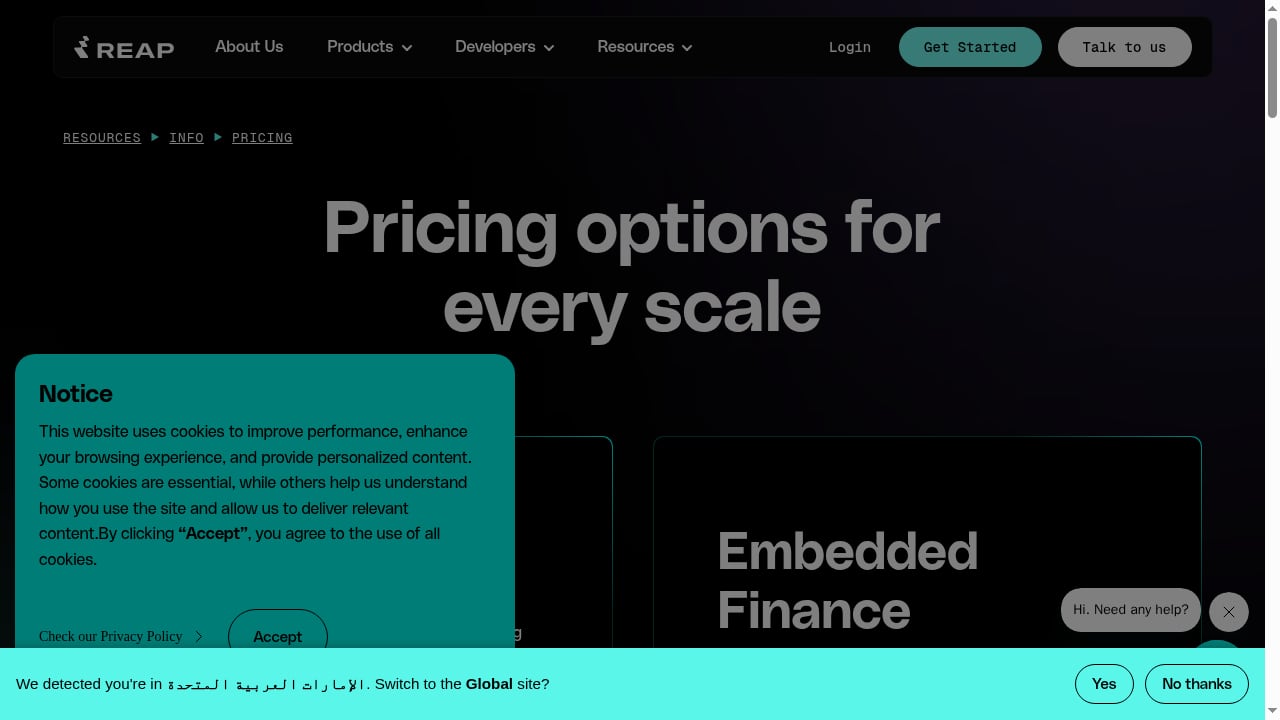
First viewport screenshot of Pricing | Reap Hong Kong.
Cardfornia's strongest case is for companies whose daily operations depend on digital advertising and SaaS subscriptions paid from stablecoin balances.
High-Limit Cards for Ad Spend
One of the most painful problems for media buyers and performance marketers is account bans and payment declines when scaling ad spend. Cardfornia addresses this directly with high-limit virtual cards designed for advertising platforms. Teams can issue separate cards for Meta Ads, Google Ads, and TikTok Ads, which helps isolate spend and reduce the risk of a single payment failure disrupting campaigns. For teams scaling paid acquisition, this structure matters more than generic corporate card limits.
For a deeper look at how crypto cards handle ad platform payments, see Crypto Card for Ad Spend: Pay Meta, Google & TikTok Ads with USDT.
Multi-Currency Settlement for SaaS and AI Tools
Cardfornia automatically settles multi-currency transactions, which removes manual FX work when paying for tools billed in USD, EUR, or other currencies. This is particularly useful for startups and remote teams subscribing to AWS, Azure, Figma, and AI tools like ChatGPT or Midjourney. The platform also supports real-time currency exchange for cross-border transactions, so procurement and travel expenses do not require pre-conversion.
Custody and Security Model
Cardfornia keeps client funds 100% in segregated accounts with third-party licensed custodians. Funds are never lent or invested. Security practices follow ISO/IEC 27001 standards, and payment, custody, and card-issuing activities run through licensed partners with regulatory approvals in Hong Kong, the UK, the US, and Canada. For businesses that prioritize fund transparency and channel stability, this custody model is a meaningful differentiator.
To understand the full cost structure before committing, review Cardfornia Fees: Transparent Crypto Card Pricing Explained.
Request Finance: Spend Control and Accounting Automation First
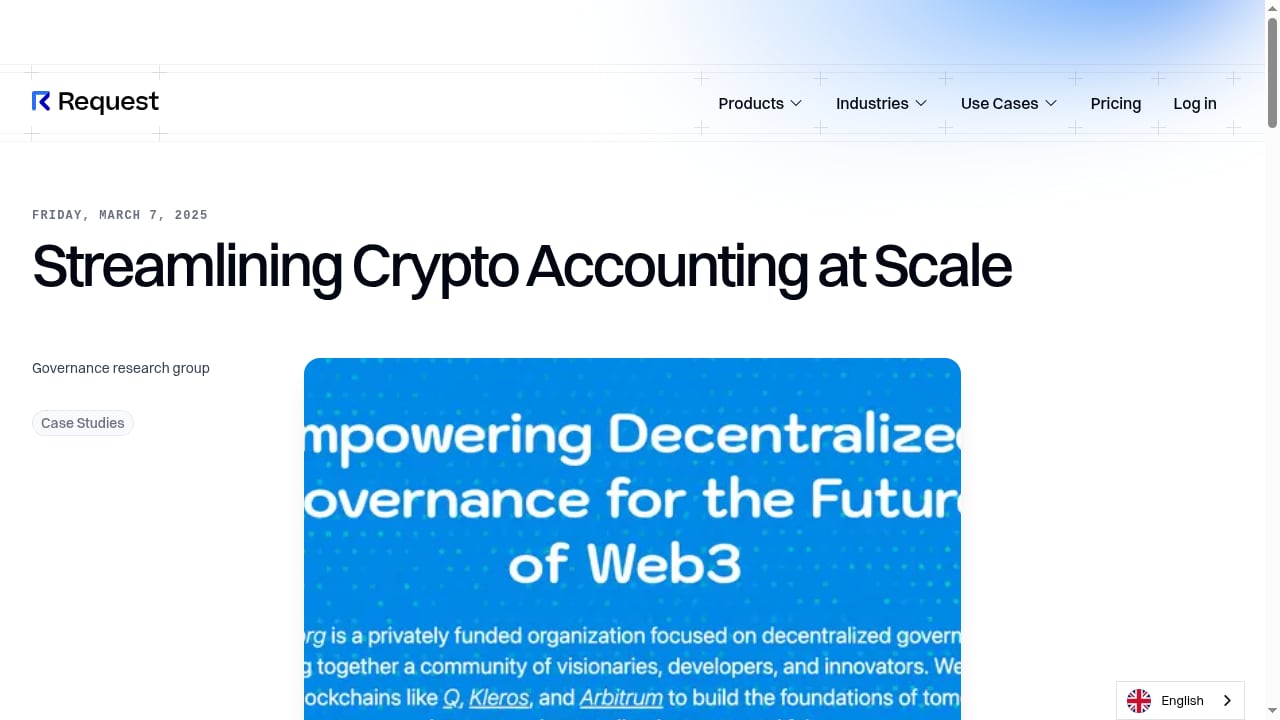
First viewport screenshot of Streamlining Crypto Accounting at Scale - Request Finance.
Request Finance takes a different angle. Instead of leading with cards, it leads with the accounts payable workflow: bills, approvals, payments, and reconciliation.
Accounts Payable Built for Finance Teams
Request Finance lets each business entity operate its own Business Account with its own budget, spending limits, and approval rules. Finance teams can import bills, run OCR extraction, route invoices through approval workflows, and pay vendors via ACH, SEPA, SWIFT, or stablecoins. The result is a single system of record for payables that replaces spreadsheet tracking and scattered payment tools.
Accrual Accounting and Reconciliation
A standout feature is accrual accounting with automated reconciliation and month-end reporting. For companies that need clean audit trails and real-time visibility into committed spend, this closes a gap that many crypto-native tools leave open. Request Finance integrates with Xero, QuickBooks, SAP, and banks such as Citibank, Chase, and Deutsche Bank, plus tools like Metamask, Revolut, and Wise.
Proven Use Cases Across Industries
Request Finance serves a broad industry range: SaaS, e-commerce, healthcare, wholesalers, marketing agencies, crypto and Web3, online travel agencies, and gaming. Documented case studies include RealT, a tokenized real estate company, and Polemos, a Web3 gaming firm. Both used Request Finance to streamline fiat and crypto payments, reduce reconciliation time, and scale operations without adding headcount.
Pricing Signals
Request Finance starts at $250 per month billed annually for small teams, with volume-based transaction fees that decrease as usage grows. A 30-day free trial is available. This positions Request Finance as a mid-market and enterprise-oriented tool rather than a lightweight card product.
Reap: Stablecoin Cards Plus Global Payout Infrastructure
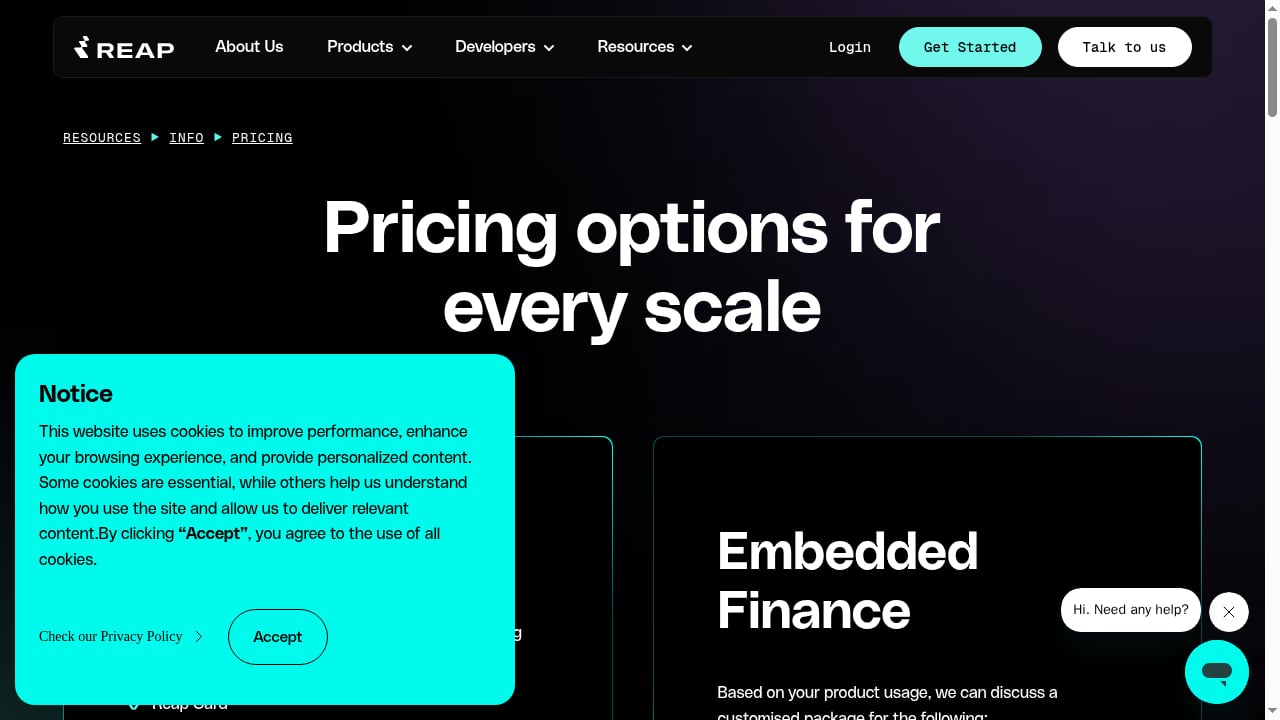
First viewport screenshot of Reap | Pricing.
Reap combines the card layer with payout rails and treasury management, making it a broader financial infrastructure play.
Stablecoin-Powered Visa Corporate Cards
Reap issues physical and virtual Visa corporate cards funded by stablecoins. Businesses can manage corporate expenses, set controls, and spend directly from stablecoin balances. This makes Reap a direct alternative for teams that want card-based spending without converting to fiat first.
Cross-Border Payout Corridors
Where Reap differentiates is its direct access to local payout corridors across multiple countries. For businesses that need to pay contractors, suppliers, or partners internationally, Reap's rails aim to deliver fast, low-cost payouts without correspondent banking delays. Automated approval workflows via email notifications streamline multi-step payment processes.
Treasury and Fraud Prevention
Reap also offers treasury management and embedded finance solutions. Its fraud prevention emphasis is backed by a documented case study with Bitcoin.com, which used Reap to resolve payment fraud and streamline spending. For companies that have experienced chargebacks, unauthorized transactions, or payment fraud on traditional rails, this is a relevant proof point.
Head-to-Head Comparison
The table below summarizes the key differences across the criteria that matter most when choosing between these platforms.
| Criteria | Cardfornia | Request Finance | Reap |
|---|---|---|---|
| Primary focus | Corporate virtual cards for ad spend, SaaS, and team expenses | Accounts payable, approvals, and accounting automation | Stablecoin cards plus global payouts and treasury |
| Card offering | Multi-currency virtual cards at scale | Corporate cards upcoming | Physical and virtual Visa corporate cards |
| Ad spend optimization | High-limit cards designed to reduce account ban risks | Not a core focus | General corporate card use |
| Accounts payable workflow | Basic expense control | Bill import, OCR, approvals, multi-rail payments | Email-based approval workflows |
| Accounting integrations | Not a primary focus | Xero, QuickBooks, SAP | Not a primary focus |
| Global payouts | Cross-border card transactions | ACH, SEPA, SWIFT, stablecoins | Local payout corridors across multiple countries |
| Custody model | 100% segregated accounts with third-party licensed custodians | Business accounts with spend controls | Stablecoin-enabled infrastructure |
| Best-fit profile | Crypto-native startups and media buyers scaling ad spend | Finance teams needing accrual accounting and audit trails | SMBs and enterprises needing cards plus international payouts |
Which Platform Should You Choose?
Choose Cardfornia if...
Your primary need is corporate virtual cards funded by stablecoins, and your biggest pain points are ad account bans, multi-currency SaaS billing, and team expense control. Cardfornia's high-limit ad spend cards and automatic multi-currency settlement make it the strongest fit for performance marketing teams, AI-native startups, and globally distributed companies that spend heavily on digital tools and advertising.
If you are evaluating Cardfornia against other card providers, see Cardfornia vs Reap vs BVNK: Which Stablecoin Card Wins? for a focused card comparison.
Choose Request Finance if...
Your finance team needs accrual accounting, approval workflows, and a clean audit trail across fiat and stablecoin payments. Request Finance is the strongest choice for companies with complex payables, multiple entities, and a requirement to integrate with Xero, QuickBooks, or SAP. The $250 monthly starting price reflects its positioning as a finance operations tool rather than a simple card product.
Choose Reap if...
You need both stablecoin cards and international payout capabilities in one platform. Reap suits businesses that pay contractors or suppliers across multiple countries and want to consolidate card spending, payouts, and treasury in a single stablecoin-native infrastructure. Its Visa card network and payout corridors make it a practical choice for companies with mixed card and wire payment needs.
Related reading
- Banxe Review 2026: Fees, Features & Honest Verdict - Evidence-based Banxe review covering personal and business accounts, crypto features, pricing signals, setup, limitations, and who should actually use it.
- Cardfornia vs Banqa vs Banxe: Which Crypto Card Fits? - Compare Cardfornia, Banqa, and Banxe for crypto spending. See custody models, card types, business features, fees, and the best fit for your use case.
Sources and further reading
- My Top 5 Travel Credit Cards for 2025: Chase, Amex, Capital One - I’ve finally picked my favorite travel credit cards for 2025! Sharing my personal review of Chase, Amex, Capital One, Citi, and Wells Fargo. Find out how I get free flights, hotel stays, and lounge access!
- Uplift Travel: Buy Now, Pay Later for Monthly Vacation Payments! - Dreaming of a getaway but worried about upfront costs? I'm sharing my experience with Uplift, the incredible travel payment plan that lets you buy your trip now and pay later! Discover how easy it is to spread your vacation costs over months for flights, cruises, and more. It truly made my dream travels more accessible!
- njnonconformist - April 21, 2026 by
Frequently Asked Questions
Can I use all three platforms together?
Yes. Some businesses use Cardfornia for ad spend and SaaS cards, Request Finance for accounts payable and accounting reconciliation, and Reap for international payouts. The platforms solve overlapping but distinct problems, so a combined stack is feasible for larger finance teams.
Which platform is best for paying Meta Ads and Google Ads with USDT?
Cardfornia is purpose-built for this use case, with high-limit virtual cards designed to reduce account ban risks when scaling ad spend. Reap's Visa corporate cards can also fund ad platforms, but Cardfornia's card structure and limits are optimized specifically for advertising. Learn more in Digital Advertising with Crypto Cards: Pay Ads Using USDT.
Do any of these platforms require KYC or business verification?
All three platforms operate in regulated environments and require business verification. Cardfornia works through licensed partners with regulatory approvals in Hong Kong, the UK, the US, and Canada. Request Finance and Reap similarly require onboarding checks appropriate to their operating jurisdictions.
Which platform has the lowest starting cost?
Cardfornia and Reap do not publish a fixed monthly subscription in the same way Request Finance does. Request Finance starts at $250 per month billed annually. Cardfornia's fee structure is transparent and usage-based; see Cardfornia Fees: Transparent Crypto Card Pricing Explained for details.
Are funds safe with these platforms?
Cardfornia holds client funds 100% in segregated accounts with third-party licensed custodians and never lends or invests them. Request Finance and Reap operate their own custody and account structures. Always review each platform's custody disclosures and regulatory authorizations before depositing funds.
Conclusion
Cardfornia, Request Finance, and Reap all help stablecoin-holding businesses spend and move money more efficiently, but they optimize for different workflows. Cardfornia wins for corporate virtual cards built around ad spend, SaaS subscriptions, and team expense control. Request Finance wins for finance teams that need accounts payable automation, accrual accounting, and audit-ready reconciliation. Reap wins for businesses that want stablecoin cards plus international payout corridors and treasury tools in one infrastructure layer.
The right choice depends on whether your bottleneck is card issuance, payable workflows, or cross-border settlement. Define that bottleneck first, and the platform decision becomes much clearer.