
Convert USDC: A Practical 2026 Guide for Businesses
Convert USDC: A Practical 2026 Guide for Businesses
USDC is designed to trade at roughly one US dollar, so converting it sounds simple. In practice, the route you choose — an exchange, a self-custody wallet, or a payment platform — changes your fees, settlement speed, and the records your finance team ends up with. This guide explains how USDC conversion works, compares the main methods, and shows where conversion fits into everyday business spending.
What "Convert USDC" Actually Means
USDC is a digital dollar issued by Circle and backed by US dollars and short-dated US dollar equivalents. Because it is designed to hold a 1:1 value with USD, converting USDC usually means one of three things:
- USDC to USD (or another fiat currency): selling or redeeming USDC for traditional money you can withdraw to a bank account.
- USDC to another crypto asset: swapping USDC for BTC, ETH, or another token on an exchange or decentralized venue.
- USDC to a spendable balance: moving USDC into a payment account or card so it can be used for purchases without a separate withdrawal step.
Most people searching "convert USDC" want the first or third option. Businesses usually care about the third, because converting to fiat and then moving money to a bank adds time and counterparties that a direct spend path avoids.
USDC Conversion Rates: Why They Stay Close to $1.00
Convert USDC: A Practical 2026 Guide for Businesses - USDC Conversion Rates: Why They Stay Close to $1.00.
USDC's price is not fixed by a central bank; it is maintained by arbitrage and redemption. When USDC trades slightly below $1.00, market makers can buy it cheaply and redeem it with the issuer for full value. When it trades above $1.00, they can create new USDC and sell it. That mechanism keeps the rate within a narrow band.
In practice, you will see small variations:
- Large conversions may show a rate like 0.9999 or 1.0001 rather than exactly 1.0000.
- Weekend and low-liquidity periods can widen the spread slightly.
- Some platforms display a "conversion rate" that already includes their fee, so the headline number is not the raw market price.
For a business converting $50,000, a 0.1% spread is $50. That is small, but it compounds if you convert frequently. It is worth checking whether your provider charges a spread, a flat fee, or both.
Main Ways to Convert USDC
Convert USDC: A Practical 2026 Guide for Businesses - Main Ways to Convert USDC.
1. Centralized Exchanges
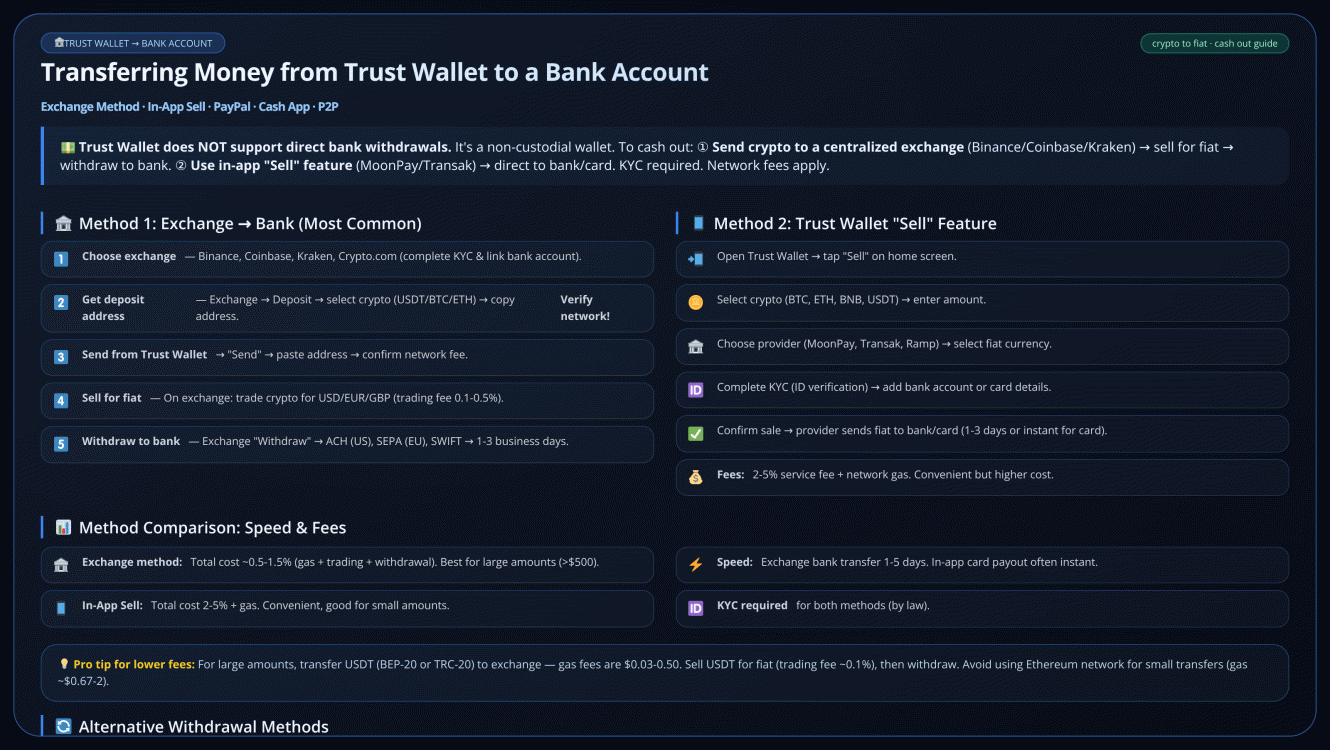
Platforms like Coinbase and Kraken let you convert USDC to USD, EUR, GBP, and other fiat currencies, or trade it against other crypto assets. You deposit USDC, place a conversion or trade, and withdraw the proceeds to a linked bank account.
Pros: deep liquidity, familiar interfaces, regulated custody in many jurisdictions. Cons: withdrawal delays, bank transfer limits, and fees that vary by payment method. Some exchanges also apply a spread on top of their stated trading fee.
2. Self-Custody Wallets and Swaps
Wallets such as MetaMask let you hold USDC and swap it for other tokens directly. This is fast and non-custodial, but it does not give you fiat in a bank account. You still need an off-ramp to turn USDC into spendable fiat, and you are responsible for network fees and security.
Pros: full control, no account approval, works 24/7. Cons: gas fees, smart contract risk, no fiat settlement, and no built-in accounting trail.
3. Payment Platforms and Corporate Cards
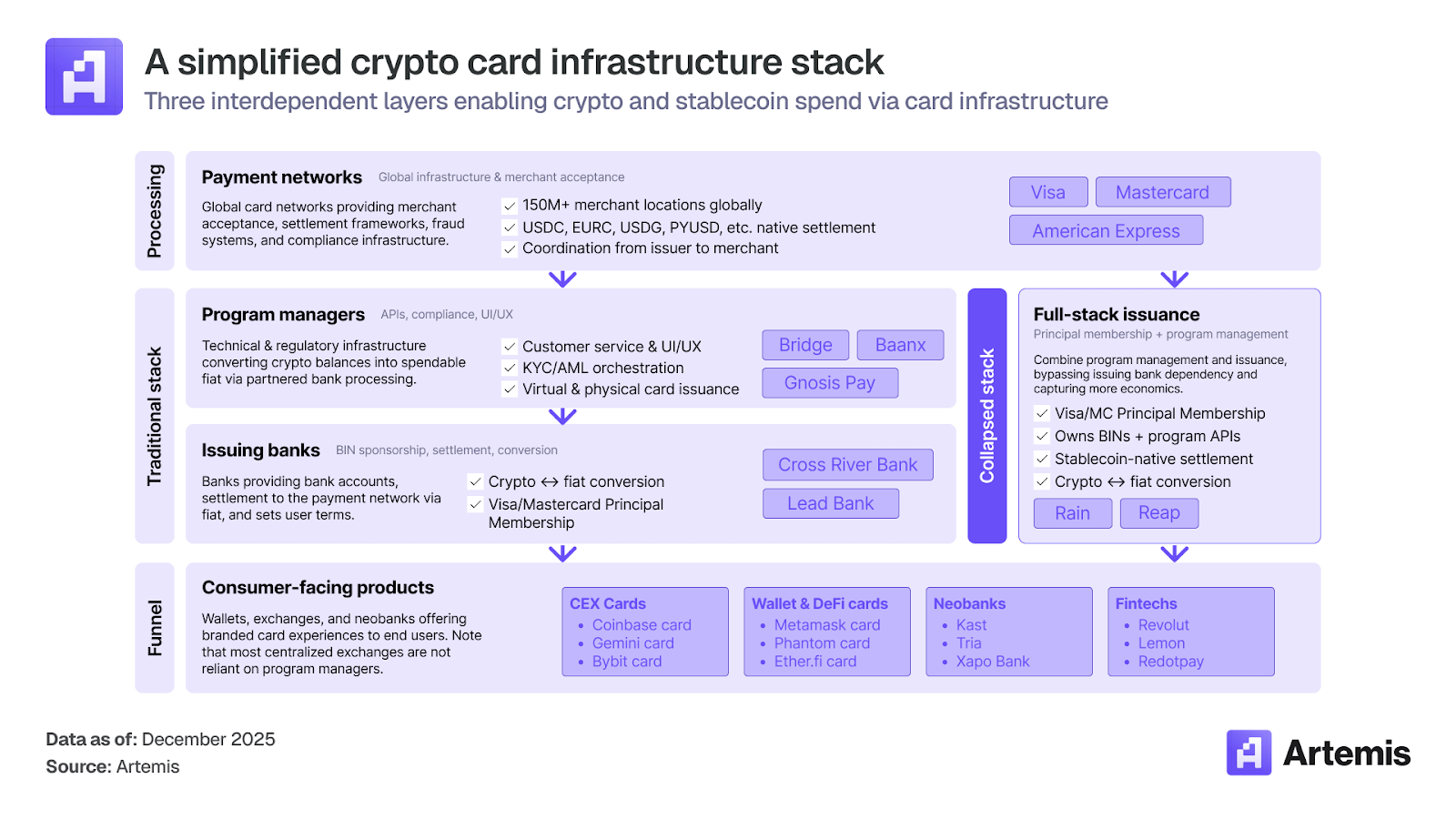
A newer option is to keep USDC in a payment account and convert it at the moment of spending. Cardfornia, a Singapore-based platform for crypto-native businesses, lets companies fund a single account with stablecoins such as USDC and USDT, then issue multi-currency virtual cards to teams. The conversion happens in real time when a card is used, so there is no separate withdrawal step.
Pros: no bank withdrawal delay, spend controls per card, and a consolidated record of transactions. Cons: you are relying on the platform's conversion rate and partner network, so you should review fee disclosure and custody arrangements before committing.
Comparing Conversion Methods for Business Use
Convert USDC: A Practical 2026 Guide for Businesses - Comparing Conversion Methods for Business Use.
| Method | Settlement speed | Typical cost | Best for |
|---|---|---|---|
| Centralized exchange | Minutes to 2 business days | Trading fee + spread + withdrawal fee | Converting large amounts to fiat |
| Wallet swap | Seconds to minutes | Network gas + swap fee | Moving between tokens |
| Payment platform / card | Instant at point of sale | Platform conversion fee, if any | Paying SaaS, ads, and travel directly |
If your goal is to pay a vendor in USD, an exchange withdrawal may be the cheapest route. If your goal is to pay 20 different SaaS subscriptions every month, a payment platform that converts at the point of sale removes a lot of manual work.
Fees, Spreads, and What to Watch
Conversion costs are rarely a single line item. Look for:
- Spread: the difference between the market mid-price and the rate you are offered.
- Trading fee: a percentage charged by the exchange or platform.
- Network fee: the blockchain cost to move USDC, which varies by chain and congestion.
- Withdrawal fee: charged when you move fiat to a bank.
- FX markup: if you convert USDC to a non-USD currency, the FX rate may include a markup.
A useful habit is to convert a small test amount first and compare the amount received against the market rate at that moment. That tells you the all-in cost more reliably than any fee schedule.
How Crypto-Native Businesses Use USDC Conversion
For companies that hold treasury in stablecoins, conversion is not a one-off event. It is part of the operating workflow:
- Paying for AI tools: subscriptions to ChatGPT, Claude, and Midjourney are usually billed in USD. A virtual card funded with USDC converts at the point of charge.
- Digital advertising: Meta Ads, Google Ads, and TikTok Ads require a card on file. High-limit virtual cards reduce the risk of declined payments and account interruptions.
- SaaS and cloud: AWS, Azure, and Figma bill monthly in USD or local currency. Multi-currency cards avoid repeated manual conversion.
- Travel and procurement: employees can hold cards with spend limits, and the platform handles currency conversion at the transaction level.
This model is sometimes described as "converting on demand" rather than converting in advance. It keeps more of the treasury in stablecoins while still paying traditional vendors. For a deeper look at how teams structure this, see Business Crypto Card for Teams: 2026 Buyer's Guide.
Custody and Security Considerations
When you convert USDC through a platform, you are trusting that platform with your funds, even briefly. Questions worth asking:
- Are client funds held in segregated accounts with a licensed custodian?
- Is the platform lending or investing customer balances?
- Which jurisdictions and licenses cover the card issuing and custody activities?
- What security standards does the provider follow?
Cardfornia states that client funds are held 100% in segregated accounts with third-party licensed custodians and are never lent or invested. Its security practices are guided by ISO/IEC 27001 standards, and payment, custody, and card-issuing activities are performed through licensed partners in jurisdictions including Hong Kong, the UK, the US, and Canada. Those are the kinds of disclosures to look for when comparing providers.
Common Mistakes When Converting USDC
- Converting everything to fiat too early. If you know a bill is coming, converting in advance can mean unnecessary withdrawal fees and lost flexibility.
- Ignoring the spread. A "zero fee" conversion often hides a wider spread.
- Using a personal wallet for business funds. It complicates accounting and weakens spend controls.
- Not checking the receiving currency. USDC to EUR or GBP involves an FX step that may carry its own markup.
- Skipping the test transaction. A small test reveals the real all-in cost.
Related reading
- Startup Founder Crypto Card: 2026 Guide to Corporate Spending - How startup founders use crypto cards to spend stablecoins on SaaS, ads, and travel — plus what to check before issuing team cards.
- Cardfornia vs Request Finance vs Cryptopay Business - Cardfornia vs Request Finance vs Cryptopay Business compared: stablecoin corporate cards, payment gateways, and spend management for crypto businesses.
FAQ
Is 1 USDC always worth $1?
USDC is designed to maintain a 1:1 value with the US dollar, and it trades very close to $1.00. Short-term deviations of a few basis points can occur, especially during market stress or low liquidity.
What is the cheapest way to convert USDC to USD?
It depends on the amount and your destination. For large amounts, a centralized exchange with a tight spread and low withdrawal fee is often cheapest. For small, frequent payments, a payment platform that converts at the point of sale may cost less in total because it avoids repeated withdrawal fees.
How long does USDC conversion take?
Exchange conversions can settle in minutes, but fiat withdrawals may take one to two business days depending on the bank and region. Wallet swaps settle in seconds to minutes. Point-of-sale conversion on a card happens instantly.
Can I convert USDC without a bank account?
Yes, if you use a wallet swap or a payment platform that lets you spend USDC directly through a card. You will not receive fiat in a bank account, but you can still use the value for purchases.
Do I need to report USDC conversions for tax?
In many jurisdictions, converting USDC to another asset or to fiat is a taxable event, even if the value is stable. Rules vary by country, so consult a qualified tax advisor. For a broader view of how finance teams handle this, see Corporate Finance Crypto Payment: 2026 Business Guide.
Conclusion
Converting USDC is straightforward in principle, but the method you choose determines your cost, speed, and administrative overhead. Exchanges are best for turning large balances into fiat. Wallets are best for on-chain swaps. Payment platforms and corporate cards are best when the goal is to spend USDC on real business expenses without a separate withdrawal step.
Start by clarifying what you actually need: fiat in a bank, a different token, or a way to pay vendors. Then compare the all-in cost, not just the headline rate. For businesses that hold stablecoins and pay global vendors, converting at the point of sale is often the most efficient path — and it keeps treasury decisions separate from day-to-day spending. If you are evaluating that model, Crypto Prepaid Cards: The Complete 2026 Business Guide is a useful next read.