
Cryptopay Business Review 2026: Crypto Payments for Merchants
Cryptopay Business Review 2026: Accept and Send Crypto Payments as a Merchant
Cryptopay Business is a crypto payment gateway aimed at merchants who want to accept digital assets without holding them. The pitch is straightforward: let customers pay in Bitcoin, Ethereum, USDC, and other coins, while your business settles in fiat. This review examines what the product actually offers, where it fits, and what to watch before signing up.
What Cryptopay Business Is
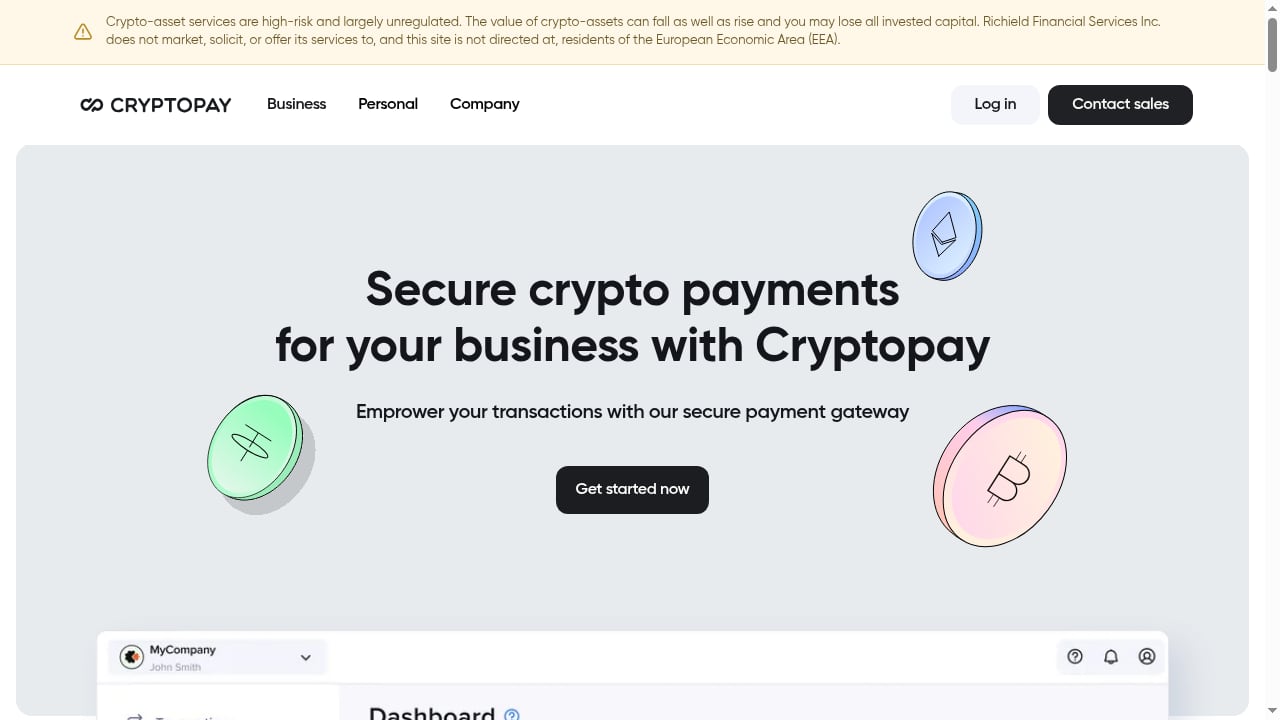
First viewport screenshot of Cryptopay Business | Accept and Send Crypto Payments as a Merchant.
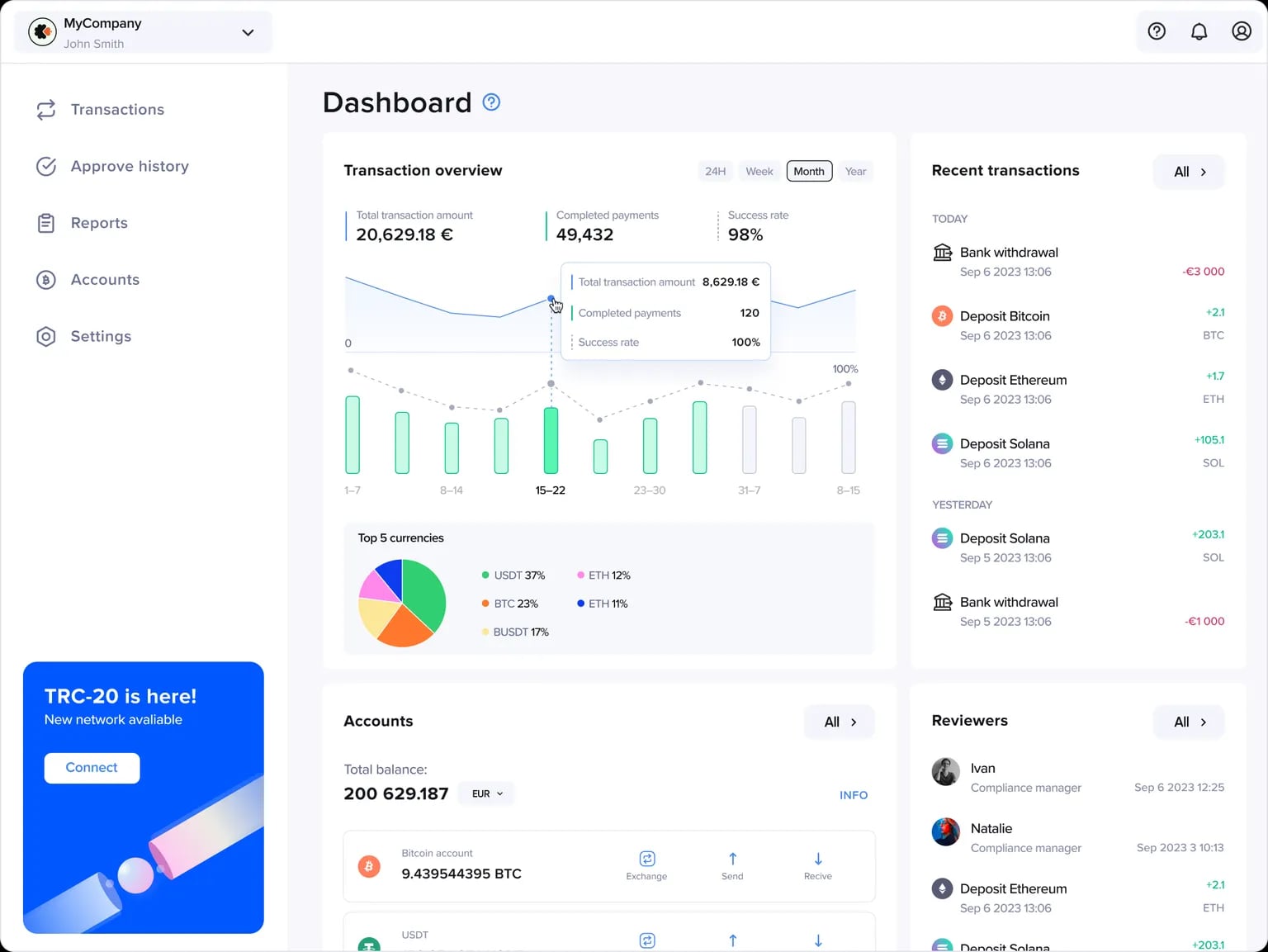
Cryptopay Business is the merchant-facing arm of Cryptopay, a platform that has operated since 2013. Its core proposition is a crypto payment gateway with fiat settlement. Merchants can accept 19 major cryptocurrencies, receive automatic withdrawals to a bank account, and access reporting and customer retention tools from a single dashboard.
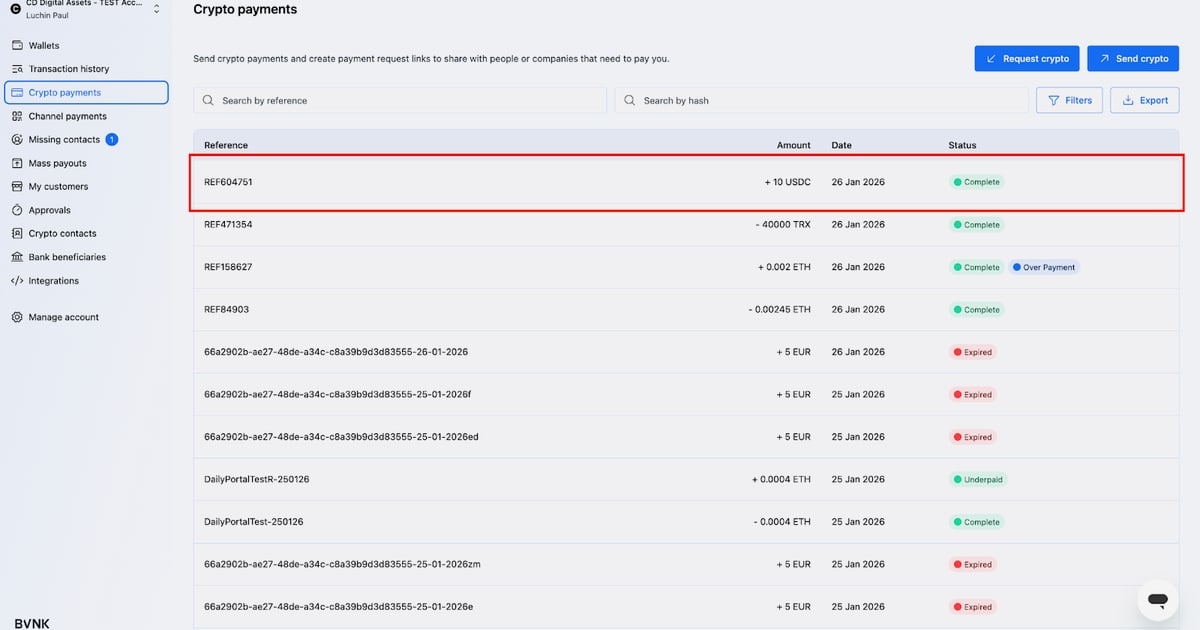
The product also includes mass crypto payouts. Businesses can pay salaries, contractors, or partners in crypto from a fiat wallet, without touching digital assets directly. This dual capability—accepting and sending crypto—distinguishes it from pure checkout-only gateways.
Ideal Users and Use Cases
Cryptopay Business is best suited to:
- E-commerce and SaaS companies that want to tap into crypto-holding customers without adding balance-sheet exposure.
- iGaming and digital services operating across borders where traditional card processing is expensive or restricted.
- Web3 and consulting businesses that already invoice in stablecoins or want to pay remote contributors in crypto.
- Companies with international contractors looking for cheaper, faster cross-border payouts than bank wires.
Typical use cases include adding a crypto checkout option to an existing store, paying a distributed team in USDC or BTC, and settling daily revenue into EUR, USD, or GBP.
Strengths
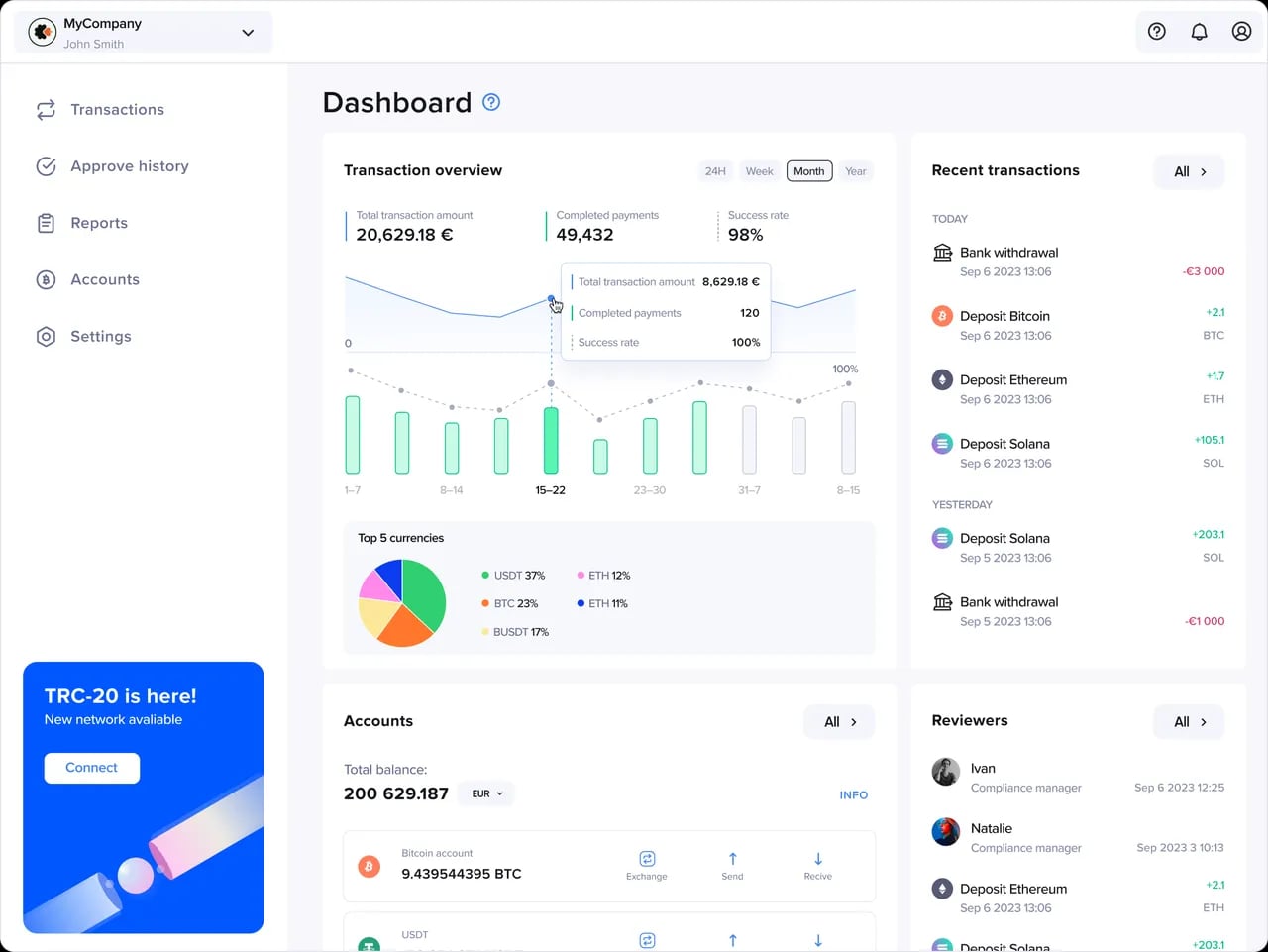
Manage your payments easily.
Fiat settlement without crypto exposure
The headline benefit is that merchants can stay 100% fiat. Crypto payments are converted in real time, and funds are withdrawn automatically to a bank account with next-day settlement. This removes the need for treasury management or price-risk hedging.
Broad asset coverage
Support for 19 major cryptocurrencies covers roughly 95% of the market by capitalization, according to Cryptopay. That includes Bitcoin, Ethereum, and USDC, which are the assets most customers actually hold.
No chargebacks
Crypto transactions are irreversible. For merchants in industries with high fraud or dispute rates, this is a meaningful operational advantage. It also means refunds must be handled manually, which is a trade-off.
Developer-friendly integration
The platform offers a hosted payment gateway, ready-to-use components for custom payment pages, and a documented API. The API supports invoice creation with parameters such as price amount, price currency, and pay currency, making it possible to build a tailored checkout flow.
Established track record
Cryptopay states it has been on the market for over 12 years, processed more than 8 million transactions yearly, and handled over $3 billion in annual volume, with zero platform hacks. These are self-reported figures, but the operating history is longer than most crypto payment startups.
Limitations and Trade-offs
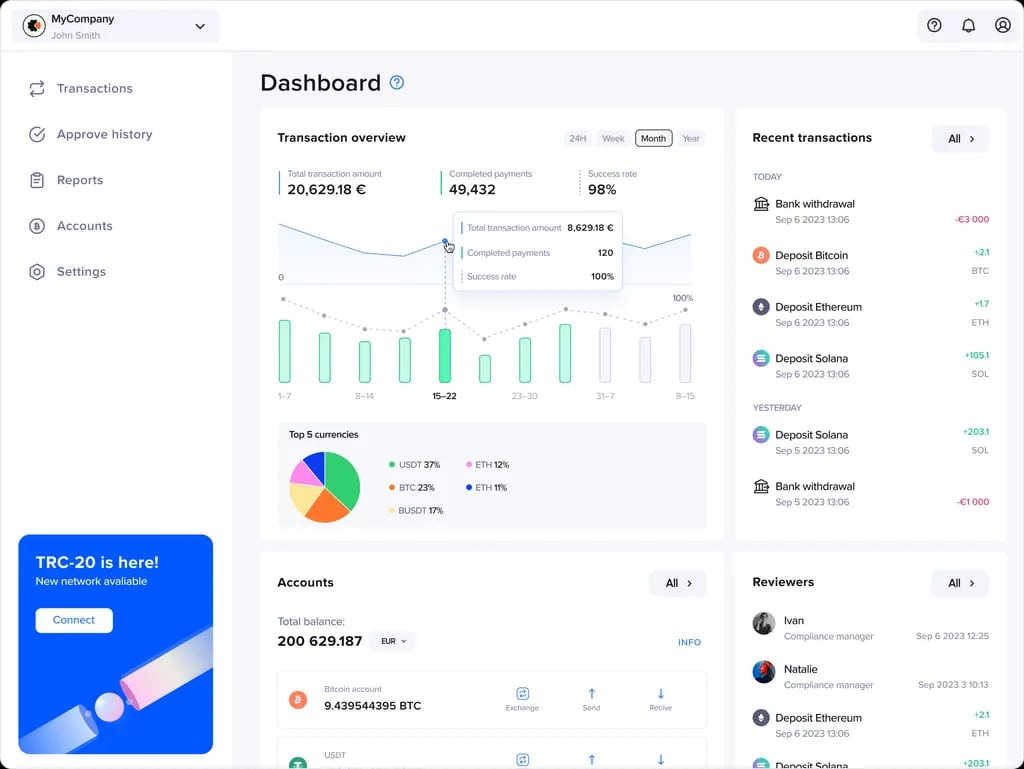
Manage your payments easily.
Crypto payments are still a niche share of checkout
Accepting crypto can attract new customers, but it will not replace cards for most consumer-facing businesses. The addressable audience is still a minority of buyers in most markets.
Irreversibility cuts both ways
No chargebacks is a benefit for merchants, but it removes a consumer protection mechanism. Businesses need clear refund policies and manual processes for disputes.
Pricing is not fully transparent upfront
Cryptopay Business does not publish a simple public fee table on its main business page. Pricing likely depends on volume, settlement currency, and whether you use payouts. You will need to request a quote to compare against alternatives.
Regulatory and banking dependencies
Fiat settlement depends on banking partners and local regulations. Availability of next-day settlement and supported currencies can vary by jurisdiction. Merchants in restricted regions may face onboarding friction.
Limited independent review depth
Public reviews of Cryptopay often focus on the consumer wallet and card products rather than the business gateway. Merchant-specific feedback is thinner, so due diligence should include direct references from similar businesses.
Pricing Signals
Cryptopay markets its business solution as cheaper than traditional payment processors, but does not list standard rates publicly. Based on the product context and typical crypto gateway models, expect:
- A percentage fee per processed transaction, often lower than card processing rates.
- Possible conversion spread when settling crypto to fiat.
- Payout fees for mass crypto payments, which may be lower than bank transfer costs.
- No monthly platform fee in many cases, though enterprise terms may differ.
Because pricing is quote-based, the only reliable way to evaluate cost is to request a tailored proposal and compare it with your current processor statement.
Setup and Onboarding
Cryptopay describes onboarding as simple and fast, with no technical skills required for the basic gateway. The typical flow is:
- Create a business account and complete KYC.
- Connect a bank account for fiat settlement.
- Choose an integration method: hosted payment page, ready-made components, or API.
- Configure accepted cryptocurrencies and settlement currency.
- Test with a small transaction before going live.
For teams with development resources, the API allows a fully custom payment page. For others, the hosted gateway and dashboard are sufficient.
How It Compares to Alternatives
Manage your payments easily.
If your priority is a corporate crypto card rather than a payment gateway, products like Cardfornia vs Reap vs Banxe cover stablecoin funding and team spend controls. If you need a broader fiat-crypto business account, a Banxe review may be more relevant. For businesses paying for AI tools with crypto, see the crypto card for AI subscriptions guide.
Cryptopay Business is closest to a classic payment gateway with crypto acceptance and fiat settlement. It is not a bank account, not a card program, and not a custody solution for long-term holdings. Evaluate it alongside other crypto payment processors if your main need is checkout conversion.
Decision Criteria
Choose Cryptopay Business if:
- You want to accept crypto without holding crypto.
- You need fiat settlement to a bank account.
- You operate in an industry where chargebacks are a problem.
- You want to pay international contractors in crypto from fiat.
- You have developer resources for API integration or are happy with a hosted page.
Look elsewhere if:
- You need published, standardized pricing before a sales conversation.
- Your customers are almost entirely card-first.
- You require a full business bank account with crypto features.
- You need a corporate card rather than a payment gateway.
Related reading
- OneSafe Neo-Banking Review: Global Business Fit & Fees - Evidence-based OneSafe review for global businesses: who it fits, real fee signals, onboarding, DAO and Web3 controls, limitations, and decision criteria.
- Cardfornia Login: Secure Access to Your Crypto Card Account - Learn how Cardfornia login works for corporate crypto card accounts, including access, security, troubleshooting, and how teams manage stablecoin spending.
Sources and further reading
- Cryptopay Reviews 2026: Details, Pricing, & Features - G2 - Cryptopay is a custodial digital asset brokerage platform. Its aim is to bridge the gap between the realms of digital currency and conventional finance.
- Cryptopay Review - IMPORTANT- Read Before Using [Europe Dominant] (2026) - Review of Cryptopay service. Is Cryptopay safe and reliable? We spend hours finding the truth behind Cryptopay.
- Cryptopay Business | Accept and Send Crypto Payments as a Merchant - Enjoy the benefits of Bitcoin and crypto payments while staying 100% fiat. Reach new customers, increase your revenue and save on fees
FAQ
Is Cryptopay Business safe for merchants?
Cryptopay reports over 12 years in operation, more than 8 million yearly transactions, and zero platform hacks. These are self-reported, so independent verification is limited. Standard due diligence applies.
Can I accept crypto and still receive fiat?
Yes. Cryptopay Business converts crypto payments in real time and settles to your bank account, typically next day. You do not need to hold digital assets.
Which cryptocurrencies are supported?
Cryptopay supports 19 major cryptocurrencies, including Bitcoin, Ethereum, and USDC, covering roughly 95% of the market by capitalization.
Does Cryptopay Business charge chargebacks?
No. Crypto transactions are irreversible, so chargebacks do not apply. Refunds must be handled manually.
How much does Cryptopay Business cost?
Pricing is not published publicly. Fees are likely volume-dependent and quoted on request. Compare a tailored quote against your current processor costs.
Can I pay contractors in crypto?
Yes. The mass payout feature lets you pay salaries and contractors in crypto from a fiat wallet, without touching digital assets directly.
Is there an API?
Yes. Cryptopay provides an API for creating invoices and building custom payment pages, with parameters for price amount, price currency, and pay currency.
Conclusion
Cryptopay Business is a mature, focused crypto payment gateway with a clear value proposition: accept crypto, settle in fiat, avoid chargebacks, and pay out in crypto without holding it. Its strengths are breadth of asset support, fiat settlement, developer tools, and a long operating history. Its main limitations are quote-based pricing, niche customer demand, and irreversibility trade-offs.
For merchants already seeing crypto demand or paying international contributors, it is worth a serious look. For businesses that need a card program or a full crypto business account, other products in the market will fit better. As always, request pricing and references before committing.
For broader context on how businesses use stablecoins beyond speculation, see Crypto Trading Explained: How It Works in 2026.