
Cardfornia vs Banqa vs Sparados: Which Corporate Card Wins?
Cardfornia vs Banqa vs Sparados: Which Business Spending Solution Fits Your Team?
Choosing the right corporate spending tool is critical when your business operates across digital assets and traditional finance. Three platforms—Cardfornia, Banqa, and Sparados—each approach business payments from a distinct angle. One is built for crypto-native teams scaling global ad spend and SaaS subscriptions. Another prioritizes self-custody of funds with a Visa Infinite card. The third focuses on automated expense management and financial workflows. This comparison breaks down where each platform excels, where they differ, and which scenarios they serve best.
Quick Comparison: Core Strengths at a Glance
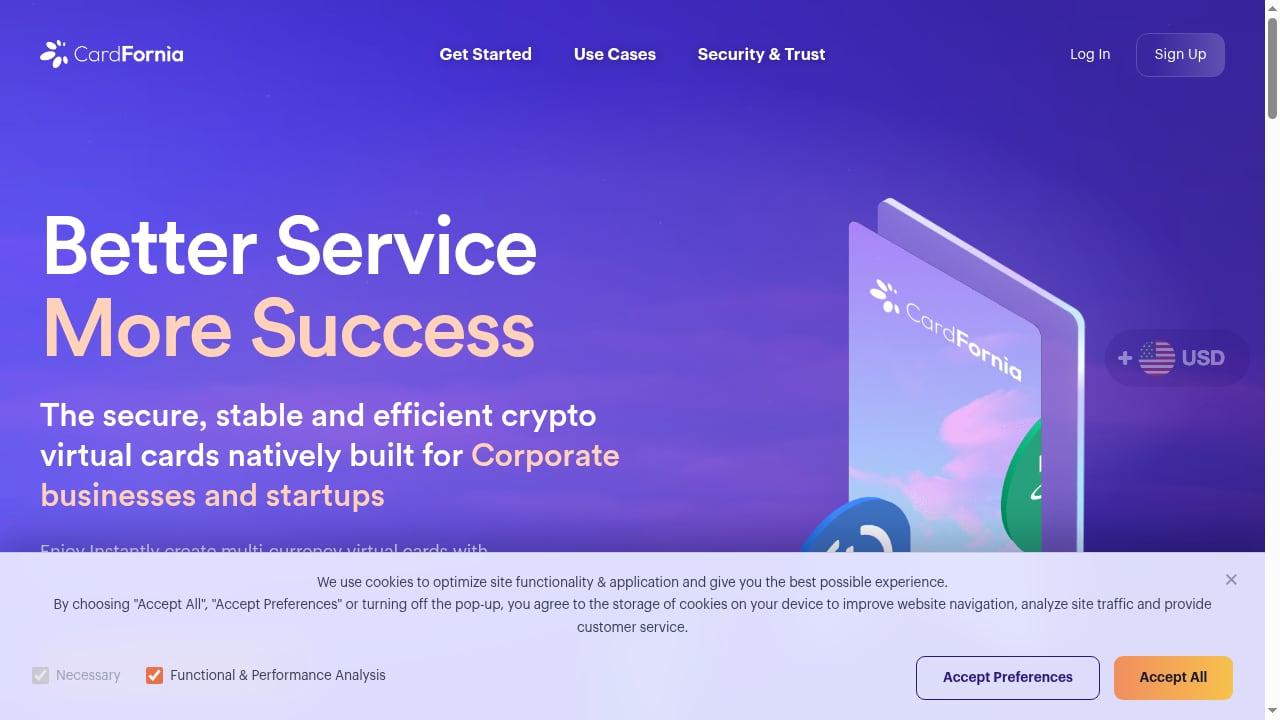
First viewport screenshot of Cardfornia | Corporate Crypto Payment Cards.
Before diving deep, here is how the three solutions align with common business needs.
| Criteria | Cardfornia | Banqa | Sparados |
|---|---|---|---|
| Primary Focus | Crypto corporate virtual cards for teams | Self-custody crypto spending card | Corporate expense management platform |
| Best For | Scaling ad spend, SaaS, and multi-currency operations with stablecoins | Individuals and businesses wanting full control of private keys | Finance teams automating expense reports and approvals |
| Card Type | Multi-currency virtual cards | Physical and virtual Visa Infinite card | Virtual corporate cards (EUR, USD, CHF) |
| Custody Model | Segregated accounts with third-party licensed custodians | Non-custodial wallet (user holds keys) | Traditional fiat-backed platform |
| Key Strength | High-limit cards for ad platforms, real-time currency exchange | Self-custody security, broad Visa acceptance | Automated receipt capture and accounting sync |
When Cardfornia Leads: High-Volume Crypto Spending and Team Control
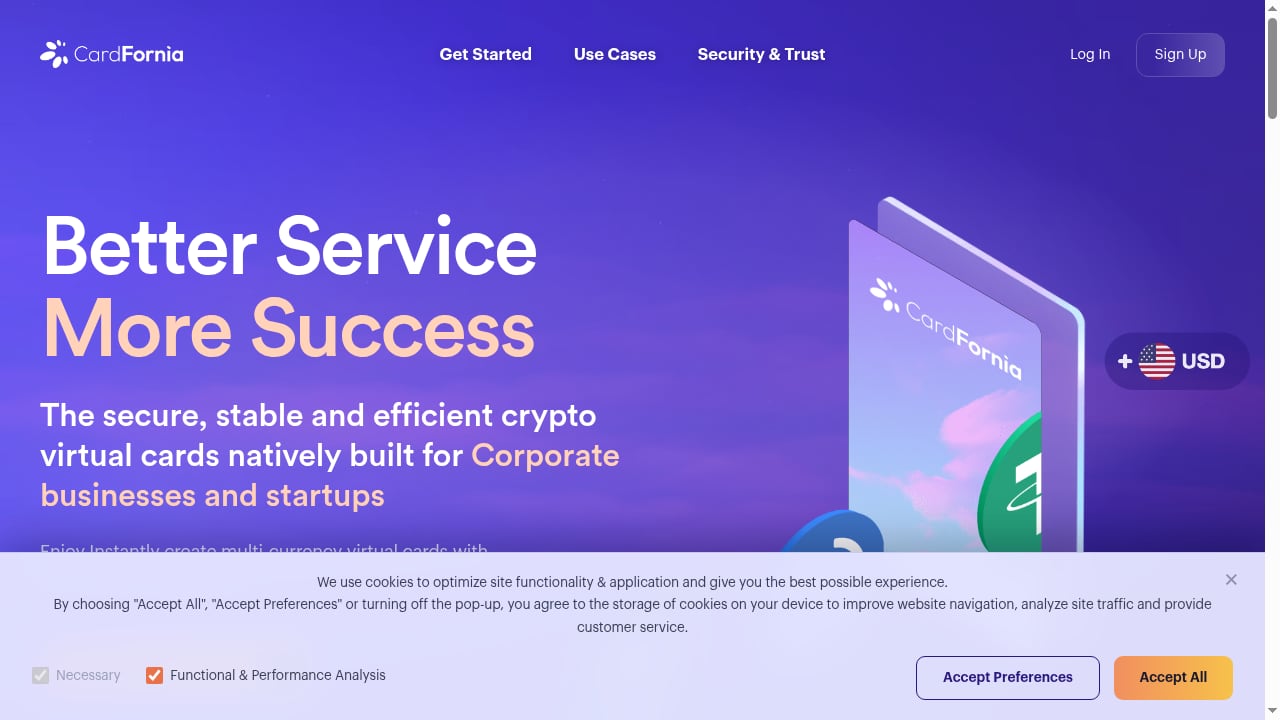
First viewport screenshot of Cardfornia | Corporate Crypto Payment Cards.
Cardfornia is purpose-built for organizations that hold stablecoins like USDT and USDC and need to deploy that capital across dozens of team members and vendors. Its architecture addresses specific pain points that generic corporate cards often miss.
Scaling Digital Advertising Without Account Bans
A persistent headache for media buyers is having ad accounts flagged or banned when a single payment method fails or triggers a fraud review. Cardfornia’s high-limit virtual cards let you issue unique card numbers for each ad account—Meta Ads, Google Ads, TikTok Ads—distributing risk. If one card encounters an issue, the others remain unaffected, keeping campaigns live. This is a supported advantage over Banqa and Sparados, which do not emphasize ad-spend-specific card issuance at the same scale.
Automatic Multi-Currency Settlement for SaaS
Paying for tools like AWS, Figma, or ChatGPT often involves currency conversion friction. Cardfornia settles transactions in the currency required by the merchant while drawing from a single stablecoin balance. The platform handles real-time exchange automatically, removing the need to pre-fund multiple currency wallets. For globally distributed teams, this simplifies reconciliation and reduces forex costs.
Fund Security Through Licensed Custodians
Cardfornia keeps client funds 100% in segregated accounts with third-party licensed custodians. The company never lends or invests these funds. Security practices follow ISO/IEC 27001 standards, and card-issuing activities run through regulated partners in Hong Kong, the UK, the US, and Canada. This regulated custody model provides a different risk profile compared to self-custody solutions.
For a deeper look at how Cardfornia handles stablecoin funding, read our guide on using Cardfornia with USDC.
Where Banqa Excels: Self-Custody and Direct USDC Spending
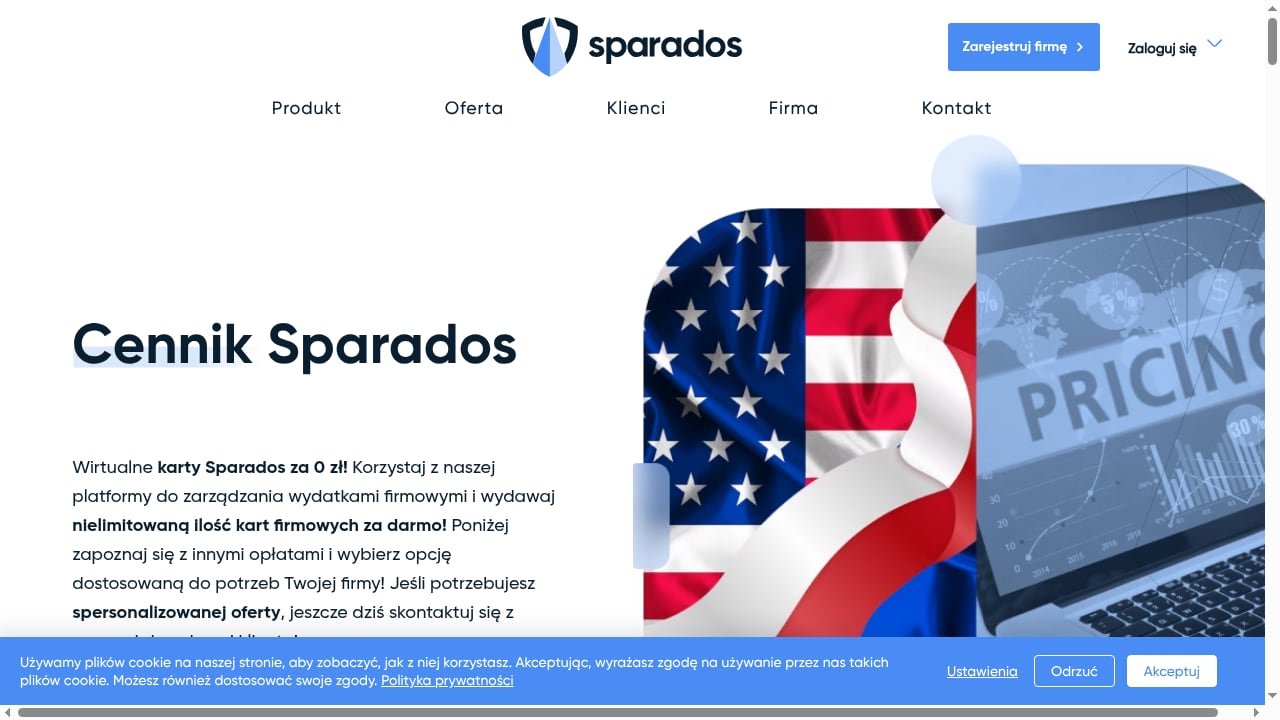
First viewport screenshot of Cennik Sparados | Przejrzyste plany i skalowalność.
Banqa takes a fundamentally different approach to crypto spending. Instead of depositing funds into a platform-managed account, you retain assets in your own non-custodial wallet. The Banqa Visa Infinite card draws against USDC held as collateral in that wallet.
Full Control of Private Keys
For businesses and individuals who prioritize the “not your keys, not your coins” philosophy, Banqa’s model is compelling. You never surrender custody of your USDC. The card interacts with your wallet on supported networks—Base, Arbitrum, and Ethereum—without requiring you to move funds to a centralized exchange or issuer. This reduces counterparty risk.
Broad Visa Acceptance with 0% Deposit Fees
Because Banqa is a Visa Infinite card, it works anywhere Visa is accepted, both online and in-store. The platform charges 0% deposit fees, which keeps costs predictable. Business plans include per-employee cards with spending limits, KYB verification, accounting exports, and MCC controls, making it viable for teams that want self-custody without sacrificing administrative oversight.
When Self-Custody Matters Most
Banqa suits organizations that already manage a multi-signature treasury and want spending to flow directly from that treasury without introducing a new custodian. DAOs, Web3 collectives, and privacy-conscious firms often fit this profile. The trade-off is that Banqa does not natively offer the same level of ad-spend optimization or multi-currency settlement automation that Cardfornia provides.
What Sparados Brings: Expense Management and Financial Automation
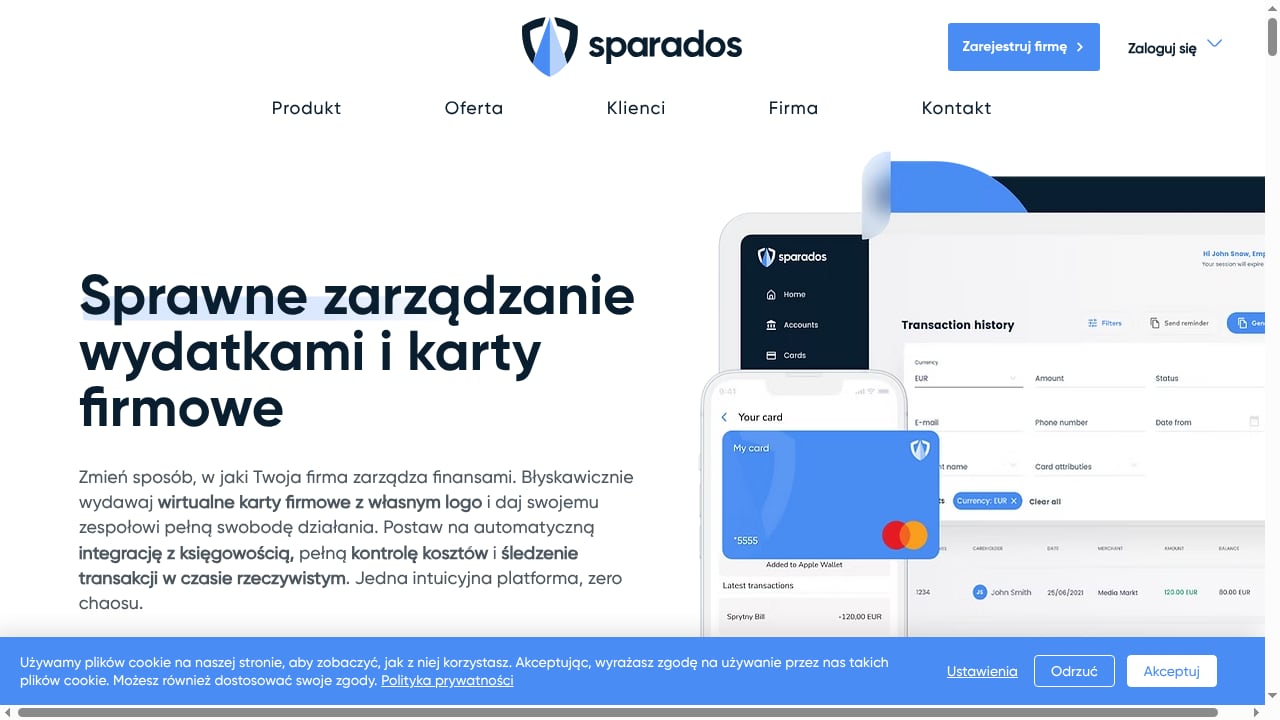
First viewport screenshot of Sparados | Zarządzanie finansami | Wirtualne karty dla firm i pracowników.
Sparados is not a crypto-native platform. It is a corporate expense management solution that issues virtual cards in EUR, USD, and CHF and wraps them with workflow automation.
Centralized Expense Tracking and Receipt Capture
Finance teams using Sparados can issue virtual cards instantly with custom limits and transaction controls. Every transaction triggers automatic receipt capture and categorization. Employees submit expenses through the platform, and managers approve them in a structured workflow. This eliminates manual expense report creation and reduces month-end chaos.
Accounting Integrations and Custom Branding
Sparados integrates with accounting systems to automate reconciliation. It also allows companies to brand virtual cards with their own logo—a small but useful touch for client-facing or department-specific cards. The platform includes billing and invoicing tools, plus lunch cards as an employee benefit option.
Pricing and User Limits
Sparados offers free virtual cards, with per-user fees applying beyond five users. This pricing model can be cost-effective for small teams but may scale less predictably for larger organizations compared to platforms with volume-based pricing.
Sparados does not support cryptocurrency funding or stablecoin settlement. It is a fiat-native tool, which makes it a strong alternative for businesses that do not hold digital assets but still need modern expense controls.
Head-to-Head: Choosing Based on Your Business Profile
Your choice depends on how your business holds funds and what spending patterns dominate your operations.
Crypto-Native Companies with High Ad Spend
If your treasury holds USDT or USDC and you spend heavily on digital advertising, Cardfornia’s high-limit virtual cards and multi-currency settlement provide direct operational advantages. The ability to issue unique cards per ad account reduces platform-level risk, and automatic currency conversion cuts manual forex work.
Organizations That Demand Self-Custody
If maintaining control of private keys is non-negotiable, Banqa is the stronger fit. You keep USDC in your own wallet and spend via Visa without introducing a custodial intermediary. Business features like per-employee cards and MCC controls add team-level management without compromising the self-custody model.
Fiat-Based Teams Automating Expense Workflows
For companies operating entirely in fiat currencies and seeking to replace manual expense reporting, Sparados delivers. Its receipt capture, approval workflows, and accounting integrations streamline finance operations. It is not designed for crypto spending, so teams holding digital assets would need a separate solution.
Hybrid Scenarios
Some businesses may use more than one tool. A crypto-native company might use Cardfornia for ad spend and SaaS while maintaining a Banqa card for discretionary team expenses from a shared treasury. A fiat-based team might pair Sparados for expense management with a separate crypto card for occasional digital asset spending. The platforms are not mutually exclusive.
For a broader comparison of crypto corporate card options, see our Cardfornia vs Banqa vs Cryptopay Business analysis.
Practical Examples: Which Card Fits the Task?
Here are three common spending scenarios and the best-aligned platform for each.
Scenario 1: Scaling Meta Ads Across 20 Client Accounts
A marketing agency runs campaigns for 20 clients, each requiring a separate payment method to avoid cross-account bans. Cardfornia allows the agency to issue 20 unique virtual cards from a single USDC balance, set individual spending limits, and settle in the currencies Meta requires—all without moving funds between multiple bank accounts.
Scenario 2: DAO Treasury Spending with Full Key Control
A DAO holds USDC in a multi-signature wallet on Arbitrum and needs to pay for conference sponsorships, software tools, and team travel. Banqa connects directly to that wallet, letting the DAO spend without transferring custody to a third party. The DAO can issue cards to core contributors with limits tied to budget approvals.
Scenario 3: Automating Expense Reports for a 30-Person Consultancy
A consulting firm with 30 employees struggles with manual expense reports and delayed reimbursements. Sparados gives each employee a virtual card with predefined limits, captures receipts automatically, and syncs transactions to the firm’s accounting software. Finance managers approve expenses in real time rather than at month-end.
Related reading
- Cardfornia vs BVNK: Crypto Corporate Cards or Stablecoin Rails? - Compare Cardfornia and BVNK for business spending. See why Cardfornia’s corporate virtual cards beat BVNK’s infrastructure for team expense control, ad spend, and SaaS.
- Developer Crypto Virtual Card: Build & Scale with APIs - Explore how developer crypto virtual cards and issuing APIs let fintechs, Web3 startups, and platforms embed branded cards, automate spending, and scale fast.
- Top 10 Crypto Accounting & Treasury Software 2026 - Compare the 10 best crypto accounting and treasury software platforms for 2026. In-depth reviews for Web3 finance teams, DAOs, and enterprises managing digital assets.
Sources and further reading
- Banana production in the United States - From Wikipedia, the free encyclopedia
- Loco Beach Coconuts vs Savannah Bananas at Petco Park in San Diego, California! - Enjoy the videos and music you love, upload original content, and share it all with friends, family, and the world on YouTube.
- Client Challenge - A required part of this site couldn’t load. This may be due to a browser extension, network issues, or browser settings. Please check your connection, disable any ad blockers, or try using a different browser.
Frequently Asked Questions
Can I use Cardfornia if I don’t hold cryptocurrency?
Cardfornia is designed for businesses that fund accounts with stablecoins like USDT or USDC. If your business does not hold or transact in digital assets, a fiat-native platform like Sparados may be a more straightforward fit.
Does Banqa support business expense controls like spending limits?
Yes. Banqa’s business plans include per-employee cards with spending limits, KYB verification, accounting exports, and MCC controls. These features allow teams to manage spending while maintaining self-custody of funds.
Is Sparados available for companies outside of Europe?
Sparados supports payments in EUR, USD, and CHF, and serves businesses in multiple jurisdictions. Check the platform’s current coverage for specific country availability, as it may differ from crypto-native platforms that operate under different regulatory frameworks.
How does Cardfornia protect client funds?
Cardfornia holds client funds in segregated accounts with third-party licensed custodians. The company does not lend or invest client assets. Security practices align with ISO/IEC 27001 standards, and card-issuing partners hold regulatory approvals in Hong Kong, the UK, the US, and Canada.
Can I issue branded virtual cards with these platforms?
Sparados offers custom card branding with company logos. Cardfornia and Banqa focus on functional card issuance for team spending rather than card-face branding, though both support naming and labeling cards for internal tracking.
Making the Final Decision
Cardfornia, Banqa, and Sparados solve different problems. Cardfornia optimizes crypto corporate spending for ad-heavy, globally distributed teams. Banqa preserves self-custody while enabling broad Visa spending from a non-custodial wallet. Sparados automates fiat expense management with receipt capture and accounting integrations.
Assess your treasury structure, spending patterns, and compliance requirements. If stablecoin funding and ad spend scalability matter most, Cardfornia’s platform aligns with those needs. If self-custody is the priority, Banqa delivers. If you need to fix expense reporting workflows in a fiat environment, Sparados is the tool for the job.
For teams evaluating crypto-native infrastructure more broadly, our Nuvei review examines global payment rails that may complement your corporate card strategy.