
Top 10 Crypto Accounting & Treasury Software 2026
Top 10 Crypto Accounting & Treasury Software Products for 2026
Managing a corporate treasury that holds digital assets isn't a simple extension of traditional finance. It demands purpose-built software that can reconcile on-chain transactions, track cost basis across thousands of assets, handle DeFi yields, and produce audit-ready financial statements that sync with your general ledger. In 2026, the market has matured beyond basic tax calculators into a landscape of specialized platforms designed for the monthly close, multi-entity consolidation, and the unique workflows of crypto-native organizations.
This guide evaluates the top 10 crypto accounting and treasury software products that are genuinely built for this category. We assessed each platform against five criteria that matter most to finance teams, CFOs, and accountants operating in the digital asset space: general ledger integration depth, on-chain data fidelity, treasury and payment workflow support, audit and compliance readiness, and scalability for institutional complexity. Whether you're a DAO managing a multi-signature treasury, a fintech embedding accounting workflows, or an enterprise holding crypto on your balance sheet, this comparison will help you find the right fit.
How We Evaluated These Platforms
First viewport screenshot of Crypto Accounting For Web3 Finance Teams — Tokenbooks.
Before diving into the rankings, here are the specific capabilities we used to score each product:
- ERP and Accounting System Sync: The depth of integration with major general ledgers like Xero, QuickBooks, NetSuite, and SAP. We looked for native journal entry creation, not just flat CSV exports.
- Blockchain and DeFi Coverage: The breadth of supported networks, the ability to automatically detect chains, and the accuracy of handling complex DeFi transactions including staking, liquidity provision, and lending.
- Treasury and Payment Operations: Native support for crypto and fiat payment workflows, multi-signature wallet governance, and real-time cash visibility across wallets and exchanges.
- Audit Trail and Compliance: Immutable audit logs, permissioned user roles, cost-basis tracking methods (FIFO, LIFO, HIFO), and SOC 2 or equivalent certifications.
- Enterprise Readiness: Multi-entity support, API-first architecture for custom integrations, and the ability to handle high transaction volumes without breaking the close process.
1. Tokenbooks
Best for: Web3 finance teams, DAOs, and fintechs needing an auditable, AI-native accounting core
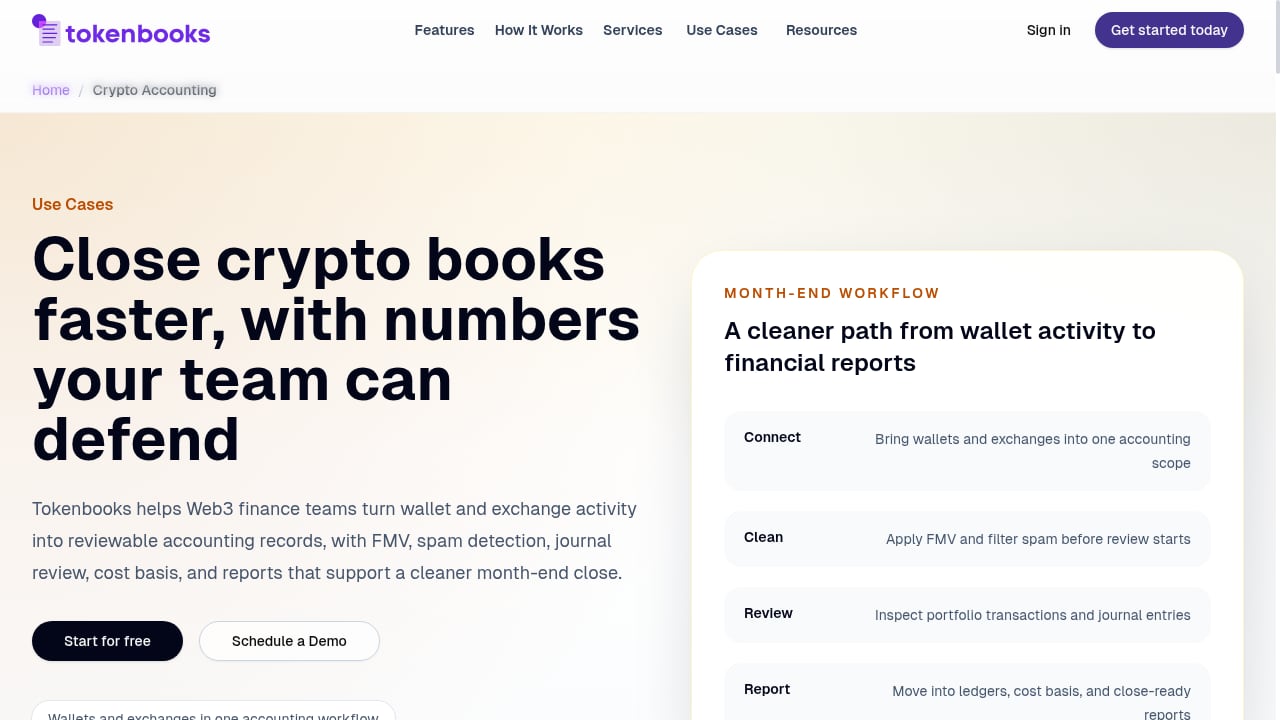
Tokenbooks is an enterprise-grade crypto accounting and treasury operations platform purpose-built for organizations that live on-chain. It doesn't just track transactions; it creates a fully auditable ledger that syncs wallets, exchanges, and bank accounts into a unified financial system. Finance teams can pay in crypto or fiat, close books faster, and maintain a permissioned period close that auditors will respect.
What sets it apart:
- Automated Wallet Synchronization: Tokenbooks connects directly to your wallets and exchanges, pulling in transactions and automatically resolving fair market value (FMV) while filtering out spam and dust attacks before they hit your books.
- Reviewable Journal Entries: Every transaction becomes a reviewable journal entry with a full audit trail. Cost basis tracking and close-ready reports—balance sheets, P&L statements, and trial balances—are generated natively.
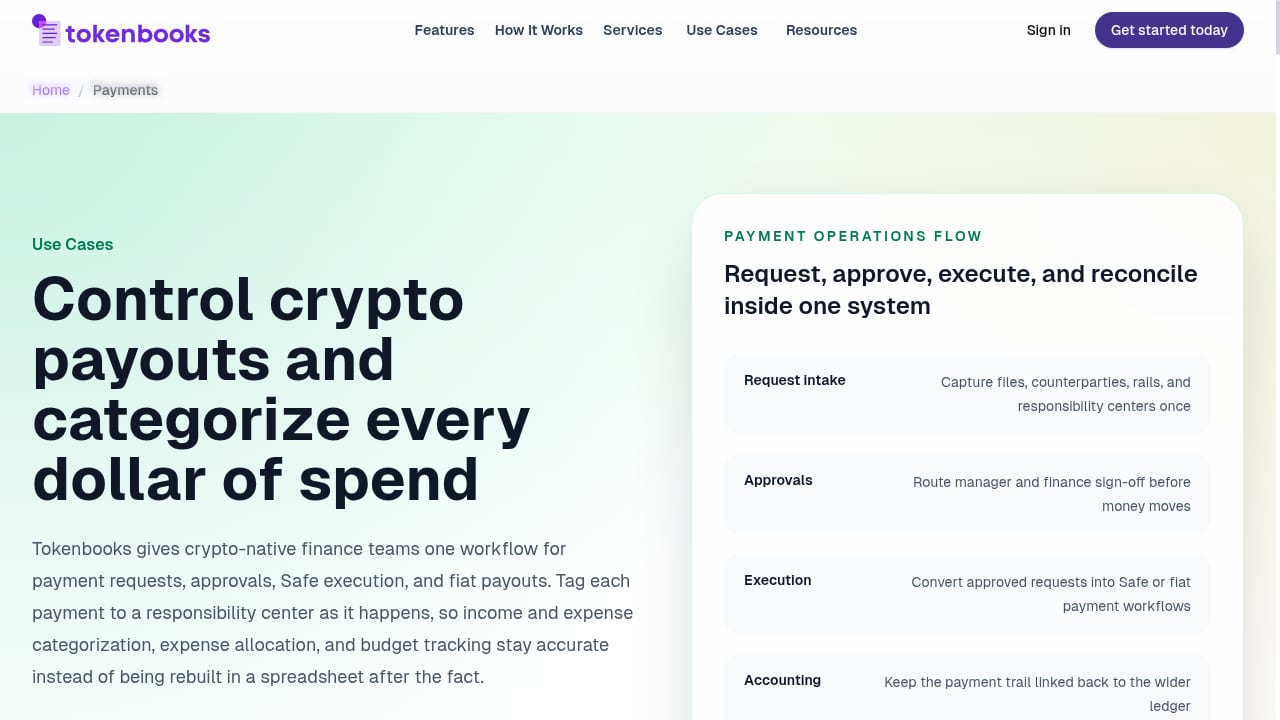
- Crypto and Fiat Payment Workflows: The platform supports payment approval routing, Safe-based execution for multi-signature governance, and budget tracking by responsibility center. This bridges the gap between accounting and operational treasury.
- AI-Native Architecture: Tokenbooks offers a first-party MCP server and a public REST API, allowing AI agents and external products to interact with the accounting system. Your team can query financial data through tools like Claude and ChatGPT while maintaining a complete, immutable audit trail.
Tokenbooks is ideal for crypto-native organizations that have outgrown spreadsheets and generic accounting software but need a solution that understands on-chain logic, multi-sig operations, and the demands of a monthly close in Web3.
2. Cryptio
Best for: Enterprise finance teams, large DAOs, and multi-entity structures
Cryptio has been a benchmark for institutional crypto accounting since 2020. Its strength lies in genuine ERP breadth, integrating natively with NetSuite, SAP, Oracle, Xero, and QuickBooks. For organizations with complex multi-entity, multi-currency structures, Cryptio provides an immutable audit trail and sophisticated token classification workflows that scale.
Key strengths:
- True enterprise ERP coverage across five major systems.
- Multi-entity consolidation designed for holding companies and large protocols.
- Institutional-grade audit trail documentation.
Considerations:
- Full portfolio onboarding is required, which can be heavy for teams wanting a selective wallet approach.
- DeFi classification accuracy can vary with highly complex protocol interactions.
- Pricing starts around $500/month and scales significantly for enterprise deployments.
3. Bitwave
Best for: US-based finance teams needing integrated accounting and tax
Bitwave combines a powerful crypto subledger with tax workflow automation on a single platform. Its NetSuite integration is among the deepest in the category, and it supports all major cost-basis accounting methods including FIFO, LIFO, HIFO, and specific identification. SOC 2 Type 2 certification makes it a strong choice for compliance-focused US organizations.
Key strengths:
- Unified accounting and tax compliance reduces tool fragmentation.
- Best-in-class NetSuite integration with robust staking and mining income classification.
- All major cost-basis methods supported.
Considerations:
- Pricing starts at $500/month and can reach tens of thousands annually for enterprise contracts.
- Primarily optimized for the US market; less suited for UK, Swiss, or EU compliance frameworks.
- Heavier implementation than lighter subledger tools.
4. Breezing
Best for: Accounting firms and SMBs using Xero or QuickBooks
Breezing is the most tightly integrated crypto subledger for mid-market accounting workflows. Unlike tools that push a flat export, Breezing creates double-sided journal entries, closes AP/AR invoices natively from on-chain payments, and allows you to update a posted journal entry without deleting and reposting it—a critical capability during a high-pressure monthly close.
Key strengths:
- Native invoice closure directly in Xero or QuickBooks when paying with USDC or ETH.
- Automatic blockchain detection from wallet addresses, with spam filtering.
- DeFi rewards accrued on an accrual basis for proper period matching.
- SOC 2 certified with 40+ blockchains and 15+ exchange integrations.
Considerations:
- Optimized for Xero, QuickBooks Online, and Bexio; not the right fit for NetSuite or SAP workflows.
- Pricing ranges from $29/month to $2,917/month based on transaction volume.
5. SoftLedger
Best for: Crypto-native companies wanting a native digital asset general ledger
SoftLedger takes a fundamentally different approach: it is the accounting system. Rather than syncing to an external ERP, its general ledger has native crypto asset support, real-time pricing, and multi-entity consolidation built in. The API-first architecture makes it highly extensible for fintechs and protocols embedding accounting directly into their products.
Key strengths:
- No external ERP required; real-time crypto pricing is embedded in the ledger.
- Multi-entity and multi-currency by design.
- Developer-friendly API for custom integrations.
Considerations:
- Replacing an existing accounting system is a significant operational transition.
- Not viable for accounting firms managing clients on different platforms.
- Starts around $500/month.
6. Cryptoworth
Best for: Mid-market companies with high-volume reconciliation needs
Cryptoworth has expanded aggressively, holding the highest G2 rating in the crypto accounting category as of early 2026. With over 1,000 supported blockchain and exchange sources, it excels at automating high-volume reconciliation for growing companies running on NetSuite, QuickBooks, or Xero.
Key strengths:
- G2's highest-rated crypto accounting platform.
- Massive integration library covering 1,000+ data sources.
- Strong automation for teams processing 1,000–50,000 monthly transactions.
Considerations:
- Less depth in Xero/QuickBooks-specific workflows like native invoice closure compared to Breezing.
- Pricing starts around $300/month and scales with transaction volume.
7. Tres Finance (Now Part of Fireblocks)
Best for: Existing Fireblocks custody clients
Fireblocks acquired Tres Finance in early 2026, integrating its CFO-focused financial reporting dashboards directly into the Fireblocks custody platform. For organizations already using Fireblocks to secure their digital assets, this creates a natural extension for treasury visibility, reporting, and reconciliation.
Key strengths:
- Seamless integration for Fireblocks custody users.
- Strong financial visibility and reporting dashboards.
Considerations:
- No longer available as a standalone product; roadmap is driven by Fireblocks' institutional priorities.
- Not a realistic option for teams not already committed to the Fireblocks ecosystem.
8. Ledgible
Best for: US-based CPA firms managing multi-client crypto portfolios
Ledgible is purpose-built for professional accounting firms. It includes a firm dashboard, client management workflows, and direct integrations with major professional tax platforms like UltraTax CS, Lacerte, Drake Tax, and CCH Axcess. White-label reporting options make it a strong choice for firms offering branded crypto accounting services.
Key strengths:
- Multi-client workflow designed specifically for CPA firms.
- Direct integrations with professional tax preparation software.
- Strong IRS compliance reporting.
Considerations:
- Primarily focused on the US market with limited international compliance coverage.
- Better suited for tax workflow than continuous monthly accounting; lighter ERP integration depth.
9. CoinTracker Business
Best for: Small businesses and freelancers with simple crypto needs
CoinTracker evolved from a popular personal portfolio tracker. The business tier adds multi-wallet aggregation and some accounting-adjacent features, but it remains fundamentally a tax-first tool rather than a true accounting subledger. It's a pragmatic starting point for very small operations that need basic capital gains tracking across a few wallets and exchanges.
Key strengths:
- Familiar interface for users already tracking personal crypto.
- Affordable entry point for freelancers and micro-businesses.
Considerations:
- Lacks the double-entry journal, invoice matching, and ERP integration depth required for a genuine monthly close.
- Not suitable for organizations with material DeFi activity or audit requirements.
10. myDiapason Treasury
Best for: Large enterprises managing traditional and digital assets side-by-side
While myDiapason is primarily a traditional treasury management system, its modular architecture—covering liquidity, payments, risk, investments, and guarantees—makes it relevant for enterprises that are adding digital assets to an otherwise conventional treasury portfolio. It centralizes multi-bank, multi-entity, multi-currency operations with real-time visibility.
Key strengths:
- Comprehensive TMS modules for cash management, FX risk, and investment portfolio tracking.
- Strong multi-bank connectivity and payment validation workflows.
Considerations:
- Digital asset support is not native; on-chain reconciliation would require custom integration or a complementary crypto subledger.
- Best suited for organizations where crypto is a small portion of a much larger, traditional treasury operation.
Bridging Accounting and Operational Spending
Top 10 Crypto Accounting & Treasury Software 2026 - How to Choose the Right Crypto Accounting Software.
A common challenge for crypto-native businesses is the gap between on-chain accounting and real-world operational spending. While the platforms above excel at ledgering and financial reporting, finance teams also need to pay for SaaS subscriptions, digital advertising, and global contractor invoices using their stablecoin holdings. This is where a corporate crypto card platform becomes a critical complementary tool.
For example, Cardfornia provides a corporate virtual card platform that lets businesses fund a single account with USDC or USDT and issue multi-currency cards to teams at scale. When integrated thoughtfully, a platform like Cardfornia can feed clean, categorized spending data into your accounting software of choice, closing the loop between treasury management and day-to-day operations. For a deeper look at how to structure this workflow, see our guide on how to segregate spending by card for smarter budgeting.
How to Choose the Right Crypto Accounting Software
First viewport screenshot of Crypto Payments With Responsibility Center Budget Tracking — Tokenbooks.
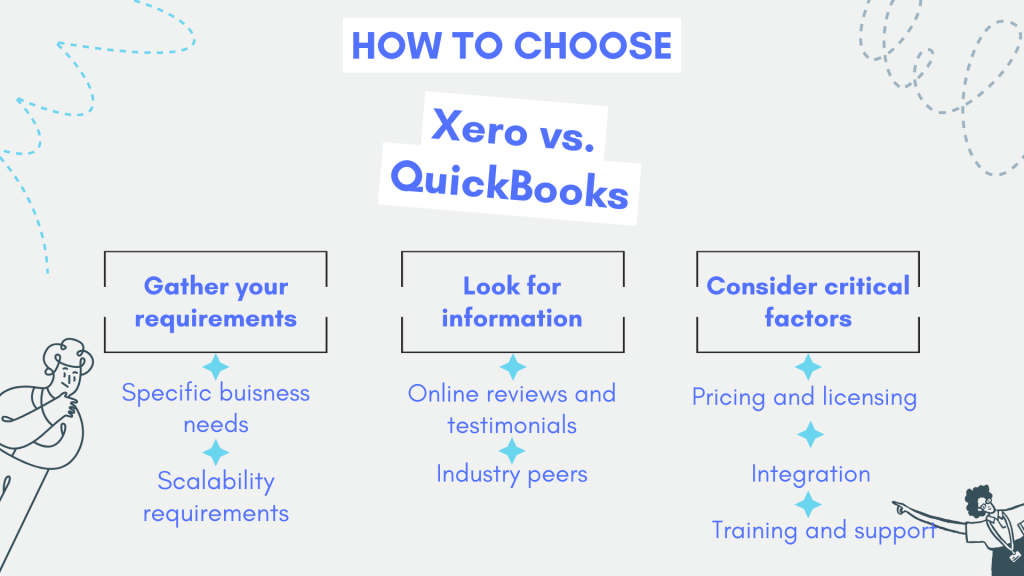
Your selection should be driven by three primary factors:
- Your Accounting System: If you're deeply embedded in Xero or QuickBooks, Breezing or Tokenbooks will provide the tightest native integration. For NetSuite or SAP, Cryptio and Bitwave are the stronger contenders. If you want to replace your GL entirely, SoftLedger is the architectural play.
- Transaction Complexity: Simple spot trades and transfers are handled well by most tools. If your organization engages in DeFi yield farming, liquidity provision, or staking across multiple protocols, prioritize platforms with proven accrual-based income recognition and automatic spam filtering, like Tokenbooks or Breezing.
- Operational Treasury Needs: If you need to combine accounting with payment approval workflows, multi-sig governance, and real-time cash visibility, look for a platform that treats treasury operations as a first-class feature. Tokenbooks is purpose-built for this convergence. For teams that need to spend stablecoins directly on business expenses, pairing your accounting software with a corporate card solution like Cardfornia creates a complete operational stack. You can learn more about funding such cards with stablecoins in our guide to using Cardfornia with USDC.
Related reading
- Cardfornia vs Banqa vs Cryptopay Business: 2026 Comparison - Compare Cardfornia, Banqa, and Cryptopay Business for crypto corporate spending. See which fits your business: virtual cards, self-custody, or payment gateway.
- Cardfornia vs Banxe: Which Crypto Business Card Wins in 2026? - Compare Cardfornia and Banxe for crypto business spending. See why Cardfornia’s stablecoin virtual cards beat Banxe for corporate control, ad spend, and SaaS.
Sources and further reading
- Top 10 Treasury Management Systems for 2026: AI-Powered Intelligence Meets Proven Excellence - Expert treasury insights on treasury management systems. Practical guidance and best practices for corporate finance teams from Ripple Treasury.
- Best Treasury Management Systems Reviews 2026 | Gartner Peer Insights - Find the top Treasury Management Systems with Gartner. Compare and filter by verified product reviews and choose the software that’s right for your organization.
- Best Crypto Accounting Software for Businesses in 2026 - Compare 8 top crypto accounting tools for accountants and finance teams. Find software that syncs with Xero and QuickBooks, handles DeFi, and closes the books cleanly.
Frequently Asked Questions
What is the difference between crypto accounting software and crypto tax software?
Crypto tax software (like Koinly or CoinLedger) calculates capital gains for annual personal tax filing. Crypto accounting software creates double-entry journal entries, syncs continuously with a general ledger, handles accrual-based DeFi income, and supports the monthly close process required by businesses.
Can I use a traditional treasury management system for crypto?
Traditional TMS platforms like Kyriba or SAP S/4HANA Treasury are not designed to reconcile on-chain transactions, handle DeFi protocols, or track cost basis across thousands of tokens. You'll need either a crypto-native platform or a hybrid approach that pairs a traditional TMS with a dedicated crypto subledger.
What should DAOs look for in a treasury management tool?
DAOs should prioritize multi-signature wallet support, transparent on-chain audit trails, and the ability to produce financial reports that satisfy community governance requirements. Platforms like Tokenbooks and Cryptio are built with these multi-entity, multi-signer workflows in mind.
How do I handle paying business expenses with stablecoins?
Many crypto accounting platforms can record stablecoin payments, but executing those payments to vendors who don't accept crypto requires a bridge. Corporate crypto card platforms like Cardfornia allow you to fund virtual cards with USDC or USDT and spend with any merchant that accepts traditional cards, while maintaining clean transaction records for your accounting system.
Is it safe to connect my wallets to accounting software?
Reputable platforms use read-only API connections to wallets and exchanges. They cannot initiate transactions or move funds. Always verify that the platform is SOC 2 certified or holds equivalent security attestations, and review the specific permissions you're granting during setup.
Conclusion
The crypto accounting and treasury software category in 2026 is no longer a patchwork of tax calculators and spreadsheets. It's a maturing ecosystem of platforms that understand the full lifecycle of digital assets—from on-chain transaction to audited financial statement. Tokenbooks leads this list for its deep convergence of accounting, treasury operations, and AI-native design, making it the strongest choice for Web3 finance teams that need an enterprise-grade, auditable ledger. Cryptio and Bitwave remain the benchmarks for traditional ERP integration at scale, while Breezing and SoftLedger offer specialized approaches for mid-market firms and crypto-native general ledger needs.
The right choice depends on your existing ERP, the complexity of your on-chain activity, and whether you need a pure accounting tool or a platform that also manages payment workflows. For many organizations, the optimal setup will pair a dedicated accounting platform with a complementary spending solution like Cardfornia, creating a seamless flow from treasury management to operational execution.