
Cardfornia vs Banqa vs Wirex: 2026 Crypto Card Comparison
Cardfornia vs Banqa vs Wirex: Which Crypto Card Fits Your Business in 2026?
Crypto-native companies rarely struggle to hold digital assets. They struggle to spend them. Paying for AWS, Meta Ads, or a last-minute flight with stablecoins still runs into the same wall: most vendors want fiat, and most finance teams want receipts, limits, and audit trails.
Cardfornia, Banqa, and Wirex all promise to close that gap, but they approach it from different directions. One is built for corporate teams funded by stablecoins, one is built around self-custody, and one is a mature multi-currency platform with millions of consumer users. This comparison breaks down where each one genuinely fits.
Quick Comparison at a Glance
First viewport screenshot of 5 Habits That Help Prevent Payment Mistakes.
| Criteria | Cardfornia | Banqa | Wirex |
|---|---|---|---|
| Primary audience | Corporate businesses and startups | Individuals and small business teams | Consumers, businesses, and builders |
| Custody model | Segregated accounts with licensed third-party custodians | Self-custody, user holds private keys | Custodial account held by Wirex |
| Funding asset | USDT, USDC stablecoins | USDC collateral in your own wallet | Crypto and fiat mix in Wirex account |
| Card type | Multi-currency virtual cards issued at scale | Visa Infinite card, physical and virtual | Visa and Mastercard, physical and virtual |
| Team card controls | Real-time control over operating expenses | Per-employee cards with spending limits | Business features, more limited than dedicated corporate platforms |
| Best fit | Crypto companies scaling team spend | Users who prioritize key ownership | Users who want one app for spend, exchange, and earn |
Where Cardfornia Is Built to Win
First viewport screenshot of Crypto.
Cardfornia is a Singapore-based fintech platform that issues crypto virtual cards specifically for corporate businesses and startups. The design assumption is that a company, not an individual, is doing the spending — and that assumption shows up in the product.
Stablecoin funding into one operating account
A business funds a single account with stablecoins such as USDT and USDC, then issues multi-currency virtual cards to teams at scale. That structure matters for companies that hold treasury in stablecoins and want to avoid converting everything to fiat before every purchase.
High-limit cards for advertising spend
One of the more practical features is high-limit cards aimed at ad spend. Anyone who has watched a Meta Ads or Google Ads account get flagged after a payment failure knows why this matters: reducing declined charges reduces the risk of account bans and disrupted campaigns. Cardfornia explicitly positions high-limit cards for ad spend to lower that risk.
Real-time control over operating expenses
Finance teams get real-time visibility and control rather than waiting for month-end reconciliation. Combined with automatic multi-currency settlement for SaaS subscriptions and real-time currency exchange for cross-border transactions, this is a workflow built for companies paying vendors in several currencies every month.
Security and fund transparency
Client funds are held 100% in segregated accounts with third-party licensed custodians and are never lent or invested. Security practices are guided by ISO/IEC 27001 standards, and payment, custody, and card-issuing activities run through licensed partners with regulatory approvals across jurisdictions including Hong Kong, the UK, the US, and Canada. For a finance lead choosing where company money sits, that transparency is a real selection criterion.
If you are still mapping the category, the guide to corporate crypto expense cards covers how stablecoin-funded team cards work and what to check before issuing them.
Where Banqa Is Strong
Banqa takes the opposite architectural bet, and for some users it is the better one.
Self-custody as the core feature
Banqa is a self-custody Visa Infinite card. The card is backed by USDC held as collateral in the user's own non-custodial wallet, so the user retains full control of their private keys. If your main concern is that no third party ever holds your funds, this is the defining advantage — and it is a legitimate one.
No deposit fees and multi-network support
Banqa advertises 0% deposit fees, with only network gas costs, and supports multiple networks including Base, Arbitrum, and Ethereum. It also works anywhere Visa is accepted, with Apple Pay and Google Pay support and 24/7 customer support.
Business plans with employee controls
Banqa is not consumer-only. It offers business plans with per-employee cards, spending limits, KYB verification, accounting exports, and MCC controls. For a small team that wants self-custody plus basic spend governance, that combination is hard to match.
No token staking required
Unlike platforms that gate higher rewards behind a native token, Banqa does not require staking any token to unlock the card or its features. You fund it directly with USDC.
Where Wirex Is Strong
First viewport screenshot of Case Study.
Wirex is the most established of the three, and its maturity is its advantage.
One platform for spend, exchange, and earn
Wirex bridges traditional finance and crypto with a multi-currency crypto wallet, physical and virtual cards backed by Visa and Mastercard, an integrated exchange, and interest-earning X-Accounts for both crypto and fiat. If you want a single app where you convert stablecoins into spendable fiat, send international transfers, and earn on idle balances, Wirex covers all of it.
Scale and card network relationships
Wirex is trusted by over 7 million users and is supported by principal memberships with Visa and Mastercard. That scale translates into broad acceptance and a long track record — useful when you want a provider that has already weathered multiple market cycles.
Consumer, business, and builder segments
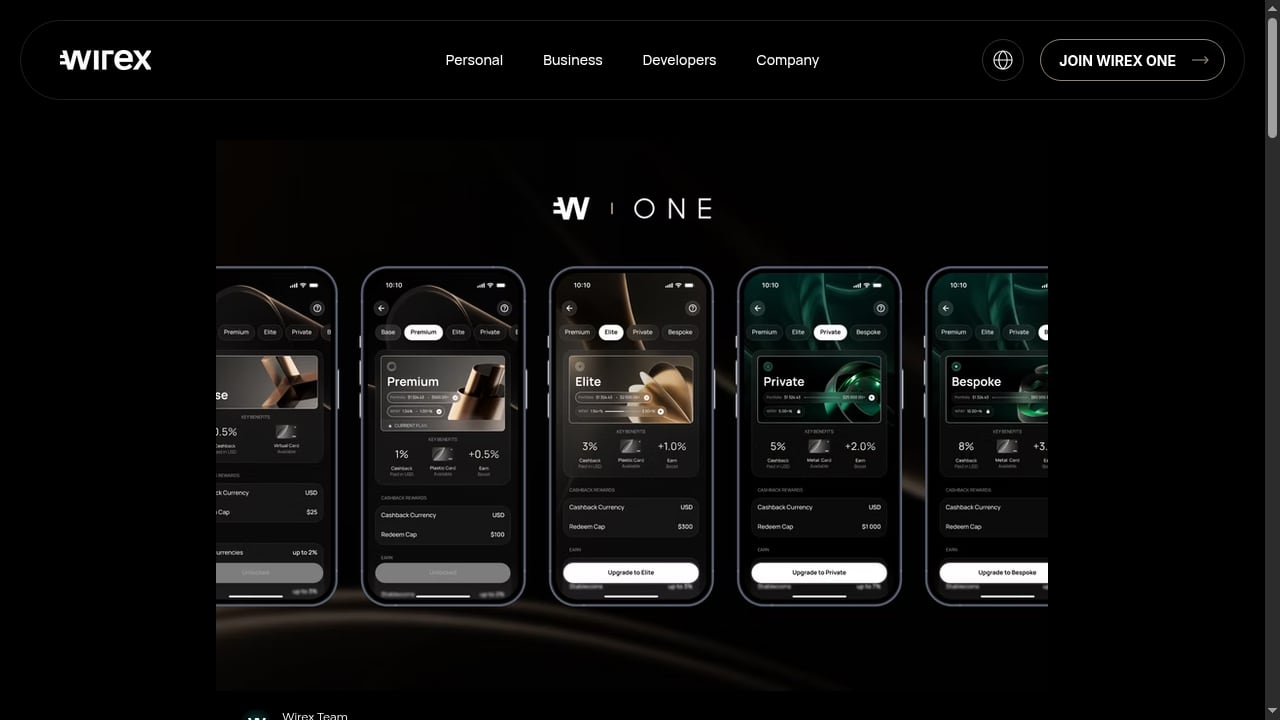
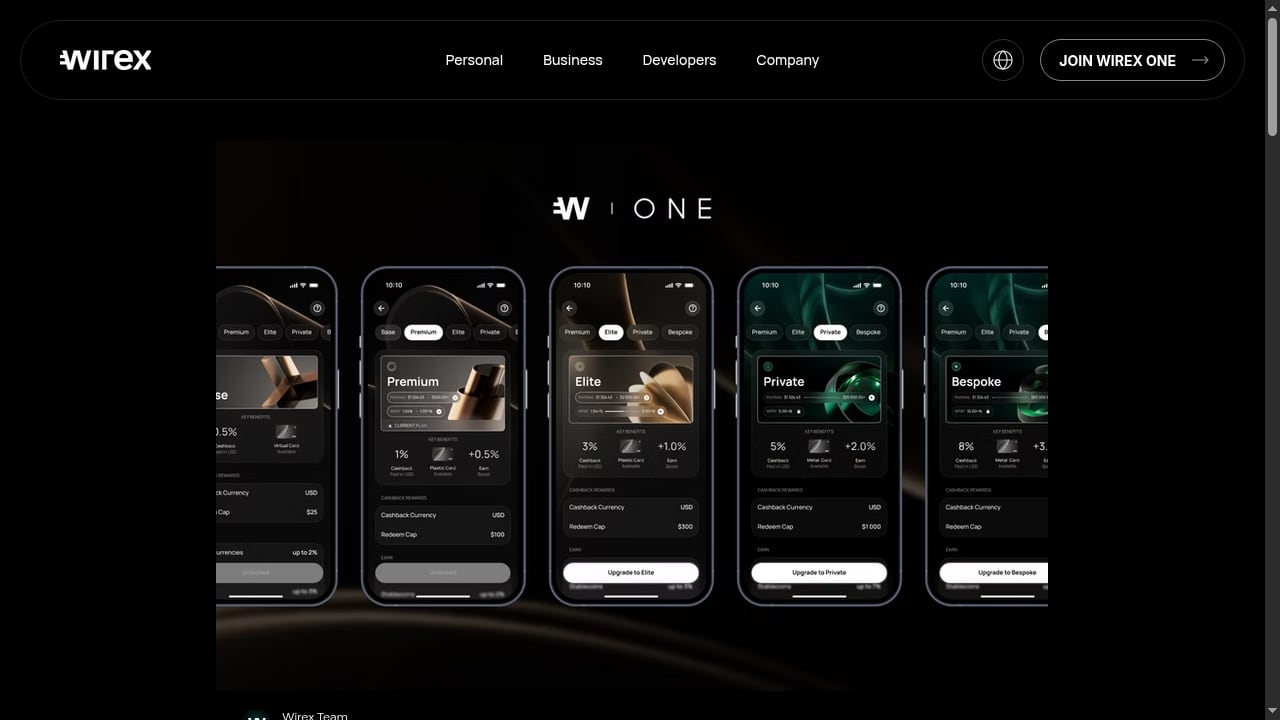
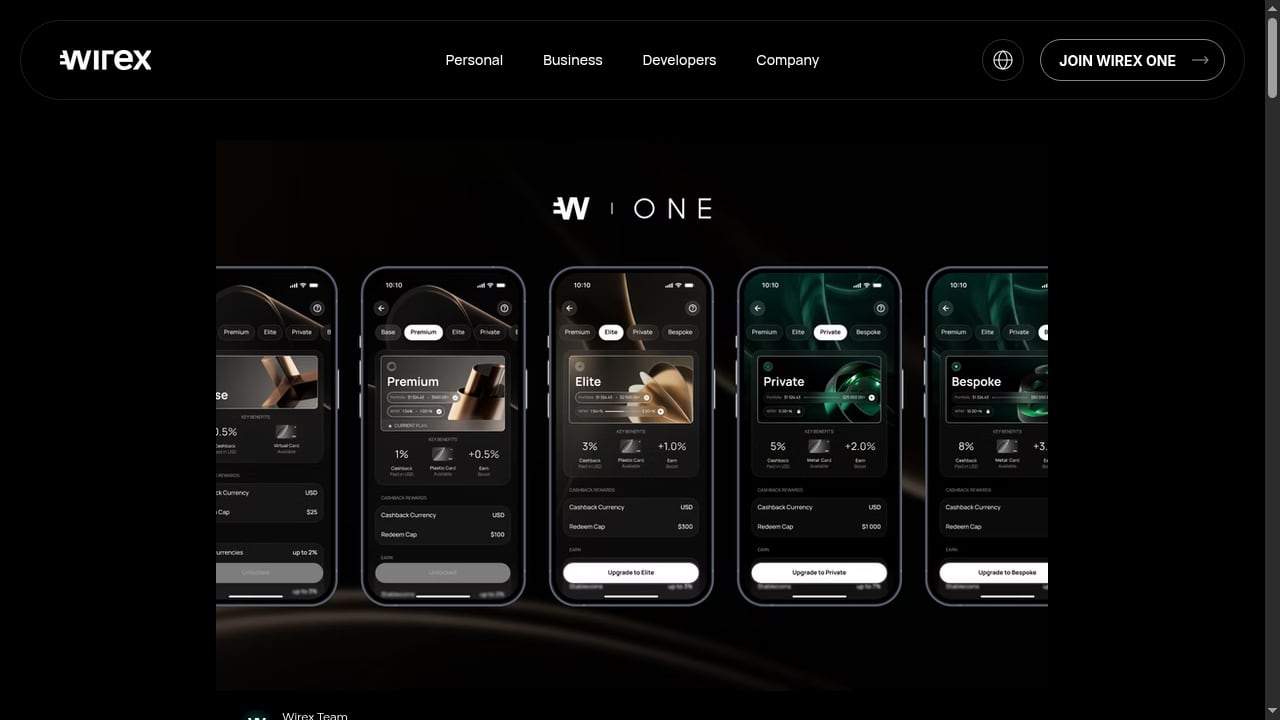
Wirex serves consumers, businesses, and builders rather than a single niche. It is also evolving into Wirex One, a next-generation offering that supports AI-powered agent-initiated payments on stablecoin rails. For companies thinking about how autonomous payment flows will work, that roadmap is worth watching.
How to Choose Between the Three
There is no universal winner here, because the three products optimize for different things.
Choose Cardfornia if you are a company or startup that holds stablecoins and needs to issue cards to a team at scale. The strongest reasons are corporate-scale card issuance, high-limit cards for ad spend, real-time expense control, automatic multi-currency settlement for SaaS, and segregated custody with licensed partners.
Choose Banqa if key ownership is non-negotiable. Self-custody USDC backing, 0% deposit fees, multi-network support, and per-employee business cards make it a strong fit for individuals and small teams who want control without giving up Visa acceptance.
Choose Wirex if you want breadth. A multi-currency wallet, exchange, earn products, and cards on both Visa and Mastercard in one account is a compelling package for users who value simplicity and an established platform over specialized corporate tooling.
A useful way to decide is to start from the money, not the card. Ask where your operating funds sit today, who needs to be able to spend them, and what evidence your accountant will need afterward. Those three answers usually point to one option quickly.
For a broader view of how these products compare against other providers, see the Cardfornia vs Reap vs Sparados comparison and the startup founder crypto card guide.
Practical Examples
First viewport screenshot of Industry Insights.
A crypto startup paying for AI tools. The team holds USDC and pays for ChatGPT, Claude, and Midjourney subscriptions. Cardfornia's automatic multi-currency settlement for SaaS means subscriptions settle without manual conversion each month, while Banqa's self-custody model lets a founder keep USDC in their own wallet and spend from it directly.
An agency running paid campaigns. Ad accounts are sensitive to failed payments. Cardfornia's high-limit cards for ad spend are designed to reduce declined charges and the account-ban risk that follows. Wirex can cover ad payments too, but its strength is the broader wallet and exchange experience rather than ad-spend-specific limits.
A distributed team with per-person budgets. Banqa's per-employee cards with spending limits and MCC controls work well for a small team that wants self-custody. Cardfornia's real-time control over operating expenses scales better when the team grows and finance needs centralized visibility.
A freelancer or solo operator. Wirex's combination of wallet, exchange, and earn products is often the simplest single-app answer, especially if you also want to hold fiat alongside crypto.
Related reading
- Circle Stablecoin Explained: USDC, EURC & Business Use - What is a Circle stablecoin? Learn how USDC and EURC work, how reserves are held, and how businesses use Circle stablecoins for global payments.
- Cardfornia vs Reap vs Sparados: 2026 Comparison - Compare Cardfornia, Reap, and Sparados on stablecoin funding, virtual corporate cards, expense controls, and global business spending in 2026.
- Corporate Crypto Expense Card: 2026 Business Guide - Compare corporate crypto expense cards, how stablecoin-funded team cards work, key controls, fees, and what to check before issuing cards.
Sources and further reading
- Banqa vs Wirex — self-custody, USDC-backed crypto card compared - Banqa vs Wirex: compare custody model, backing asset, deposit fees and control. Banqa is a self-custody Visa card backed by USDC with 0% deposit fees.
- CardFornia Blog - What is a Circle stablecoin? Learn how USDC and EURC work, how reserves are held, and how businesses use Circle stablecoins for global payments.
Frequently Asked Questions
What is the main difference between Cardfornia, Banqa, and Wirex?
The custody model and target user. Cardfornia is a corporate platform with stablecoin funding and segregated custody through licensed partners. Banqa is self-custody, with USDC held in the user's own non-custodial wallet. Wirex is custodial and aimed at a broad consumer, business, and builder audience.
Is Banqa or Wirex better for self-custody?
Banqa. Its card is non-custodial, backed by USDC in a wallet you control, and it does not require staking a token. Wirex holds funds in your Wirex account, which is a custodial model.
Can I use these cards for business expenses?
All three support business use to some degree. Banqa offers business plans with per-employee cards, spending limits, KYB verification, accounting exports, and MCC controls. Wirex serves businesses as part of a broader platform. Cardfornia is built specifically for corporate teams, with multi-currency virtual cards issued at scale and real-time expense control.
Which option is best for paying for ads and SaaS subscriptions?
If ad spend is a major line item, Cardfornia's high-limit cards for ad spend and automatic multi-currency settlement for SaaS are designed around exactly that use case. Banqa and Wirex can both be used for these payments, but neither markets ad-spend-specific limits as a core feature.
Do any of these require holding a native token?
Banqa does not require staking any token to unlock the card or its features. Wirex has historically tied rewards to its WXT token. Cardfornia's model centers on stablecoin funding rather than a native token.
How are funds protected?
Cardfornia holds client funds 100% in segregated accounts with third-party licensed custodians, never lent or invested, with security practices guided by ISO/IEC 27001 standards and activities performed through licensed partners. Banqa's protection comes from self-custody: you hold the keys. Wirex holds funds in your account under its custodial model.
Conclusion
Cardfornia, Banqa, and Wirex are not really competing for the same user. Banqa wins on self-custody and deposit fees. Wirex wins on breadth, scale, and an all-in-one wallet-and-exchange experience. Cardfornia wins when the buyer is a company that needs to issue cards to a team, control spend in real time, and fund operations with stablecoins held in segregated custody.
Start with your custody preference and your spending structure. If a team is spending company money across many vendors and currencies, corporate tooling matters more than a single card. If you are spending your own funds and want to keep the keys, self-custody is the priority. If you want one app for everything, an established multi-currency platform is the pragmatic choice.