
Cardfornia vs Cryptopay Business vs Banxe
Cardfornia vs Cryptopay Business vs Banxe
Choosing between Cardfornia, Cryptopay Business and Banxe is really a question about what your business needs crypto for. Cryptopay Business is built around accepting and sending crypto payments as a merchant. Banxe is built around multi-currency accounts and cross-border payments with crypto services attached. Cardfornia is built around one job: funding a corporate account with stablecoins and issuing virtual cards your team can spend on ads, AI tools, SaaS and travel.
This comparison looks at where each platform is genuinely strong, and where the fit depends on your operating model rather than on marketing claims.
The short version
- Cryptopay Business — best if your priority is a crypto payment gateway: payment links, API, checkout, mass payouts and next-day fiat bank settlement.
- Banxe — best if you want a multi-currency account with IBANs, SEPA/SWIFT/Faster Payments, debit cards and a non-custodial Pro Wallet in one place.
- Cardfornia — best if you hold USDT or USDC and need to turn that balance into team-level virtual cards for recurring digital spend, with multi-currency settlement and real-time FX.
What each platform actually does
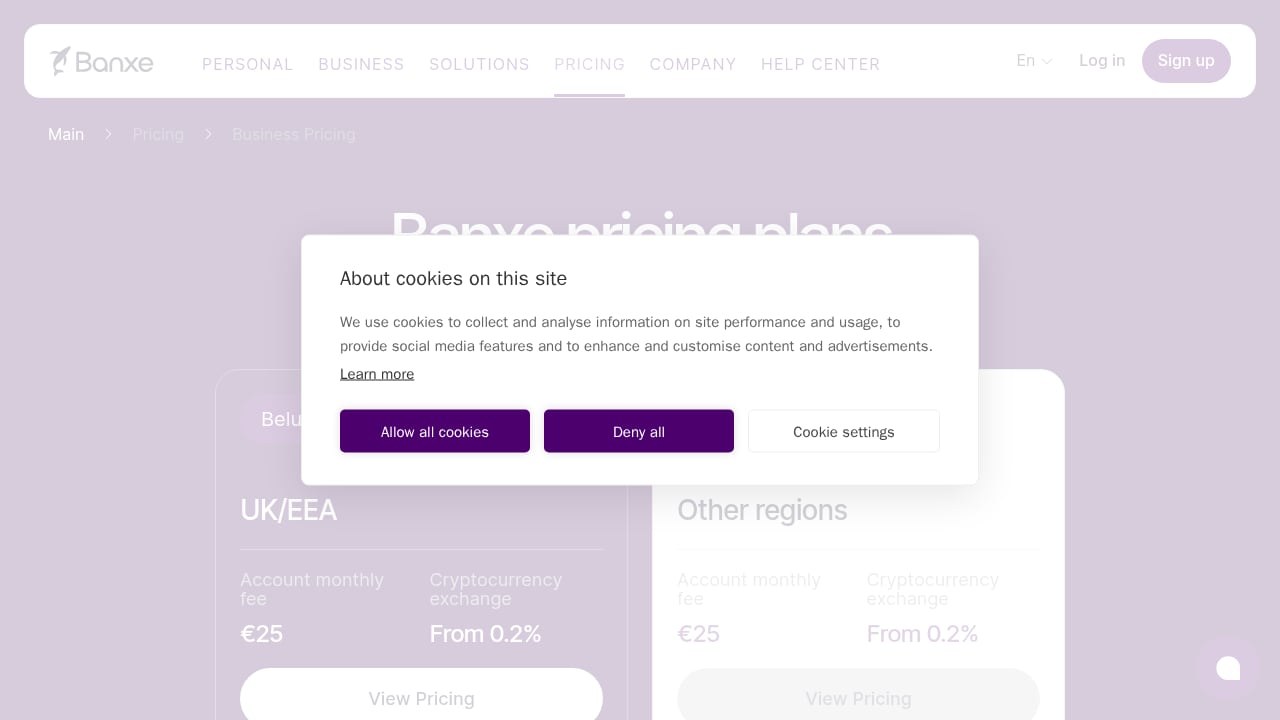
First viewport screenshot of Banxe — Global Payments Platform.
Cardfornia: stablecoin-funded corporate virtual cards
Cardfornia is a Singapore-based fintech platform focused on corporate businesses and startups. You fund a single account with stablecoins such as USDT and USDC, then issue multi-currency virtual cards to teams at scale. The emphasis is on operational control: real-time visibility over operating expenses, high-limit cards for ad spend to reduce the risk of account bans, automatic multi-currency settlement for SaaS subscriptions, and real-time currency exchange for cross-border transactions.
Typical use cases are paying for AI tool subscriptions such as ChatGPT, Claude and Midjourney, running Meta Ads, Google Ads and TikTok Ads, covering SaaS and cloud services like AWS, Azure and Figma, and handling global travel and procurement. Client funds are held 100% in segregated accounts with third-party licensed custodians and are never lent or invested. Security practices are guided by ISO/IEC 27001 standards, and payment, custody and card-issuing activities run through licensed partners with regulatory approvals across jurisdictions including Hong Kong, the UK, the US and Canada. Onboarding is designed to be quick, with light KYC for individual users and KYB review typically taking one to two days for teams.
Cryptopay Business: crypto payment gateway and processing
Cryptopay Business is a crypto payment gateway for merchants and enterprises. It lets you accept, manage and send cryptocurrency payments while staying fully fiat-denominated. It supports over 15 cryptocurrencies and 35 fiat currencies, with automatic conversion and next-day bank settlement so you are not exposed to price swings between the sale and the payout.
Its channels cover payment links, a flexible API, an online crypto checkout and static addresses for recurring customer payments. On top of that it offers mass payouts, corporate crypto cards with high spending limits, and a white-label payment gateway in development. Cryptopay positions itself as licensed and EU-compliant, with VASP registrations in Estonia and Luxembourg, an MSB license in Canada, AML/KYC and Travel Rule adherence, and preparations for MiCA. It also highlights a long operating record with no platform hacks, detailed reporting, customer retention tools and automatic withdrawals to bank accounts. The service is focused exclusively on business clients.
Banxe: digital banking plus crypto payments
Banxe is a global payments platform that combines traditional banking-style services with crypto management. Business accounts support multi-currency operations in GBP, EUR and USD, with dedicated IBANs, SEPA, Faster Payments, SWIFT transfers, currency exchange and physical or virtual debit cards. On the crypto side it offers a non-custodial Pro Wallet where you hold your own private keys, high-volume exchange with preferential rates and a dedicated manager, and a white-label API that lets businesses embed banking capabilities under their own brand.
Banxe is explicit that it is not a bank — it operates as a distributor of an FCA-authorized e-money institution. It positions itself on security (3D Secure, card freezing, regulated safeguarding), transparent pricing (monthly fees starting around €5 for personal and €25 for business) and global reach. Availability covers the UK, the EU and a list of additional countries including Singapore, South Korea, Switzerland, Australia, New Zealand, Norway, Iceland, Israel, Liechtenstein and Andorra.
Head-to-head comparison
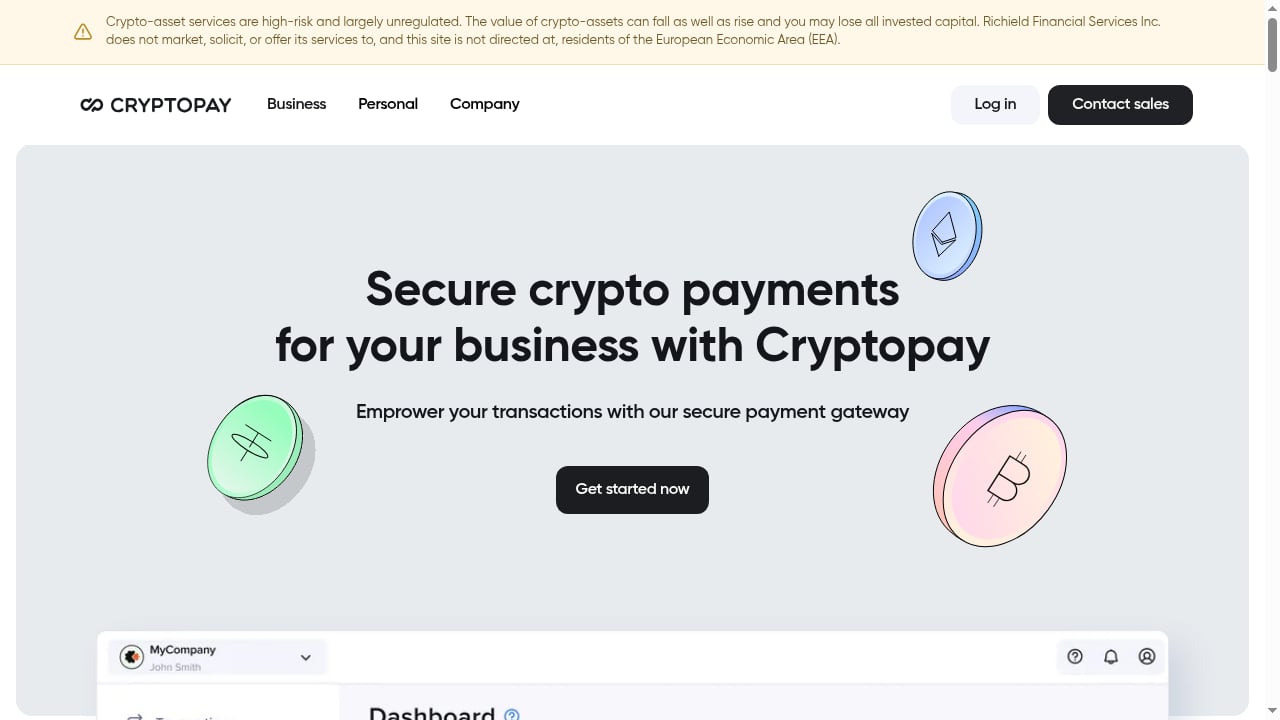
First viewport screenshot of Cryptopay Business | Accept and Send Crypto Payments as a Merchant.
| Criterion | Cardfornia | Cryptopay Business | Banxe |
|---|---|---|---|
| Primary purpose | Corporate crypto virtual cards for spend | Crypto payment gateway for merchants | Multi-currency accounts plus crypto services |
| Funding model | Stablecoins (USDT, USDC) into one account | Crypto received from customers, converted to fiat | Bank transfers, SEPA, SWIFT, CHAPS, crypto via ProWallet |
| Card type | Multi-currency virtual cards issued to teams at scale | Corporate crypto cards with high limits | Physical and virtual debit cards |
| Fiat settlement | Automatic multi-currency settlement for SaaS | Next-day bank settlement | SEPA, Faster Payments, SWIFT |
| Custody model | Segregated accounts with third-party licensed custodians | Platform-managed with automatic conversion | Non-custodial Pro Wallet for crypto |
| Compliance posture | ISO/IEC 27001-aligned practices; licensed partners in HK, UK, US, Canada | VASP registrations in Estonia and Luxembourg, MSB in Canada, MiCA preparation | Distributor of an FCA-authorized e-money institution |
| Best for | Crypto-native teams spending stablecoins on ads, AI, SaaS and travel | Merchants who want to accept crypto and settle in fiat | Businesses needing IBANs and cross-border fiat rails alongside crypto |
How to choose
First viewport screenshot of Banxe — Global Payments Platform.
Choose Cryptopay Business if your revenue problem comes first. If customers want to pay you in crypto and you want fiat in your bank account the next day, a payment gateway with checkout, API and mass payouts is the right tool. Its corporate cards are a useful add-on, but the core value is acceptance and processing.
Choose Banxe if you need traditional payment infrastructure — dedicated IBANs, SEPA and SWIFT — with crypto management layered on top. The non-custodial Pro Wallet is a meaningful differentiator for businesses that want to hold their own keys, and the white-label API suits fintechs building embedded banking.
Choose Cardfornia if your problem is spending, not collecting. Crypto-native companies and globally scaling startups often hold stablecoins and then struggle to pay for digital services that only accept cards. Cardfornia turns a USDT or USDC balance into team-level virtual cards, which matters most for high-volume ad accounts, recurring SaaS billing and cross-border procurement. If you are weighing how stablecoin balances convert into everyday corporate spend, see our guide to converting USDC for business use and the broader overview of crypto prepaid cards for business.
Practical examples
- A Web3 startup paying for growth. Ad platforms bill in card currency and can suspend accounts when payments fail. High-limit virtual cards funded by stablecoins reduce failed charges and the ban risk that follows. Cardfornia is designed around this scenario; Cryptopay's corporate cards can also serve it, while Banxe cards are more general-purpose.
- A SaaS company selling to crypto customers. Cryptopay Business fits best: checkout, payment links and API let you accept BTC, ETH or USDC and receive fiat the next day.
- A consultancy with clients in three currencies. Banxe's IBANs and SEPA/SWIFT rails handle inbound fiat cleanly, with crypto exchange available when clients prefer to pay in digital assets.
- A remote team with subscriptions everywhere. Cardfornia's automatic multi-currency settlement is aimed at exactly this: AWS, Figma, AI tools and travel booked in different currencies from one stablecoin-funded account. Founders evaluating this setup can start with our startup founder crypto card guide.
Compliance and risk notes
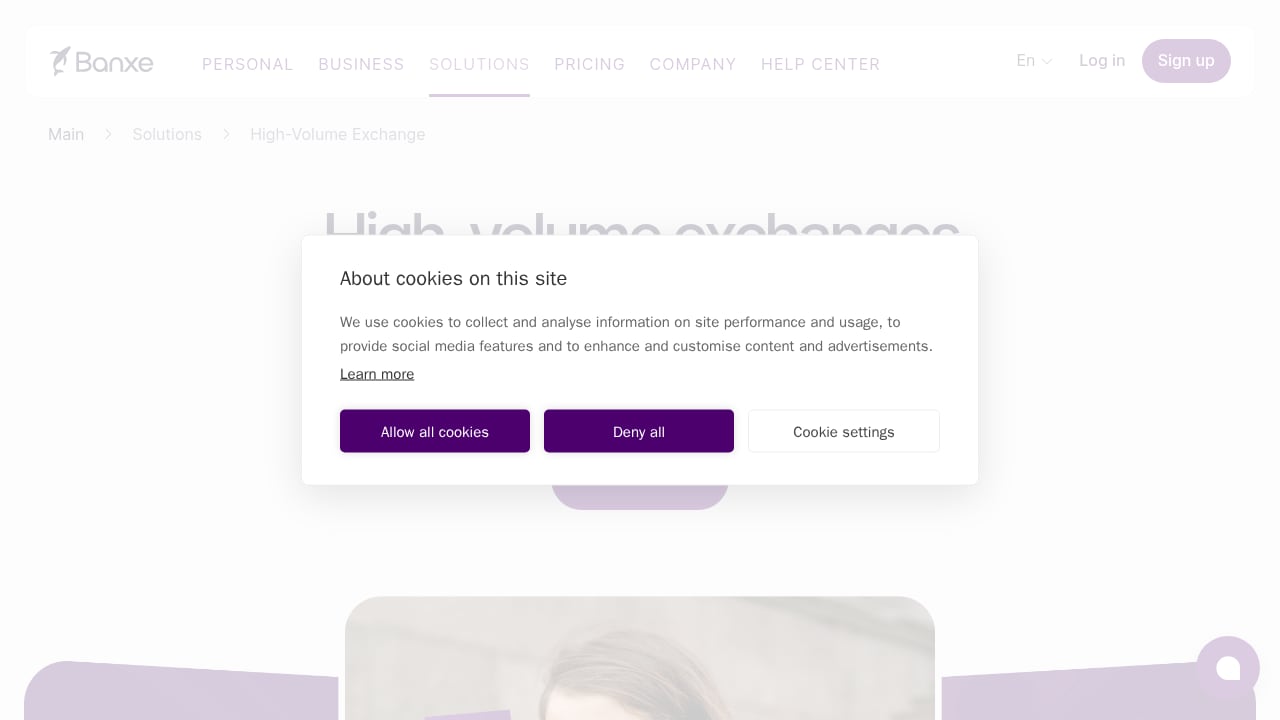
First viewport screenshot of Banxe — Global Payments Platform.
All three platforms operate through licensed entities or partners rather than as standalone banks, and each carries regional restrictions. Cryptopay states it does not market its services to EEA residents through the entity referenced on its site. Banxe notes that crypto services are subject to regional restrictions and may not be available in every jurisdiction. Cardfornia's payment, custody and card-issuing activities are performed through licensed partners with approvals in several jurisdictions, and its security practices follow ISO/IEC 27001 standards.
Before committing, confirm three things for your own entity: which legal entity contracts with you, where your funds sit, and what happens to your balance if a card programme changes. For a wider view of how finance teams handle this, see corporate finance and crypto payments.
Related reading
- USDCAD Explained: Rate Drivers and Business FX Strategy - What USDCAD means, what moves the USD/CAD rate, and how crypto-native businesses manage cross-border FX and corporate spend exposure.
FAQ
Is Cardfornia a replacement for Cryptopay Business?
Not exactly. Cryptopay Business is primarily a payment gateway for accepting and sending crypto. Cardfornia is a corporate card platform for spending stablecoins. Many businesses could use both: one to collect, one to spend.
Can Banxe replace a business bank account?
Banxe is not a bank. It provides access to payments and digital asset services through partners, including a distributor relationship with an FCA-authorized e-money institution. It can handle many day-to-day payment needs, but it is not a deposit-taking bank.
Which platform is best for paying Meta Ads or Google Ads?
This is Cardfornia's core use case. It offers high-limit virtual cards for ad spend specifically to reduce account ban risk, funded from a stablecoin balance. Cryptopay Business also offers corporate crypto cards with high spending limits.
Do I need to convert crypto to fiat before spending?
With Cardfornia, you fund the account with USDT or USDC and spend through virtual cards, with automatic multi-currency settlement and real-time FX. With Cryptopay Business, incoming crypto is converted automatically and settled to your bank in fiat. With Banxe, you can hold crypto in a non-custodial wallet and exchange when needed.
Which platforms support USDC?
All three reference USDC support. Cardfornia accepts USDT and USDC as funding assets. Cryptopay lists USDC among its supported cryptocurrencies. Banxe lists USDC via its Pro Wallet.
Conclusion
These three platforms solve different problems, and the right answer depends on whether your bottleneck is collecting, holding or spending. Cryptopay Business is a strong choice for merchant crypto acceptance with fiat settlement. Banxe is a strong choice for multi-currency accounts and cross-border fiat rails with crypto alongside. Cardfornia is the focused choice for crypto-native companies that want to turn stablecoin balances into controlled, high-limit corporate card spend across ads, AI tools, SaaS and travel — with segregated custody and licensed partners behind it.
For official details, check Cryptopay Business, Banxe and Cardfornia directly before you commit.