
RedotPay Review 2026: Fees, Features & Real Verdict
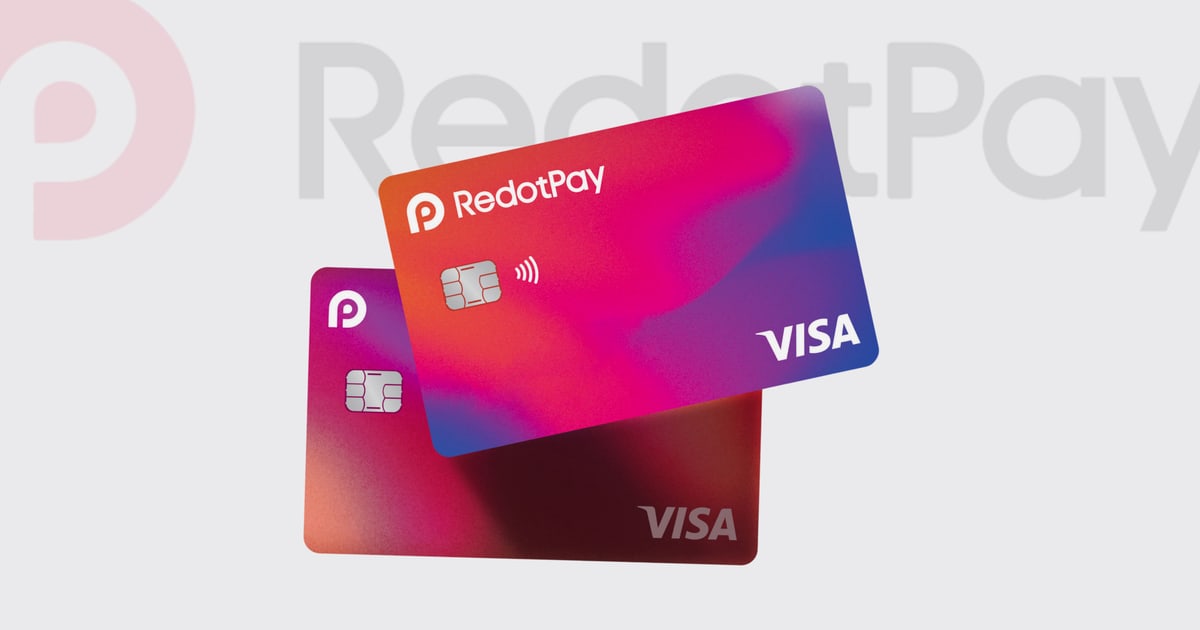
RedotPay Review 2026: Fees, Features, and Who Should Actually Use It
Most crypto products still assume users want to buy, hold, and wait. RedotPay takes a different route: it focuses on what happens when people actually spend stablecoins in everyday life. That shift is what makes RedotPay worth reviewing closely.
RedotPay is a Hong Kong-based crypto payments platform founded in 2023. It combines a Visa debit card, multi-currency wallet, bank and e-wallet transfers, internal P2P transfers, swaps, credit, and an Earn feature inside one app. The company reports over 6 million users across 100+ countries and roughly $10 billion in annualized payment volume, backed by investors including Lightspeed, Coinbase Ventures, and Pantera Capital.
This review breaks down how RedotPay actually works, what it costs, where it stumbles, and who should choose it over alternatives.
Quick Verdict
RedotPay is best understood as a stablecoin-powered payments app with a card attached, not just another crypto card. The card is the visible front end, but the real value sits in the wider stack: bank and e-wallet payouts, internal transfers, wallet funding, swaps, P2P access, and Earn.
That broader setup gives RedotPay more practical utility than many simpler card products. It also means more fees, more settings, and more dependence on regional availability and platform controls.
Our take: RedotPay is one of the more useful crypto payments products for users who want spending, transfers, and balance management in one app. It is less appealing for anyone who wants the simplest card experience, the strongest mainstream brand, or the lowest-friction fee structure.
Scorecard
| Category | Score | Notes |
|---|---|---|
| Product Depth | 4.7/5 | Broad ecosystem beyond just a card |
| Card Utility | 4.4/5 | Solid online, mobile wallet, and in-store support |
| Payments and Transfers | 4.8/5 | Bank and e-wallet payouts make it a real payments bridge |
| Wallet and Funding Flexibility | 4.5/5 | Multiple funding routes and multi-currency support |
| Fees and Cost Efficiency | 4.0/5 | Manageable when simple, but layered fees add up |
| User Experience and Controls | 4.5/5 | Modern app with strong controls, but KYC and settings friction |
| Overall | 4.6/5 | Strong for payments-first users, weaker for simplicity seekers |
What Is RedotPay?
First viewport screenshot of RedotPay.
RedotPay is a stablecoin-based payments platform with a card built into a wider financial app. Instead of acting as a one-feature spending tool, it combines several services that help users hold, move, convert, and use digital assets inside one ecosystem.
The current consumer-facing product stack includes:
- RedotPay Card — virtual and physical Visa cards for online, in-store, and ATM spending
- Bank and e-wallet transfers — payouts to external accounts in local currency
- Internal user transfers — instant P2P transfers between RedotPay users
- Multi-currency wallet — crypto and local-currency balances inside the app
- Swaps — convert between supported assets
- RedotPay Credit — credit functionality within the platform
- Earn — yield on USDC and USDT deposits
- P2P marketplace — direct crypto-to-fiat trades between users
Think of it as a digital money app built around stablecoins, with the card acting as one practical spending layer.
Company Background and Licensing
RedotPay was co-founded by Jonathan Chan and Michael Gao in 2023. The company holds a Money Services Business (MSB) registration in Canada, a FinCEN MSB in the U.S., a Virtual Asset Service Provider (VASP) license in Argentina, and a VASP registration from Lithuania's Financial Crime Investigation Service.
Institutional backing includes Lightspeed, HongShan Capital, Coinbase Ventures, Pantera Capital, and Goodwater Capital, with a Series B round of approximately $107 million reported in December 2025.
RedotPay Card: Virtual, Physical, and Everyday Spending
First viewport screenshot of RedotPay.
The card is the most visible part of the RedotPay experience. To judge how useful it really is, you need to look at both the payment experience and the practical rules around fees, limits, and controls.
Virtual Card vs Physical Card
RedotPay offers both a virtual card and a physical card, and the difference is practical rather than cosmetic.
Virtual card:
- Costs $10 as a one-time issuance fee
- Available within 5–10 minutes of completing KYC
- Runs on the Visa network
- Supports online purchases, subscriptions, and e-commerce
- Links to Apple Pay and Google Pay for contactless payments
- Does not support ATM withdrawals or PIN-based in-store transactions
Physical card:
- Costs 100 USDT as a one-time issuance fee
- Takes about two weeks to arrive after ordering
- Enables in-store contactless and chip-and-PIN payments
- Supports ATM withdrawals
- Also works for online purchases
- Contactless payments unavailable until activation
Physical card delivery is unavailable in some countries and regions, even where the broader platform remains accessible.
Online, In-Store, and ATM Usage
In day-to-day use, RedotPay works across the payment settings most users care about. The virtual card handles online purchases and mobile wallet payments. The physical card expands that with in-store POS transactions, ATM withdrawals, and contactless functionality after activation.
ATM withdrawals carry a 4.2% fee on top of whatever the ATM operator charges. Limits are high on paper — $100,000 per transaction and $1 million daily — but those are exceptional ceilings most users will never approach. RedotPay Pro annual members can withdraw up to $1,000 monthly at ATMs with zero RedotPay fees, though third-party ATM surcharges still apply.
Card Controls and Limits
A strong card product is also about how much control users have when something goes wrong. RedotPay includes card security settings that let users:
- Set per-purchase and daily limits
- Turn online, offline, and ATM transactions on or off
- Choose transaction currencies
- Adjust payment priority
- Temporarily freeze a card
For beginners especially, these controls can make the difference between a card that feels risky and one that feels manageable.
Wallet, Funding, and Account Structure
First viewport screenshot of RedotPay.
The card may be the part users notice first, but the real foundation sits underneath it. RedotPay's wallet and account structure is what allows value to be stored, funded, moved, and then routed toward spending, transfers, swaps, or credit.
Multi-Currency Wallet Architecture
The wallet works as the base account. Users can keep value inside the app, and the wallet supports different forms of value including digital assets and local-currency balances. Primary settlement currencies are US Dollars (USD) and Hong Kong Dollars (HKD). RedotPay uses a real-time conversion model at point of purchase rather than a pre-loaded balance system.
Funding Your Account
Funding sources include:
- Bank transfer
- On-chain deposit
- Credit/debit card
- Binance Pay
- Supported third-party transfers
Crypto top-up is free, while card top-up costs 3% and Binance Pay costs 1%. The minimum deposit is 1 USDT on TRC20, which typically lands in about 5 minutes.
Supported Cryptocurrencies
RedotPay supports ten primary assets: USDT, USDC, BTC, ETH, BNB, SOL, XRP, SUI, TRX, and S. BTC, ETH, USDT, USDC, and SOL are the core assets, supported across multiple networks including Ethereum, Arbitrum, Polygon, Solana, TON, Sui, and Sonic. Over 20 additional cryptocurrencies are accessible via the multi-currency wallet.
Stablecoins are the backbone of RedotPay's spending model. For non-USD purchases, the swipe fee is 2.2%, while USD merchants like Amazon are charged only 1%, making stablecoin funding the cheapest route.
RedotPay Fees: A Detailed Breakdown
First viewport screenshot of RedotPay.
Fees are where RedotPay demands the most attention. Costs stay manageable when usage is simple, but physical card fees, top-up costs, cross-currency spending, ATM withdrawals, and selected-merchant charges can add friction fast.
Core Fee Schedule
| Fee Type | Cost |
|---|---|
| Virtual card issuance | $10 one-time |
| Physical card issuance | 100 USDT one-time |
| Monthly fee | None |
| Crypto top-up | Free |
| Card top-up | 3% |
| Binance Pay top-up | 1% |
| Crypto conversion at point of sale | 1% |
| FX markup on non-local spend | 1.2% |
| ATM withdrawal | 4.2% + operator fees |
The Real Cost of International Spending
The combined 2.2% fee on international transactions is the number to remember. If you spend €1,500 a month abroad, that is roughly €33 in fees every month — about €396 per year. For heavy cross-border spenders, this compounds quickly.
Spending in USD (or your card's base currency) avoids the 1.2% FX fee, which is why stablecoin-heavy users see lower effective costs. USD merchants like Amazon are charged only the 1% conversion fee.
Where Fees Add Up Fast
- Physical card issuance — 100 USDT is steep compared to many competitors
- Card top-ups — 3% is a meaningful penalty for using a debit or credit card to fund
- ATM withdrawals — 4.2% plus operator fees makes cash access expensive
- Cross-currency spending — the 1.2% FX markup applies to every non-local purchase
Transfers, P2P, and Cross-Border Payments
Bank and e-wallet payouts, plus instant internal transfers, make RedotPay function as more of a payments bridge than a simple card product.
Bank and E-Wallet Transfers
The platform supports transfers to external bank accounts and e-wallets in multiple corridors. Transfer fees and processing times vary by corridor and currency. Some regions face restrictions where transfers are blocked entirely.
Internal P2P Transfers
Internal transfers between RedotPay users can be used for splitting bills, sending remittances, or paying contacts. The P2P marketplace feature, launched in 2026, allows direct crypto-to-fiat trades between users. P2P availability depends on local regulations and supported payment methods.
Cross-Border Payment Capabilities
RedotPay positions itself as a better option than traditional wire transfers for international payments. However, the 2.2% combined fee on international transactions can add up quickly for heavy cross-border spenders.
For businesses evaluating stablecoin-powered corporate cards, RedotPay's consumer focus means it lacks the team controls, budget limits, and expense management features that dedicated business platforms offer. Teams managing multiple cardholders should review team crypto card management options before committing.
RedotPay Credit, Earn, and Swap Features
Earn / Yield
Earn is a feature provided by RedotPay Panama for growing crypto holdings, where users can generate returns by depositing digital assets for flexible periods. Currently, only USDC and USDT are supported. The interest rate can change based on market conditions, and RedotPay does not publish a fixed APY.
Swaps
The in-app swap feature lets users convert between supported assets without leaving the platform. This is useful for consolidating balances into stablecoins before spending or transferring.
Credit
RedotPay Credit adds a credit layer to the platform, though details on limits, interest rates, and eligibility vary by region and user profile. It is best treated as a supplementary feature rather than a primary reason to choose RedotPay.
Real User Feedback: What Trustpilot Reveals
On Trustpilot, RedotPay holds a 3.1 out of 5 rating across 744 reviews, with 54% five-star reviews and 33% one-star reviews. That split tells a story worth understanding.
What Positive Reviews Highlight
- Fast virtual card issuance after KYC
- Works in regions where most crypto cards do not
- Useful for online spending and mobile wallet payments
- Broad feature set beyond just a card
What Negative Reviews Highlight
- Account freezes and sudden restrictions
- Customer support response times
- Fee surprises on international transactions
- KYC and onboarding friction
- Merchant restrictions and payment-setting errors
The one-star cluster is a meaningful signal. Users who experience account freezes or support delays tend to be vocal, and RedotPay's custodial model means users depend entirely on platform controls when issues arise.
Security and Custody Considerations
RedotPay is a custodial platform. That means users hand custody of their funds to a third party, and the platform controls the private keys. This is standard for crypto card products, but it carries real trade-offs.
What Custody Means in Practice
- Convenience: No seed phrase management, no wallet setup complexity
- Risk: Platform failure, account freezes, or regulatory action can affect access to funds
- Dependence: Users rely on RedotPay's security practices and support responsiveness
For users who prefer a fully non-custodial setup, RedotPay is not the right fit. For users who value convenience and are comfortable with a managed platform model, the custodial approach is part of the trade-off.
Regulatory Position
RedotPay's MSB registrations in Canada and the U.S., VASP license in Argentina, and VASP registration in Lithuania provide some regulatory grounding. However, these are not equivalent to a full banking license or a MiCA authorization in the EU. Users should understand the difference before depositing significant funds.
Who Is RedotPay For?
Best For
- Users who want more than a crypto card — the broader payments app experience adds real utility
- People who need bank or e-wallet payouts alongside card spending
- Users comfortable managing balances, settings, and multiple product layers inside one app
- Crypto holders who like the idea of spending, swapping, sending, and parking assets in one ecosystem
- Users in regions with limited banking options where RedotPay's reach is a differentiator
Not Ideal For
- Users who want the simplest possible card product with minimal setup friction
- People sensitive to layered fees, cross-currency costs, or ATM charges
- Users in unsupported or restricted regions
- Anyone who prefers a fully non-custodial setup over a managed platform model
- Businesses needing team controls, budgets, or expense management — dedicated stablecoin business spending platforms are a better fit
RedotPay vs Alternatives
RedotPay vs Bleap
Bleap is a MiCA-licensed, self-custodial Mastercard with 0% FX fees and up to 20% cashback. The contrast is stark:
| Feature | RedotPay | Bleap |
|---|---|---|
| FX fee | 1.2% | 0% |
| Custody | Custodial | Self-custodial |
| Cashback | Minimal | Up to 20% |
| Card network | Visa | Mastercard |
| Monthly fee | None | None |
For users who prioritize fee efficiency and self-custody, Bleap changes the equation. For users who need RedotPay's regional reach or broader transfer utility, RedotPay remains relevant.
RedotPay vs Wirex
Wirex is a more established crypto card and wallet platform with a longer track record and broader feature set. For a detailed comparison, see our Wirex review. The key difference: Wirex offers more mature rewards and a longer operational history, while RedotPay focuses more on stablecoin payment utility and transfer functionality.
RedotPay vs Business-Focused Platforms
For businesses, RedotPay's consumer focus means it lacks the team controls, budget limits, and expense management that dedicated platforms offer. Teams evaluating options should compare Cardfornia vs Reap or review the broader stablecoin business payments guide for practical setup guidance.
Setup: How to Get Started with RedotPay
Step 1: Download and Register
Download the RedotPay app and create an account. You will need an email address and phone number.
Step 2: Complete KYC
KYC requires identity verification documents. The virtual card becomes available within 5–10 minutes of completing KYC, assuming verification passes smoothly.
Step 3: Fund Your Account
Choose your funding route:
- Crypto deposit (free): Minimum 1 USDT on TRC20, typically lands in about 5 minutes
- Card top-up (3% fee): Fast but expensive
- Binance Pay (1% fee): A middle-ground option
- Bank transfer: Availability varies by region
Step 4: Order Your Card
Start with the $10 virtual card for online spending and mobile wallet payments. Order the 100 USDT physical card only if you need in-store POS or ATM access.
Step 5: Configure Card Controls
Set per-purchase and daily limits, toggle transaction types, and choose your payment priority before first use. This reduces risk and prevents surprises.
Decision Criteria: Should You Choose RedotPay?
Ask yourself these questions before committing:
- Do you need bank or e-wallet payouts alongside card spending? If yes, RedotPay's transfer utility is a real differentiator.
- Are you sensitive to layered fees? If you spend internationally or withdraw cash often, the 2.2% FX markup and 4.2% ATM fee will hurt.
- Do you value self-custody? If yes, look elsewhere. RedotPay is custodial by design.
- Are you in a supported region? Check physical card delivery availability before paying the 100 USDT issuance fee.
- Do you need team controls or business features? If yes, RedotPay is not the right tool. Explore corporate travel crypto cards instead.
- How much do you value simplicity? RedotPay's breadth is a feature, but it also means more settings, more fees, and more platform dependence.
Sources and further reading
- Read Customer Service Reviews of redotpay.com - Trustpilot - RedotPay Reviews · We use technology to protect platform integrity, but we don't fact-check reviews · See what reviewers are saying · Contact info.
- RedotPay Explained: Card, Wallet, Transfers and Credit in One App - Learn what RedotPay is, how its card works, and how the app handles transfers, credit, swaps, Earn, fees, and regional limits in 2026.
- RedotPay Review 2026: Fees, Features, Pros & Alternatives - Read our in-depth RedotPay review for 2026. Compare its fees, supported cryptocurrencies, rewards, security, and user experience, and see how it compares with leading crypto cards like Bleap, Bybit, Nexo, and MetaMask.
Frequently Asked Questions
Is RedotPay legit?
Yes. RedotPay is a Hong Kong-based company founded in 2023 with MSB registrations in Canada and the U.S., a VASP license in Argentina, and a VASP registration in Lithuania. It has raised institutional funding from Lightspeed, Coinbase Ventures, Pantera Capital, and others, and reports over 6 million users.
What are RedotPay's main fees?
The core fees are: $10 virtual card issuance, 100 USDT physical card issuance, no monthly fee, free crypto top-ups, 3% card top-ups, 1% Binance Pay top-ups, 1% crypto conversion at point of sale, 1.2% FX markup on non-local spend, and 4.2% ATM withdrawal fee.
Does RedotPay support Apple Pay and Google Pay?
Yes. The virtual card supports Apple Pay and Google Pay for contactless payments. Cards issued after August 22, 2025 initially could not link to Apple Pay directly, but RedotPay rolled out a free card upgrade starting January 15, 2026 that restores Apple Pay compatibility.
What cryptocurrencies does RedotPay support?
RedotPay supports ten primary assets: USDT, USDC, BTC, ETH, BNB, SOL, XRP, SUI, TRX, and S. Over 20 additional cryptocurrencies are accessible via the multi-currency wallet. Stablecoins (USDT, USDC) are the preferred funding mechanism.
Why does RedotPay have a 3.1 Trustpilot rating?
The 3.1 rating reflects a split: 54% five-star reviews and 33% one-star reviews. Positive reviews highlight fast card issuance and regional reach. Negative reviews focus on account freezes, support delays, and fee surprises.
Can I use RedotPay for business expenses?
RedotPay is a consumer-focused platform. It lacks the team controls, budget limits, and expense management features that businesses need. For business use cases, explore dedicated stablecoin corporate card platforms.
Is RedotPay self-custodial?
No. RedotPay is a custodial platform, meaning the platform controls the private keys. Users who prefer self-custody should consider alternatives like Bleap.
Conclusion
RedotPay earns its place as one of the more useful crypto payments products for users who want spending, transfers, and balance management in one app. The card is the visible front end, but the real value comes from the wider stack: bank and e-wallet payouts, internal transfers, swaps, credit, P2P access, and Earn.
The trade-offs are real. Fees layer up quickly for international spenders and ATM users. The custodial model means platform dependence. KYC and onboarding can be friction-heavy. And the 3.1 Trustpilot rating, with its 33% one-star cluster, signals that account freezes and support delays are genuine pain points for some users.
Choose RedotPay if you want a stablecoin-powered payments app with real transfer utility and regional reach. Look elsewhere if you want the simplest card, the lowest fees, self-custody, or business-grade team controls.
For a deeper look at how RedotPay compares to other crypto card options, see our Wirex review and our guide to paying with stablecoins for business.