
USDC Similar Tools: 7 Stablecoin Platforms Compared in 2026
USDC Similar Tools: 7 Stablecoin Platforms and Alternatives Worth Comparing in 2026
USDC has become the default choice for compliance-sensitive businesses that want dollar-pegged digital assets. But it is far from the only option. Depending on whether you need a stablecoin for treasury holding, cross-border settlement, DeFi collateral, or everyday corporate spending, a different tool may fit better.
This guide compares USDC against similar stablecoins and the platforms that make them usable for real business workflows. You will learn how USDC stacks up against USDT, PYUSD, DAI, and others, and which infrastructure tools turn stablecoins into practical payment rails.
What "USDC Similar Tools" Actually Means
Search intent for this keyword splits into two groups:
- Stablecoin alternatives — people comparing USDC to other dollar-pegged tokens like USDT, PYUSD, DAI, FDUSD, or USDP.
- Platform and infrastructure tools — teams evaluating stablecoin orchestration APIs, payment networks, and card-issuing platforms that support USDC alongside other assets.
A useful answer covers both. The stablecoin itself matters, but the tooling around it often determines whether USDC is practical for your use case.
USDC Compared to Other Major Stablecoins
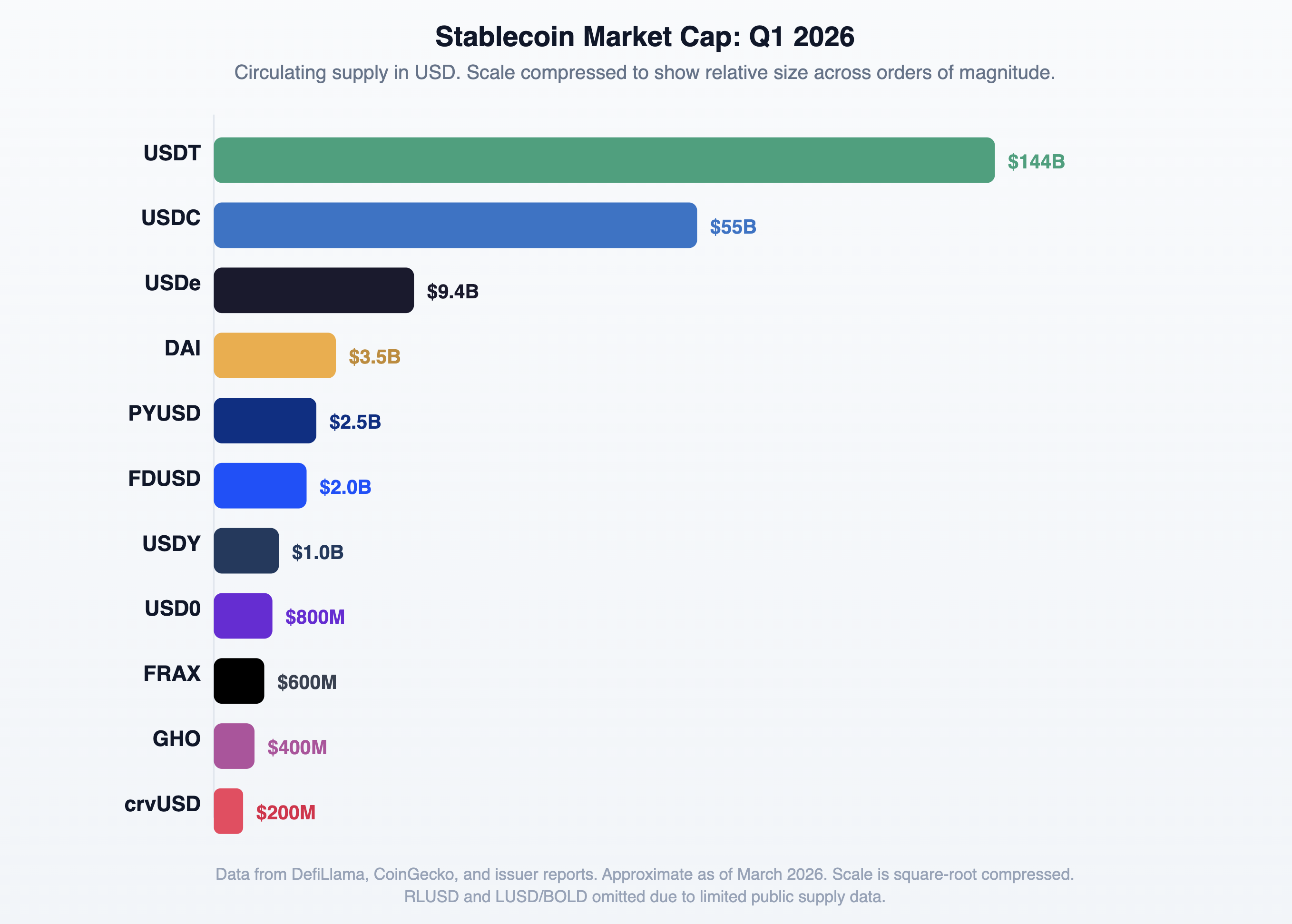
USDC Similar Tools: 7 Stablecoin Platforms Compared in 2026 - USDC Compared to Other Major Stablecoins.
USDC vs USDT
USDC and USDT are the two largest fiat-backed stablecoins, but they serve different audiences.
| Factor | USDC | USDT |
|---|---|---|
| Issuer | Circle | Tether |
| Market cap | ~$55B | ~$140B |
| Reserves | Cash and US Treasury bills | Cash, T-bills, reduced commercial paper |
| Attestation | Monthly, Deloitte | Quarterly, BDO Italia |
| Regulatory posture | US-regulated, IPO filed | BVI-incorporated, less direct US oversight |
| Chain coverage | 16+ networks | 16+ networks |
USDT dominates global trading volume and peer-to-peer transfers in emerging markets, especially on Tron. USDC is the preferred option for compliance-sensitive payment flows, business treasury, and regulated exchanges. If your company needs audit trails and institutional acceptance, USDC is usually the safer default.
USDC vs PYUSD
PYUSD is PayPal's stablecoin, issued by Paxos under New York Department of Financial Services (NYDFS) regulation. It is backed by cash and Treasury bills and currently runs on Ethereum and Solana.
PYUSD offers one of the strongest regulatory profiles in the market, comparable to USDC. However, its chain availability is limited, and its ecosystem is younger. For businesses already operating inside PayPal's merchant network, PYUSD can be a natural fit. For broader cross-chain activity, USDC remains more flexible.
USDC vs DAI
DAI is a crypto-backed stablecoin governed by MakerDAO. Instead of holding dollars in a bank, users lock ETH, stETH, USDC, and other assets into overcollateralized vaults.
The tradeoff is clear: DAI offers on-chain transparency and decentralization, but it carries smart contract risk and depends on liquidation mechanics during sharp market moves. USDC is centralized but simpler to reason about for corporate treasury. Many DeFi users hold both.
USDC vs FDUSD and USDP
- FDUSD is issued by First Digital, regulated in Hong Kong, and has grown as a Binance trading pair. It is a credible regional alternative for Asia-based operations.
- USDP is Paxos's own stablecoin, available on Ethereum and Solana. It shares Paxos's regulatory standing but has limited adoption compared to USDC.
For most business use cases, these are secondary options unless you have a specific exchange or regional requirement.
Stablecoin Infrastructure Tools Similar to USDC Platforms
USDC Similar Tools: 7 Stablecoin Platforms Compared in 2026 - Stablecoin Infrastructure Tools Similar to USDC Platforms.
Beyond the tokens themselves, several platforms help businesses move, store, accept, and spend USDC and other stablecoins. These are the "tools" half of the search intent.
Circle Platform
Circle is the issuer of USDC and offers developer infrastructure including Programmable Wallets and the Cross-Chain Transfer Protocol (CCTP). CCTP enables native burn-and-mint transfers across roughly 30 chains without wrapped tokens.
Circle is the natural starting point for USDC-native applications. The limitation: it is USDC-only, has no fiat conversion built in, and requires more developer effort than a full orchestration API.
Bridge (Stripe)
Bridge is a stablecoin orchestration and issuance platform that Stripe acquired for $1.1 billion in 2024. It provides a single API for moving, storing, accepting, and issuing stablecoins across multiple networks, with built-in compliance for custom stablecoin issuance.
Bridge is a strong fit for teams that need custom stablecoin issuance and are already building on Stripe's payment stack. If you want wallets, onramps, and compliance in one vendor, you may need to evaluate broader platforms.
Crossmint
Crossmint is a full-stack stablecoin platform covering wallets, onramps and offramps across 150+ countries, orchestration, and compliance automation including AML screening and Travel Rule support. It positions itself as a single-vendor alternative to assembling Bridge, a wallet provider, and compliance tools separately.
Paxos
Paxos is a regulated stablecoin issuer and infrastructure provider. It lets enterprises issue branded stablecoins under its regulatory umbrella and holds an OCC trust charter. Paxos is the choice when you need full issuance with the strongest regulatory standing, though launch timelines are longer and fiat rails still require separate integration.
BVNK and Zero Hash
- BVNK processes stablecoin payments at scale across 130+ countries, with Mastercard announcing its acquisition in March 2026. It suits high-volume cross-border payment and treasury use cases.
- Zero Hash is an API-first platform covering stablecoin payments, crypto trading, and tokenization. It works well for fintechs that need multiple capabilities without separate vendors, but it is not focused on merchant payments or wallets.
Using USDC for Corporate Spending: Card Platforms
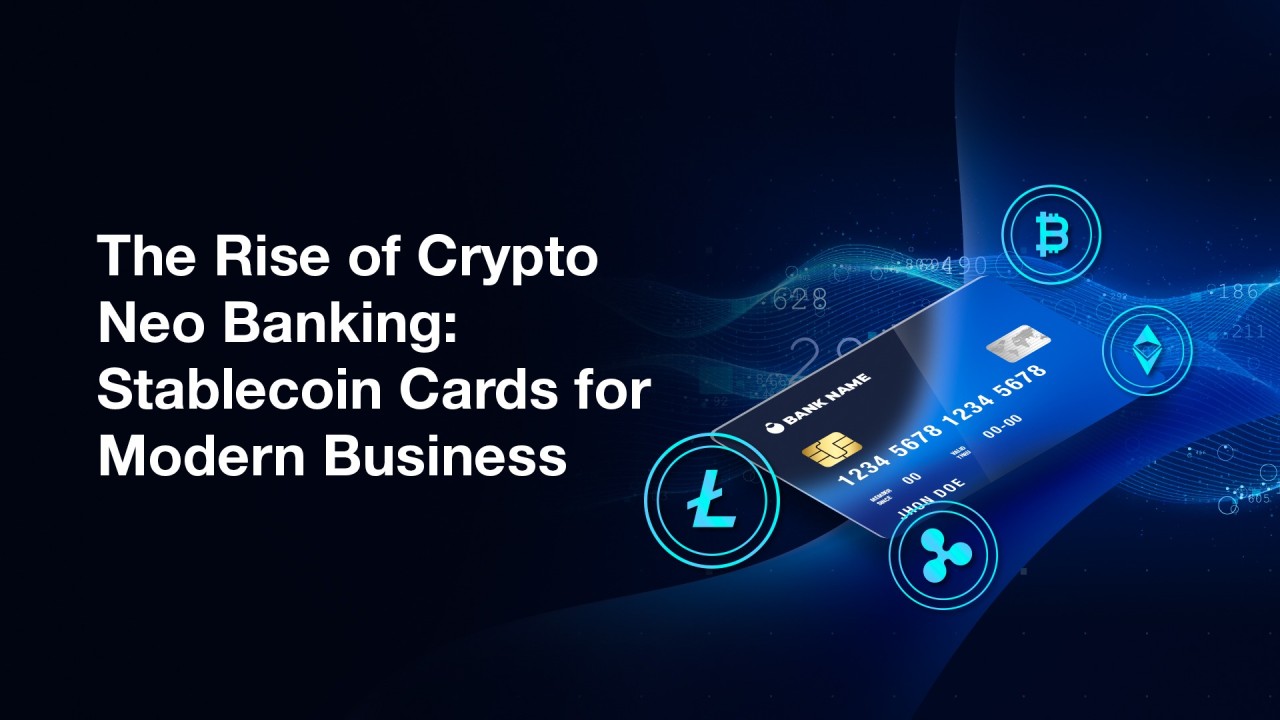
USDC Similar Tools: 7 Stablecoin Platforms Compared in 2026 - Using USDC for Corporate Spending: Card Platforms.
Holding USDC is one thing. Spending it on SaaS subscriptions, ad campaigns, and travel is another. That is where stablecoin virtual card platforms come in.
A corporate crypto card platform lets a business fund a single account with USDC or USDT, issue multi-currency virtual cards to teams, and control operating expenses in real time. This bridges the gap between stablecoin treasury and everyday business payments.
For example, Cardfornia is a Singapore-based fintech platform that provides crypto virtual cards designed for corporate businesses and startups. Organizations can fund an account with stablecoins such as USDT and USDC, issue virtual cards at scale, and maintain real-time control over operating expenses. Common use cases include:
- Paying for AI tool subscriptions like ChatGPT, Claude, and Midjourney
- Funding digital advertising on Meta Ads, Google Ads, and TikTok Ads
- Covering SaaS and cloud subscriptions such as AWS, Azure, and Figma
- Managing global travel and procurement spend
Cardfornia emphasizes high-limit cards for ad spend to reduce account ban risks, automatic multi-currency settlement for SaaS, and real-time currency exchange for cross-border transactions. Client funds are held 100% in segregated accounts with third-party licensed custodians, and the platform operates through licensed partners across Hong Kong, the UK, the US, and Canada.
For teams that already hold USDC and want to spend it without manual off-ramping, this type of platform is a practical complement to stablecoin infrastructure tools. You can learn more about how stablecoins turn into everyday business spend in this guide to stablecoin corporate payments.
How to Choose the Right USDC Similar Tool
Your decision should start with the job you need done:
If you need a stablecoin for compliance-sensitive business payments: USDC or PYUSD. Both have strong regulatory profiles and frequent attestations.
If you need maximum liquidity and trading pair coverage: USDT. It dominates global exchange volume despite less regulatory oversight.
If decentralization is your priority: DAI. Collateral is verifiable on-chain, but smart contract risk applies.
If you need stablecoin infrastructure APIs: Circle for USDC-native development, Bridge for orchestration plus issuance, Crossmint for a single-vendor stack, or Paxos for regulated branded issuance.
If you need to spend USDC on business expenses: A corporate crypto virtual card platform that supports USDC funding, multi-currency settlement, and team-level spend controls.
Many experienced teams hold multiple stablecoins to diversify issuer risk. No single token or platform is risk-free, and each carries its own combination of counterparty, regulatory, and technical risk.
For a deeper comparison of high-limit card options that support stablecoin funding, see this guide to high limit crypto cards in 2026. If you are managing recurring SaaS billing with virtual cards, the one-click subscription setup card guide explains how to reduce failed renewals and checkout friction.
Related reading
- Blockchain Payments in 2026: How Businesses Can Get Started - Learn how blockchain payments work, the key systems behind them, and practical steps for businesses to accept and manage crypto and stablecoin payments in 2026.
- Crypto Payment Cards for Ad Agencies: A 2026 Guide - How ad agencies can use crypto payment cards to fund Meta, Google, and TikTok campaigns, reduce declines, and manage multi-currency ad spend in 2026.
Sources and further reading
- Top 5 USDT Alternatives: USDC, PYUSD, USDP, GUSD, FDUSD - Nov 10, 2025 ... Top 5 USDT Alternatives: USDC, PYUSD, USDP, GUSD, FDUSD · 1. USDC — Circle's fully reserved dollar coin · 2. PYUSD — PayPal's stablecoin (issued ...
- Stablecoin Comparison: USDC vs USDT vs DAI vs PYUSD vs USDB - Compare major stablecoins side by side: market cap, backing, chains, fees, regulation, and use cases. Find the right stablecoin for payments, DeFi, or savings.
- Bridge Alternatives for Stablecoin Infrastructure - Compare Bridge to top alternatives for stablecoin infrastructure. Explore all-in-one platforms like Crossmint with wallets, onramps, orchestration, and compliance automation.
Frequently Asked Questions
What is the safest USDC alternative?
PYUSD is often cited alongside USDC for safety, thanks to NYDFS regulation through Paxos and backing in cash and Treasury bills. FDUSD offers a regulated option in Hong Kong. No stablecoin is risk-free; the safest choice depends on your jurisdiction and use case.
Is USDT or USDC better for business payments?
USDC is generally better for business payments because of its US regulatory standing, monthly Big Four attestations, and acceptance on compliance-sensitive platforms. USDT has deeper liquidity but less direct regulatory oversight.
Can I spend USDC directly on business expenses?
Yes. Corporate crypto virtual card platforms let you fund an account with USDC and issue virtual cards for SaaS, ads, AI tools, and travel. This avoids manual off-ramping and keeps funds in stablecoins until the moment of spend.
What is the best USDC infrastructure platform?
It depends on your requirements. Circle is best for USDC-native developer applications. Bridge suits custom stablecoin issuance and Stripe integration. Crossmint covers wallets, ramps, orchestration, and compliance in one API. Paxos is the choice for regulated branded issuance.
Does USDC work on multiple blockchains?
Yes. USDC supports 16 or more networks, including Ethereum, Solana, Base, Arbitrum, Polygon, and others. Circle's CCTP enables native cross-chain transfers across roughly 30 chains.
Conclusion
USDC remains the strongest default for compliance-sensitive stablecoin use, but the right tool depends on what you are trying to accomplish. USDT wins on liquidity, DAI on decentralization, PYUSD on regulatory pedigree, and FDUSD on Asia-focused exchange activity.
For businesses, the more important decision is often the platform layer: whether you need stablecoin orchestration APIs, issuance frameworks, or corporate virtual cards that turn USDC into everyday spend. Evaluate your actual workflow first, then match the token and tooling to it.