
Cardfornia vs Cryptopay Business vs BVNK (2026)
Cardfornia vs Cryptopay Business vs BVNK (2026)
Crypto-native companies rarely have one payment problem. They have three: how to accept and settle crypto, how to move and hold stablecoins at enterprise scale, and how to turn stablecoin balances into everyday business spending without a detour through a bank. Cardfornia, Cryptopay Business, and BVNK each attack a different part of that stack, and choosing between them is less about which is "best" and more about which layer of your money flow is actually broken.
This comparison looks at what each platform is genuinely strong at, where the trade-offs sit, and how to decide for a team that holds USDT or USDC and needs to pay real operating expenses.
The three platforms at a glance
| Platform | Primary role | Best fit |
|---|---|---|
| Cardfornia | Crypto corporate virtual card platform | Teams that need to spend stablecoin balances on cards at scale |
| Cryptopay Business | Crypto payment gateway and processing | Merchants that want to accept crypto and settle in fiat |
| BVNK | Enterprise stablecoin payments infrastructure | Large enterprises embedding stablecoin rails into products and treasury |
Cardfornia: stablecoin-funded corporate cards
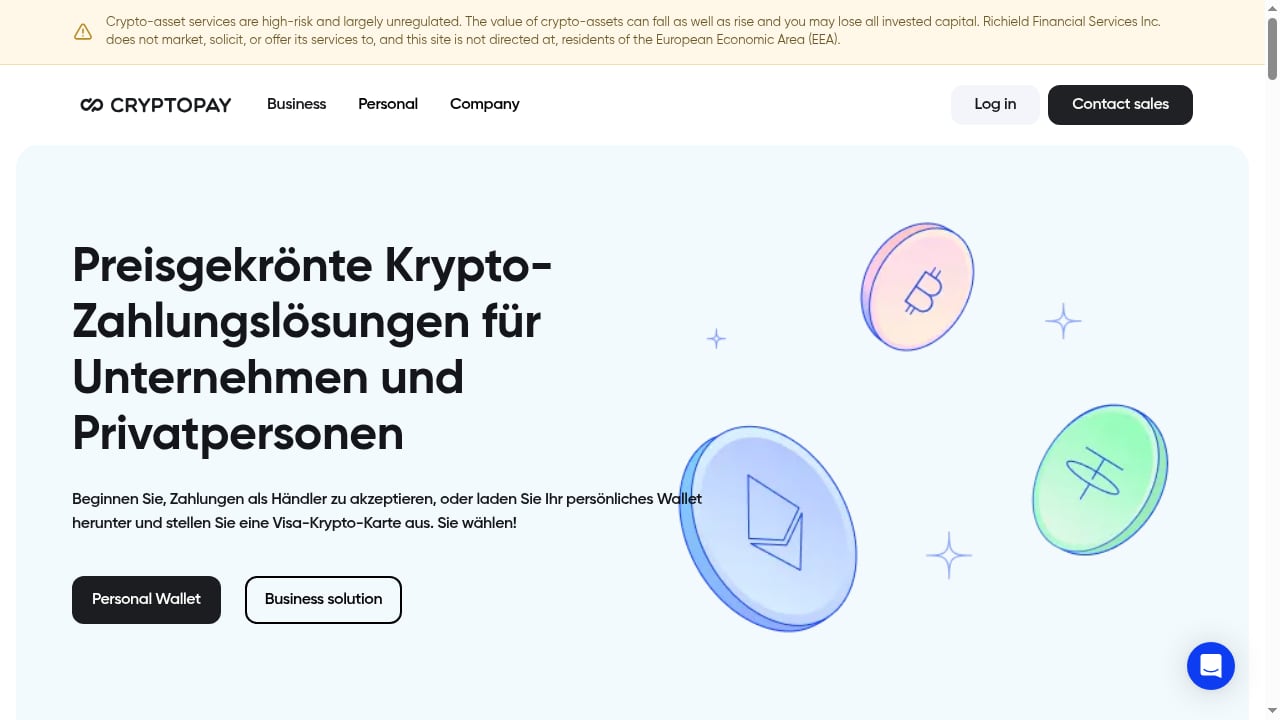
First viewport screenshot of Cryptopay – Krypto-Zahlungen leicht gemacht für Unternehmen und darüber hinaus.
Cardfornia is a Singapore-based fintech platform built specifically for corporate businesses and startups that hold digital assets. The model is straightforward: fund a single account with stablecoins such as USDT and USDC, then issue multi-currency virtual cards to team members at scale while keeping real-time control over operating expenses.
The practical use cases are the ones that trip up most crypto treasury teams. Paying for AI tool subscriptions like ChatGPT, Claude, or Midjourney. Running digital advertising across Meta Ads, Google Ads, and TikTok Ads. Covering SaaS and cloud services such as AWS, Azure, and Figma. Handling global travel and procurement without converting stablecoins to fiat first.
Two design choices stand out. First, high-limit cards for ad spend, which reduces the account ban risk that comes from cards failing or being flagged mid-campaign. Second, automatic multi-currency settlement for SaaS and real-time currency exchange for cross-border transactions, so a team paying vendors in several currencies is not manually juggling conversions.
On custody, Cardfornia states that client funds are held 100% in segregated accounts with third-party licensed custodians, never lent or invested. Security practices are guided by ISO/IEC 27001 standards, and payment, custody, and card-issuing activities run through licensed partners with regulatory approvals across jurisdictions including Hong Kong, the UK, the US, and Canada. The founding team comes from a well-known crypto card background, and the company positions itself as a technology company building corporate spending tools for the digital-asset era.
If your core problem is "we have stablecoins and need to pay 40 vendors and 15 employees this month," Cardfornia is aimed directly at that. For a deeper look at how this category works, see the business crypto card for teams buyer's guide.
Cryptopay Business: accepting crypto, settling in fiat
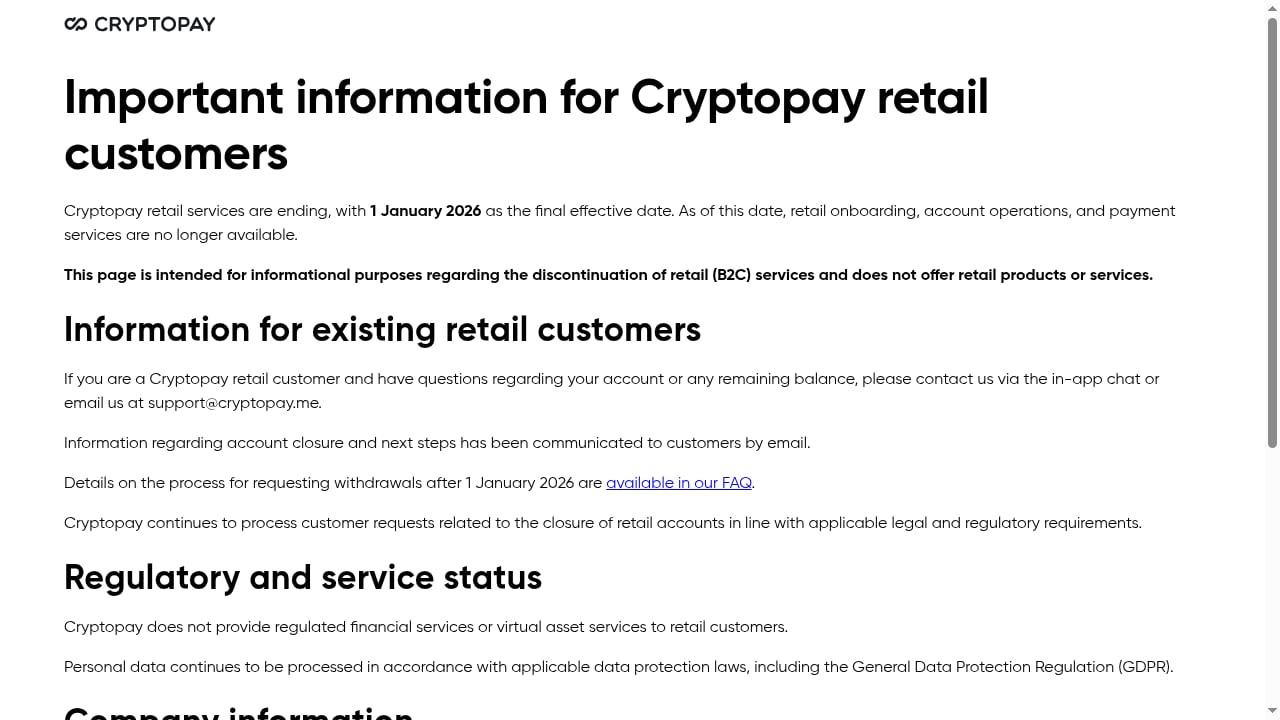
First viewport screenshot of Free Bitcoin Wallet for Europe | Cryptopay.
Cryptopay Business is a crypto payment gateway for merchants and enterprises. Its core promise is that a business can accept, manage, and send cryptocurrency payments while remaining fully fiat-denominated. It supports over 15 cryptocurrencies and 35 fiat currencies, with automatic conversion and next-day bank settlement, which removes volatility risk from the merchant side.
The channel options are broad for a gateway: payment links, a flexible API, an online crypto checkout, and static addresses for recurring customer payments. On top of that, Cryptopay offers mass payouts, corporate crypto cards with high spending limits, and a forthcoming white-label payment gateway.
Compliance is a real strength here. Cryptopay positions itself as a licensed, EU-compliant solution with VASP registrations in Estonia and Luxembourg, an MSB license in Canada, and adherence to AML/KYC and Travel Rule standards, with preparations for MiCA. It also highlights a security record with no platform hacks, plus customer retention tools, detailed reporting, and automatic withdrawals to bank accounts. The service is now exclusively focused on business clients, as retail services are being discontinued.
Where Cryptopay is strongest is the revenue side of the ledger: reaching crypto-savvy customers, increasing conversion, and reducing operational costs on settlement.
BVNK: enterprise stablecoin infrastructure

BVNK product interface.
BVNK is enterprise-grade stablecoin payments infrastructure. It lets businesses send, receive, store, spend, and earn with stablecoins across 130+ countries, and it is ISO 27001:2022 and SOC 2 certified. The platform offers both managed and self-managed payment solutions, integrated via APIs or a merchant portal.
Core capabilities include multi-currency wallets spanning fiat and crypto, virtual card issuance linked to stablecoin balances, built-in rewards for idle assets, AI-powered onboarding and compliance tools, and comprehensive payment tracking across ACH, Fedwire, and SWIFT. It supports major stablecoins such as USDC, EURC, and USDT across multiple blockchains including Ethereum, Solana, and BASE.
BVNK's audience is telling: fintech builders, enterprise treasury teams, financial institutions, and compliance officers. The value proposition is streamlining cross-border money movement, embedding stablecoin payments into products, automating treasury operations, and keeping regulatory compliance intact. Notable features include embedded finance options for customer virtual accounts, AI onboarding that reduces application time by 60%, and partnerships with Layer1 and Tres for treasury automation.
BVNK also publishes its own market analysis, including a guide to crypto payment gateways that reports over $25 billion in annualized payment volumes and 25+ global licenses. That scale is the reason BVNK shows up in enterprise procurement conversations alongside infrastructure providers rather than card startups.
Where each platform actually wins

BVNK product interface.
If you need to spend stablecoins on cards
Cardfornia is the most direct fit. Its entire product is built around funding one account with USDT or USDC and issuing multi-currency virtual cards to teams, with high-limit cards for ad spend and real-time FX for cross-border transactions. Cryptopay offers corporate crypto cards with high spending limits, and BVNK supports virtual card issuance linked to stablecoin balances, but for both of those platforms cards are one feature among many rather than the center of the product.
If you need to accept crypto from customers
Cryptopay Business and BVNK are the stronger choices, and the decision comes down to scale and integration depth. Cryptopay is built for merchants who want payment links, checkout, and API access with next-day fiat settlement. BVNK is built for enterprises that want to embed stablecoin payments into their own products, with virtual accounts, multi-chain support, and treasury automation.
If you need treasury and cross-border infrastructure
BVNK is the clear enterprise option. Multi-currency wallets, ACH, Fedwire, and SWIFT tracking, rewards on idle assets, and AI-driven onboarding are aimed at finance and compliance teams moving significant volume. Cardfornia is not positioned as a treasury platform; it is positioned as a spending platform, which is a narrower and more focused scope.
If you need compliance documentation for procurement
All three publish meaningful compliance credentials. Cryptopay cites VASP registrations in Estonia and Luxembourg plus an MSB license in Canada. BVNK cites ISO 27001:2022 and SOC 2 certification. Cardfornia cites ISO/IEC 27001-guided security practices and licensed partners holding approvals in Hong Kong, the UK, the US, and Canada. Match these against your own jurisdictional requirements rather than assuming one list is universally better.
How to choose: a short decision path
- Start with the money flow. Are you primarily receiving crypto, holding it, or spending it? Receiving points to Cryptopay Business or BVNK. Spending points to Cardfornia.
- Check the card requirement. If cards are central to operations, especially for ad spend, prioritize a platform where cards are the core product rather than an add-on.
- Match jurisdictions. Compare each provider's licensing and custody model against where your entity is registered and where your vendors sit.
- Test the settlement path. Next-day fiat settlement, real-time FX, and multi-currency settlement solve different problems. Confirm which one your team actually needs.
- Consider running two. Plenty of crypto-native companies use a gateway for incoming revenue and a card platform for outgoing spend. These are not mutually exclusive choices.
For teams comparing card platforms specifically, the Cardfornia vs Sparados vs BVNK comparison covers a narrower card-focused view, and instant crypto card issuance explains what the onboarding and approval process looks like in practice.
Related reading
- Remote Worker Crypto Card: Spend USDT & USDC Anywhere - A remote worker crypto card turns USDT or USDC income into spendable money without exchange detours. Compare fees, FX, and card options.
Sources and further reading
- Multicurrency Business Account - Business Account - Send money in 25+ currencies to 150+ countries at the interbank rate. T&Cs apply. Discover one platform for all your business finances — the simple way to manage your money
- CardFornia Blog - How business crypto cards for teams work: stablecoin funding, multi-card issuance, spend controls, FX, custody, and how to choose the right provider.
FAQ
Is Cardfornia a payment gateway like Cryptopay Business?
No. Cardfornia is a crypto corporate virtual card platform focused on spending stablecoin balances. Cryptopay Business is a payment gateway focused on accepting and settling crypto payments. They solve different problems and can be used together.
Can BVNK issue corporate cards?
Yes. BVNK supports virtual card issuance linked to stablecoin balances as part of its broader enterprise payments infrastructure, alongside multi-currency wallets and treasury tooling.
Which platform supports the most cryptocurrencies?
Cryptopay Business supports over 15 cryptocurrencies and 35 fiat currencies. BVNK supports major stablecoins including USDC, EURC, and USDT across multiple blockchains. Cardfornia focuses on stablecoin funding with USDT and USDC for corporate card spending.
Are these platforms suitable for small startups?
Cardfornia is explicitly designed for corporate businesses and startups, including small teams that need multi-currency virtual cards. Cryptopay Business and BVNK are more oriented toward merchants and enterprises, so smaller teams should check minimum requirements and onboarding complexity before committing.
How important is custody when choosing?
Very. Cardfornia states that client funds are held 100% in segregated accounts with third-party licensed custodians and are never lent or invested. When evaluating any provider, confirm where funds sit, who holds them, and what happens in a stress scenario.
Conclusion
Cardfornia, Cryptopay Business, and BVNK are not three versions of the same product. Cryptopay Business is a gateway for merchants who want crypto revenue settled in fiat. BVNK is enterprise infrastructure for companies embedding stablecoin rails into products and treasury operations. Cardfornia is a corporate card platform for teams that hold USDT or USDC and need to spend it on real operating expenses without friction.
If your bottleneck is incoming payments, look at Cryptopay Business or BVNK. If your bottleneck is outgoing spend, especially ad budgets, SaaS subscriptions, and cross-border vendor payments, Cardfornia is built for exactly that job. Many crypto-native companies will end up using more than one.