
USDC Coin Explained: How the Digital Dollar Works in 2026
USDC Coin Explained: How the Digital Dollar Works in 2026
USDC is one of the most widely used stablecoins in the world, designed to hold a steady value of one U.S. dollar. For traders, it is a safe harbor during market volatility. For businesses, it is something more practical: a digital dollar that can move across borders in seconds and settle payments without the friction of traditional banking rails. This article explains what USDC coin is, how it stays pegged, where it fits in real business operations, and what risks to watch.
What Is USDC Coin?
USDC Coin Explained: How the Digital Dollar Works in 2026 - What Is USDC Coin?.
USDC (USD Coin) is a stablecoin issued by Circle Internet Group. It was announced in May 2018 and launched in September of that year through the Centre consortium, a joint venture between Circle and Coinbase. In August 2023, the consortium was dissolved, giving Circle full governance over the asset.
Each USDC is intended to be redeemable one-for-one for one U.S. dollar. The token originally ran as an ERC-20 token on Ethereum and has since expanded to multiple blockchains, including Base and Polygon. That multi-chain presence matters for businesses: it means USDC can be transferred on whichever network offers the best speed and cost for a given payment.
Unlike a central bank digital currency, USDC is issued by a private company rather than a government. It is also distinct from volatile cryptocurrencies such as Bitcoin or Ether, because its design goal is price stability rather than appreciation.
How USDC Stays Pegged to the Dollar
USDC Coin Explained: How the Digital Dollar Works in 2026 - How USDC Stays Pegged to the Dollar.
The peg is maintained through reserves. Circle holds cash and cash-equivalent assets, including short-term U.S. Treasury securities, to back the tokens in circulation. When demand rises, new USDC is minted; when holders redeem, tokens are burned and dollars are returned.
Reserve transparency has been a central part of USDC's positioning. Circle has engaged major accounting firms for reserve reporting, including Grant Thornton in earlier years and Deloitte for reserve attestations starting in 2023. These reports are published regularly so holders can review the composition of the backing assets.
The peg has not been perfectly unshakable. In March 2023, USDC briefly lost its dollar peg after Circle disclosed that $3.3 billion of its reserves were held at Silicon Valley Bank, which collapsed. The peg was restored within days. That episode is a useful reminder that even well-managed stablecoins carry reserve and banking-partner risk.
USDC vs Other Stablecoins: A Quick Comparison
USDC Coin Explained: How the Digital Dollar Works in 2026 - USDC vs Other Stablecoins: A Quick Comparison.
| Feature | USDC | Tether (USDT) |
|---|---|---|
| Issuer | Circle Internet Group | Tether Limited |
| Peg target | 1 U.S. dollar | 1 U.S. dollar |
| Reserve reporting | Regular attestations, Deloitte engaged since 2023 | Periodic reports, historically less detailed |
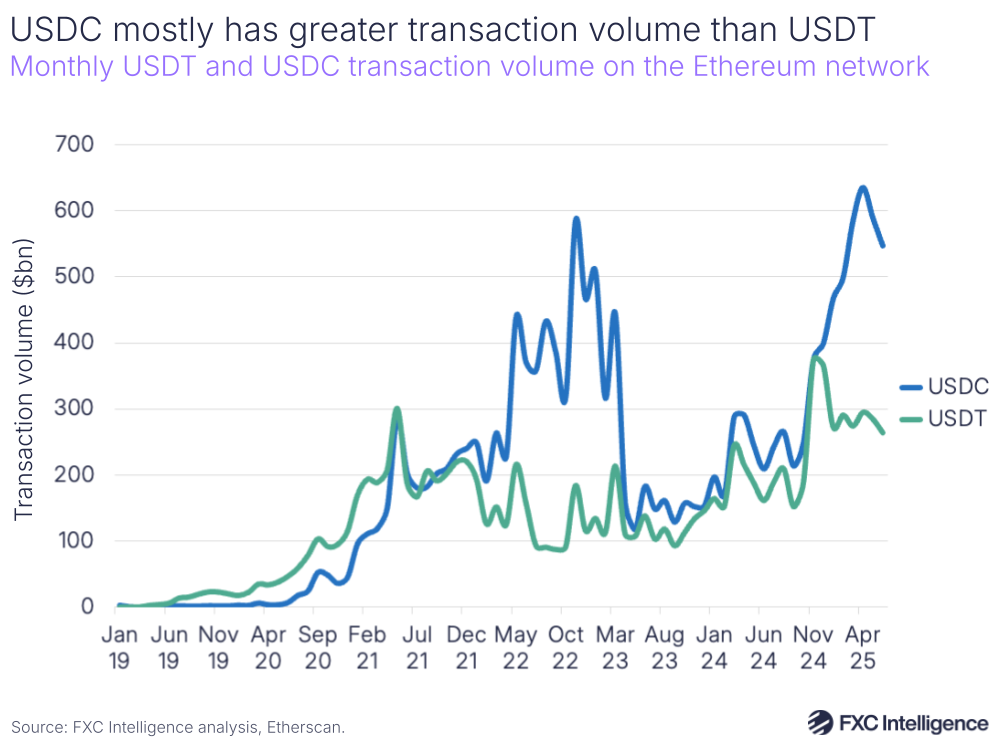
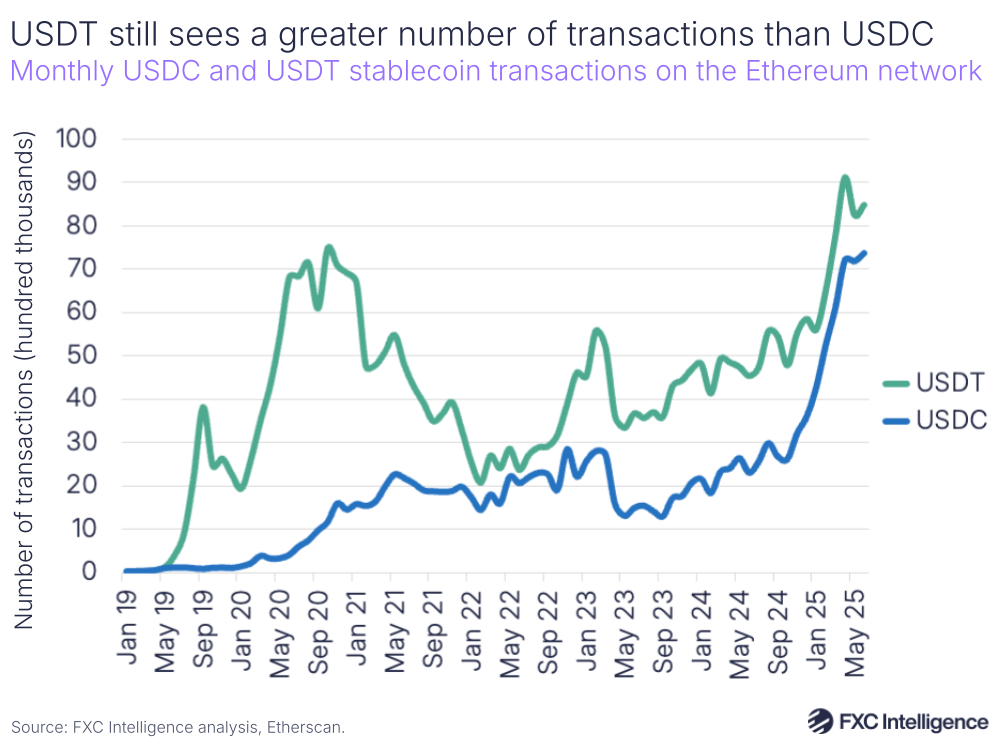
| Market position | Second-largest by market cap; led stablecoin transaction volume in August 2024 per Visa data | Largest by market capitalization |
| Regulatory posture | Issued by a regulated financial services business; Circle listed on NYSE in June 2025 | Subject to repeated investigations historically |
USDC and USDT have traded places in different metrics. USDT has long dominated by market capitalization, while USDC has often led in transaction volume and regulatory clarity. For businesses that prioritize transparency and compliance, USDC is frequently the default choice.
Why Businesses Use USDC
USDC Coin Explained: How the Digital Dollar Works in 2026 - Why Businesses Use USDC.
USDC's core appeal for companies is that it behaves like a dollar but moves like crypto. That combination enables several practical use cases.
Cross-Border Payments Without Bank Delays
Traditional international wires can take days and involve correspondent banking fees. USDC settles in minutes on most networks, often for fractions of a cent in network fees. For companies paying contractors, suppliers, or remote teams across multiple countries, this can materially reduce both cost and settlement time.
Treasury and Working Capital
Crypto-native companies often hold portions of their treasury in stablecoins to avoid converting in and out of fiat. USDC provides a dollar-denominated unit that can be deployed quickly without exposure to crypto price swings.
Accepting Digital Payments
Merchants and service providers can accept USDC directly, reaching customers who prefer to pay in digital assets. This is especially relevant for SaaS platforms, digital agencies, and Web3 businesses.
Funding Corporate Spending
This is where USDC becomes operational rather than just financial. Companies can fund a corporate account with USDC and issue virtual cards to employees for everyday business expenses. Platforms such as Cardfornia are built around this model: organizations fund a single account with stablecoins including USDC and USDT, then issue multi-currency virtual cards to teams with real-time spend controls.
That structure solves a specific problem for crypto-native businesses. Instead of converting USDC to fiat through an exchange, waiting for a bank transfer, and then loading a traditional corporate card, the stablecoin balance itself becomes the funding source. Expenses like AI tool subscriptions, cloud services, and digital advertising can be paid directly from that balance.
Real-World Use Cases for USDC Spending
USDC is no longer just a trading asset. It has moved into mainstream payment infrastructure. Visa initiated a pilot program in 2023 to send USDC via the Solana blockchain to payment firms Worldpay and Nuvei, who could then transfer payment to merchants. The UNHCR also ran a pilot in December 2022 to distribute cash assistance to Ukrainians displaced by the war using USDC.
For businesses, common USDC spending categories include:
- AI and software subscriptions: Tools like ChatGPT, Claude, and Midjourney bill in fiat, but the underlying funds can originate from a USDC balance.
- Digital advertising: Meta Ads, Google Ads, and TikTok Ads require card payments. A stablecoin-funded virtual card can cover these without converting the entire treasury.
- Cloud and SaaS: AWS, Azure, and Figma subscriptions are recurring expenses that benefit from automatic settlement and multi-currency handling.
- Travel and procurement: Cross-border bookings and vendor payments can be settled in the currency the merchant requires, with real-time exchange at the point of transaction.
If you want a deeper comparison of how different platforms handle stablecoin funding for corporate cards, see Cardfornia vs Reap vs Cryptopay Business.
Risks and Limitations of USDC
USDC is designed for stability, but it is not risk-free. Understanding the limitations is part of using it well.
Reserve and counterparty risk. The peg depends on the quality and liquidity of the assets backing it, as well as the banking partners holding those assets. The March 2023 depeg showed how quickly confidence can be tested.
Regulatory uncertainty. Stablecoin rules are still evolving in major jurisdictions. Issuers and service providers may face changing compliance requirements that affect availability or functionality.
Blockchain risk. USDC exists on multiple networks, and each carries its own smart contract, bridge, and congestion risks. Sending USDC on the wrong network can result in permanent loss.
Not a yield product by itself. Holding USDC does not generate returns unless you deploy it in a lending or DeFi protocol, which introduces additional risk.
For a broader explanation of how stablecoins fit into business finance, see USDC Crypto Explained: How the Digital Dollar Works in 2026.
How to Start Using USDC for Business Spending
If your company already holds USDC, the operational question is how to turn it into usable purchasing power. There are a few common paths:
- Convert to fiat and use a traditional bank account. Simple but slow, and it reintroduces currency conversion costs.
- Use a crypto payment gateway. Good for accepting USDC, less useful for issuing cards to employees.
- Use a stablecoin-funded corporate card platform. This keeps funds in USDC, issues virtual cards to team members, and provides spend controls.
The third option is the one most crypto-native companies are adopting. It preserves the benefits of holding digital dollars while giving finance teams the controls they need: per-card limits, real-time authorization, and transaction visibility. For a closer look at how real-time funding works, see Virtual Card With Real-Time Funding: How It Works in 2026.
When evaluating platforms, check where client funds are held, whether they are segregated from operating capital, and what regulatory licenses the payment and custody partners hold. Cardfornia, for example, states that client funds are held 100% in segregated accounts with third-party licensed custodians and are never lent or invested, with security practices guided by ISO/IEC 27001 standards.
Related reading
- Cardfornia vs OneSafe vs Cryptopay Business (2026) - Cardfornia vs OneSafe vs Cryptopay Business compared for 2026: stablecoin corporate cards, neo-banking, and crypto payment gateways.
- Cardfornia vs Sparados vs Wirex: Best Crypto Card for Business? - Cardfornia vs Sparados vs Wirex compared for 2026: stablecoin corporate cards, fiat expense tools, and consumer crypto payments. Find your best fit.
- Cardfornia vs Cryptopay Business: Which Fits Your Team? - Cardfornia vs Cryptopay Business compared for 2026: stablecoin corporate cards and spend controls against a crypto payment gateway with cards.
Sources and further reading
- USDC price today, USDC to USD live price, marketcap and chart | CoinMarketCap - The live USDC price today is $0.9999 USD with a 24-hour trading volume of $16,593,492,743.16 USD. We update our USDC to USD price in real-time.
- USDC | The world’s largest regulated digital dollar - Send, spend, save, and trade with a fully reserved stablecoin. Trusted by millions, issued by Circle.
- USDC (cryptocurrency) - From Wikipedia, the free encyclopedia
FAQ
Is USDC the same as USD?
No. USDC is a digital token designed to be worth one U.S. dollar, but it is not issued by the U.S. government. It is a stablecoin issued by Circle Internet Group, backed by reserves of cash and cash equivalents.
Is USDC a good investment?
USDC is not designed as an investment. Its value is intended to remain stable at one dollar, so it does not appreciate. It is better understood as a digital dollar for holding, sending, and spending rather than a growth asset.
Can I use USDC to pay for business expenses?
Yes. You can use USDC directly with merchants that accept it, or fund a corporate card account with USDC and issue virtual cards for expenses like software subscriptions, advertising, and travel. Platforms like Cardfornia are built specifically for this use case.
What happens if USDC loses its peg?
It has happened before. In March 2023, USDC briefly traded below one dollar after Circle disclosed exposure to Silicon Valley Bank. The peg was restored within days. A sustained depeg would mean USDC holders could not redeem one-for-one, which is why reserve transparency matters.
Which blockchains support USDC?
USDC is available on multiple networks, including Ethereum, Base, and Polygon. Circle discontinued USDC on the TRON blockchain in 2024. Always confirm the correct network before sending, because cross-network mistakes can be irreversible.
How does USDC compare to USDT?
Both are dollar-pegged stablecoins. USDT is larger by market capitalization, while USDC is generally viewed as more transparent and more tightly regulated. USDC overtook USDT in stablecoin transaction volume in August 2024 according to Visa data.
Conclusion
USDC has evolved from a trading tool into genuine financial infrastructure. It offers businesses a dollar-denominated asset that can move globally in minutes, settle cheaply, and integrate with modern payment systems. The trade-offs are real: reserve risk, regulatory shifts, and network complexity all require attention.
For companies that already operate in digital assets, the practical next step is often not whether to hold USDC, but how to spend it efficiently. Stablecoin-funded corporate cards close that gap, turning a treasury balance into everyday purchasing power for teams. As stablecoin regulation matures and more payment infrastructure adopts digital dollars, USDC's role in business finance is likely to expand rather than shrink.