
BingCard Review 2026: Fees, Features & Real Risks

BingCard Review 2026: Fees, Features, and Real Risks
BingCard markets itself as a low-fee gateway for spending Bitcoin, Ethereum, USDT, and USDC through virtual and physical debit cards. Founded in 2021 and operated under Canadian law, the platform promises instant virtual card issuance, no KYC for virtual cards, and global usability through major payment networks. But how much of that holds up under scrutiny? This review digs into the actual features, fee signals, user complaints, and the decision criteria that matter before you deposit funds.
What Is BingCard?
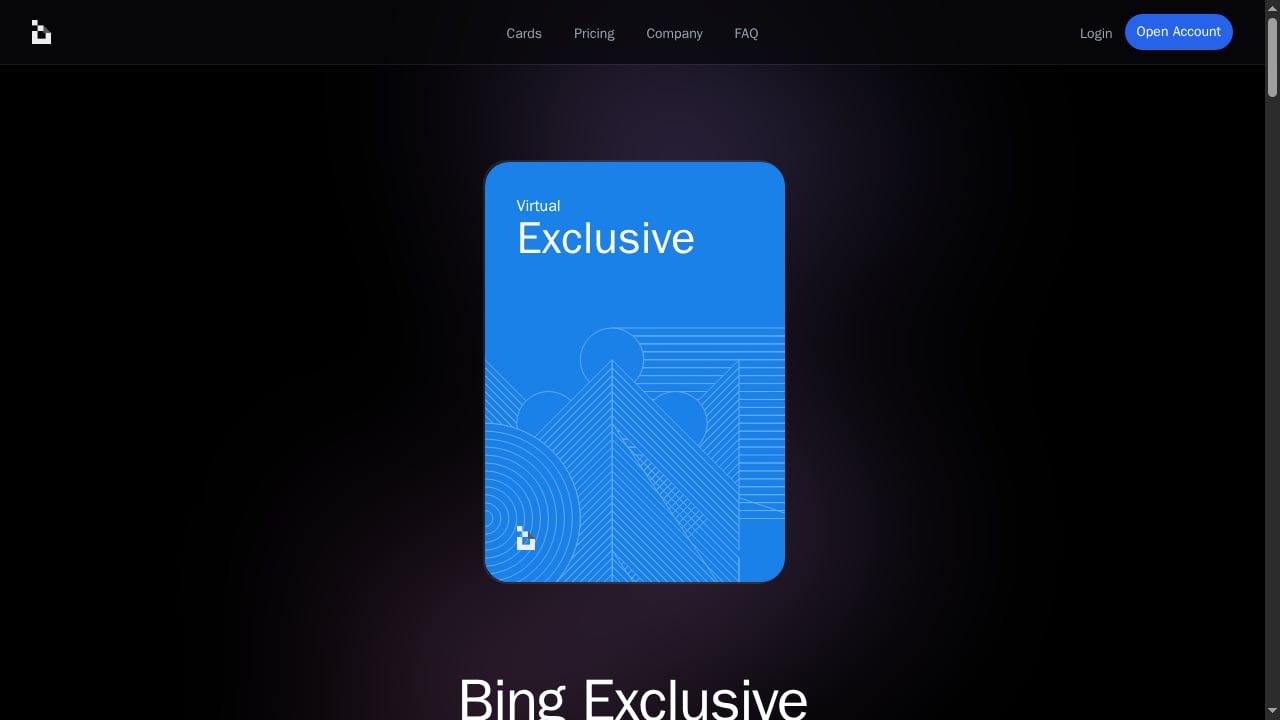
First viewport screenshot of Bing Exclusive Virtual Crypto Card.
BingCard is a crypto debit card platform offering two virtual card tiers—Star and Exclusive—plus a physical Platinum card shipped from Hong Kong. The core pitch is simple: deposit crypto, convert it to spendable balance, and use the card wherever traditional debit cards are accepted, including online checkouts, subscriptions, bill payments, and in-store purchases.
The platform emphasizes three differentiators:
- No KYC for virtual cards — a rare position in the crypto card market
- Instant issuance — virtual cards delivered in under five minutes
- No declined transaction fees — a small but meaningful cost advantage
Supported assets include BTC, ETH, USDT, and USDC. BingCard also claims integration with PayPal, WeChat Pay, and Alipay, which broadens its appeal for cross-border and e-commerce spending.
Who Is BingCard Actually For?
First viewport screenshot of Pricing and Plans - BingCard.
BingCard is not a one-size-fits-all product. Based on its feature set and limitations, it suits a specific profile:
Good Fit
- Privacy-conscious spenders who want a virtual card without submitting identity documents
- Frequent online shoppers using crypto for subscriptions, digital services, or international purchases
- Freelancers and remote workers paid in USDT or USDC who want a direct spending path
- Crypto holders who want to avoid selling on exchanges and transferring fiat to a bank first
Poor Fit
- Users who need reliable customer support — Trustpilot complaints suggest slow or unresponsive service
- Anyone depositing small amounts — one reviewer reported depositing $30 and being unable to proceed or withdraw cleanly
- Regulated business users — the no-KYC model creates compliance questions for corporate accounting and tax reporting
- People who prioritize fund safety — the platform's custody and issuer arrangements are not clearly documented
Virtual Cards: Star vs Exclusive
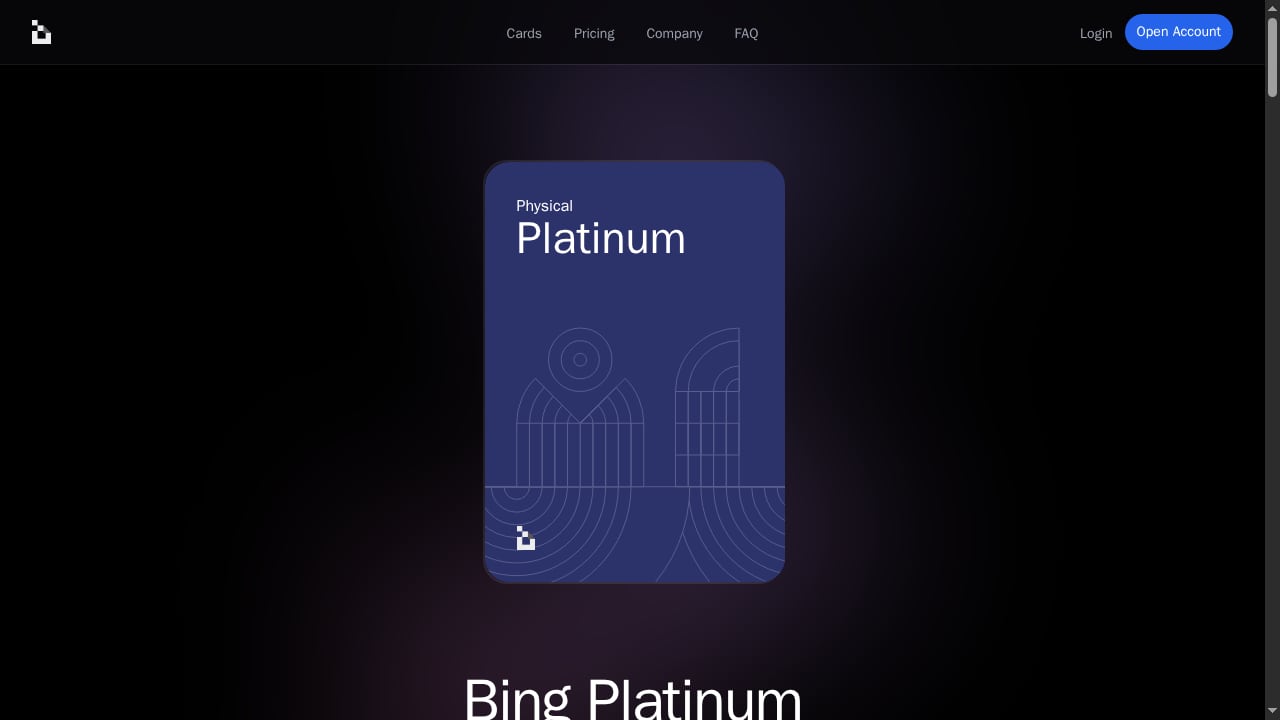
First viewport screenshot of Bing Star Virtual Crypto Card.
BingCard's virtual card lineup is its main entry point. Here's what the available information suggests:
| Feature | Star Card | Exclusive Card |
|---|---|---|
| Monthly maintenance | $0 | Not publicly disclosed |
| KYC required | No | Not publicly disclosed |
| Issuance time | Under 5 minutes | Under 5 minutes |
| Supported assets | BTC, ETH, USDT, USDC | BTC, ETH, USDT, USDC |
| Declined transaction fee | $0 | $0 |
Important caveat: BingCard's own comparison page claims no monthly or annual maintenance fees across the board, but the product context indicates the Star tier is the $0 option while Exclusive carries different terms. This inconsistency is itself a signal—verify current pricing on the official site before depositing.
Physical Platinum Card
The physical Platinum card ships globally from Hong Kong and adds ATM cash withdrawal capability. For users who need in-person spending or cash access, this is the meaningful upgrade. However, physical card issuance typically involves more verification than virtual cards, and shipping times vary by region.
Key considerations for the physical card:
- ATM withdrawals are supported, but fee structures for out-of-network ATMs are not clearly published
- 3-year validity is longer than many competitor cards, reducing renewal friction
- Global shipping is claimed, but delivery reliability is difficult to verify independently
Fee Structure: What's Clear and What Isn't
BingCard's fee transparency is mixed. The platform advertises:
- No monthly or annual maintenance fees
- No declined transaction fees
- Low transaction fees
What's not clearly published:
- Exact conversion spreads from crypto to fiat at point of sale
- ATM withdrawal fees for the physical card
- Card issuance or replacement fees
- Inactivity penalties, if any
This is a common pattern among crypto card providers: headline fees look attractive, while the spread on conversion is where costs hide. Before using BingCard, calculate your effective cost by comparing the rate you receive against a spot price reference. A 1–2% spread can quickly erase the benefit of zero maintenance fees.
Setup Process: Fast, But With Friction Points
The virtual card setup is designed to be quick:
- Create an account on bingcard.com
- Deposit supported crypto (BTC, ETH, USDT, or USDC)
- Select a virtual card tier
- Receive card details within minutes
- Link to payment platforms or use directly for online purchases
The no-KYC claim is the headline feature here. For users who value speed and privacy, this is genuinely differentiated. Most competing crypto cards require identity verification even for virtual products.
However, the Trustpilot complaint highlights a real friction point: a user deposited $30, was told they were short on funds to proceed, and then struggled to withdraw. This suggests minimum balance requirements or deposit thresholds that are not clearly communicated upfront. Before depositing, confirm:
- Minimum deposit amount
- Minimum balance to activate a card
- Withdrawal minimums and fees
- Whether deposited funds are locked once a card is issued
User Sentiment: The Red Flags
Independent user feedback paints a less flattering picture than BingCard's marketing.
Trustpilot
The most visible Trustpilot review is stark: a user reports depositing $30, being unable to get the virtual card due to insufficient funds, and then facing withdrawal problems. The language used—"scammed me"—reflects frustration, though a single review is not conclusive evidence of fraud.
KYCnot.me
KYCnot.me, a community resource that evaluates privacy-focused crypto services, gives BingCard a 4/10 score with six user ratings averaging 1.7/5. Critically, the listing notes that BingCard "requires KYC" despite the no-KYC marketing for virtual cards. This discrepancy is worth investigating: the no-KYC claim may apply only to specific card tiers or initial issuance, while withdrawals, higher limits, or physical cards trigger verification.
The gap between marketing claims and user-reported reality is the single most important finding in this review. Approach BingCard with the assumption that KYC may be required at some point, regardless of the virtual card pitch.
Privacy and Security Assessment
BingCard's privacy positioning deserves scrutiny:
What supports the privacy claim:
- No KYC for virtual card issuance
- No credit checks
- Canadian legal operation, which provides some regulatory framework
What undermines it:
- Physical cards shipped from Hong Kong, where issuer and custody arrangements are less transparent
- Community listings indicating KYC is required for the service overall
- Limited public documentation on fund custody, insurance, or issuer relationships
For users whose primary motivation is privacy, BingCard's no-KYC virtual card is interesting but not a guarantee of anonymity. Payment network integration, IP logging, and blockchain analytics can still link transactions to identities in many cases.
For a broader view on how compliant crypto cards handle regulatory safeguards, see this guide on compliant crypto payment cards in 2026.
BingCard vs Alternatives
How does BingCard stack up against other crypto spending options?
BingCard vs OneSafe
OneSafe targets global business banking with crypto rails, whereas BingCard is primarily a consumer spending tool. If you need business accounts, multi-currency management, and compliance-friendly infrastructure, OneSafe's approach is more aligned. BingCard's no-KYC virtual cards are faster but less suitable for business bookkeeping.
BingCard vs Corporate Travel Stablecoin Cards
For teams spending USDC or USDT on travel and expenses, dedicated corporate travel stablecoin cards offer spend controls, receipt capture, and policy enforcement that BingCard does not. BingCard's physical card can technically handle travel spending, but without the administrative layer businesses typically need.
BingCard vs Request Finance
Request Finance focuses on stablecoin B2B payments and AP automation, not consumer spending. If your need is paying contractors or vendors in stablecoins, Request Finance is the better comparison. BingCard solves a different problem: converting personal crypto holdings into everyday spend.
The No-KYC Tradeoff
BingCard's no-KYC virtual card is its clearest differentiator. Most competitors—including major exchange-branded cards—require full identity verification. The tradeoff is higher risk: less recourse if funds are lost, less regulatory protection, and more uncertainty about issuer stability.
Decision Criteria: Should You Use BingCard?
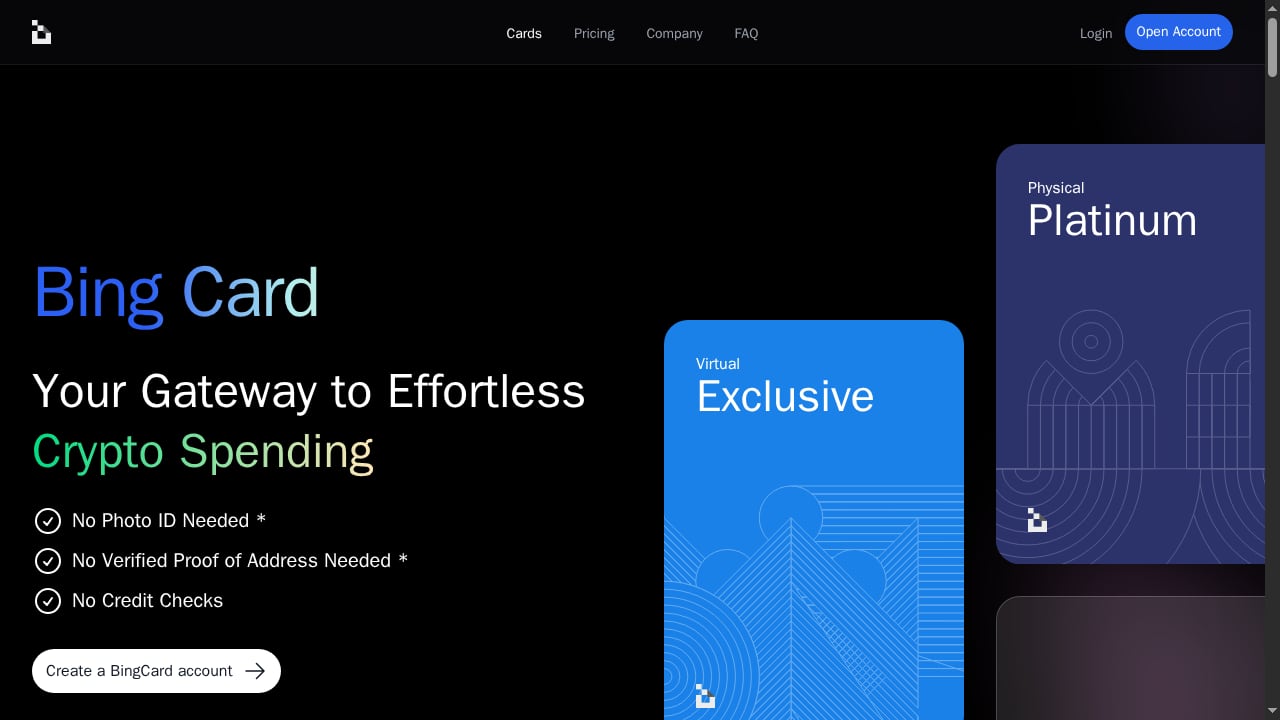
First viewport screenshot of BingCard - Virtual and Physical Crypto Debit Cards.
Before depositing any funds, work through this checklist:
Use BingCard if:
- You need a virtual crypto card quickly without KYC
- You're comfortable with the risk of limited customer support
- You're spending small-to-moderate amounts you can afford to lose access to temporarily
- You've verified current fees and minimums directly with the platform
Avoid BingCard if:
- You need reliable support and clear dispute resolution
- You're depositing funds you cannot afford to have locked
- You require regulatory-compliant spending for business purposes
- You're uncomfortable with the gap between marketing claims and community-reported reality
Test small first. If you decide to try BingCard, deposit the minimum amount required, test a small transaction, and attempt a withdrawal before committing larger sums. This approach limits downside while revealing how the platform actually behaves.
Sources and further reading
- Read Customer Service Reviews of bingcard.com - Trustpilot - Scammed me. Deposited $30 to get their virtual crypto debit card, didnt allow me since I was short on funds so I tried to withdraw.
- Crypto Cards Compared: Why Bing Card Stands Out from the Rest - Discover the unique advantages of Bing Card in the world of crypto cards. Our in-depth comparison highlights why Bing Card stands out among its competitors, covering features, benefits, and user experiences. Make an informed choice for your crypto transactions!
- BingCard comments on KYCnot.me - BingCard is a cards service that accepts Fiat. It requires KYC and has a score of 4/10. There are 6 user ratings averaging 1.7/5.
FAQ
Is BingCard legit?
BingCard is a real platform operating since 2021 under Canadian law, but independent user reviews are poor. KYCnot.me gives it a 4/10 score with a 1.7/5 average user rating, and Trustpilot shows complaints about deposits and withdrawals. It is not an outright scam based on available evidence, but it carries meaningful risk.
Does BingCard really require no KYC?
BingCard advertises no KYC for virtual cards. However, KYCnot.me lists the service as requiring KYC, and user reports suggest verification may be triggered for withdrawals, higher limits, or physical cards. Treat the no-KYC claim as applying only to initial virtual card issuance, not the entire service.
What cryptocurrencies does BingCard support?
BingCard supports Bitcoin (BTC), Ethereum (ETH), Tether (USDT), and USD Coin (USDC) for deposits and card funding.
What are BingCard's fees?
BingCard advertises no monthly maintenance fees, no annual fees, and no declined transaction fees. Conversion spreads, ATM fees, and withdrawal minimums are not clearly published. Verify these directly before depositing.
Can I withdraw cash with BingCard?
The physical Platinum card supports ATM cash withdrawals. Virtual cards are limited to online and card-not-present transactions.
How fast is BingCard virtual card issuance?
BingCard claims virtual cards are issued in under five minutes after deposit. Actual timing may vary based on network congestion and deposit confirmation.
Final Verdict
BingCard offers a genuinely interesting proposition: fast, no-KYC virtual crypto cards with low headline fees and multi-network compatibility. For privacy-conscious users who understand the risks, it fills a niche that few competitors address.
But the red flags are significant. Poor independent ratings, a KYC discrepancy between marketing and community documentation, unclear fee structures, and at least one public complaint about locked funds suggest the platform's execution does not match its promises. The no-KYC feature that makes BingCard attractive is also what makes it risky—less verification means less recourse when things go wrong.
Rating: Approach with caution. Test with minimal funds, verify every fee and limit before committing, and keep expectations aligned with the platform's actual track record rather than its marketing.
For users who need stablecoin spending with stronger compliance and support infrastructure, explore how stablecoins work and compare compliant crypto payment card options before deciding.