
Cardfornia vs Bitsa Card: Which Crypto Card Fits?
Cardfornia vs Bitsa Card: Which Crypto Card Fits Your Use Case?
If you are choosing between Cardfornia and Bitsa Card, the decision is less about which card is "better" and more about what you need it to do. Cardfornia is built for businesses and AI agents that need programmable, self-custodied stablecoin payments at scale. Bitsa Card is a consumer-oriented prepaid Visa that lets individuals spend crypto as euros in everyday life. This comparison breaks down where each one fits, using only supported facts from the cited sources.
Quick Verdict
- Choose Cardfornia if you are a business or crypto-native team that needs to issue cards at scale, pay for AI tool subscriptions, ad accounts, or SaaS, and keep funds in your own self-custodied wallet with real-time controls.
- Choose Bitsa Card if you are an individual in Europe who wants a prepaid Visa for daily spending, cashback, a Spanish IBAN, and mobile wallet support.
- They are not direct substitutes for the same buyer. Cardfornia targets autonomous AI payments and business spend management; Bitsa targets personal crypto spending and digital banking.
What Each Product Actually Is
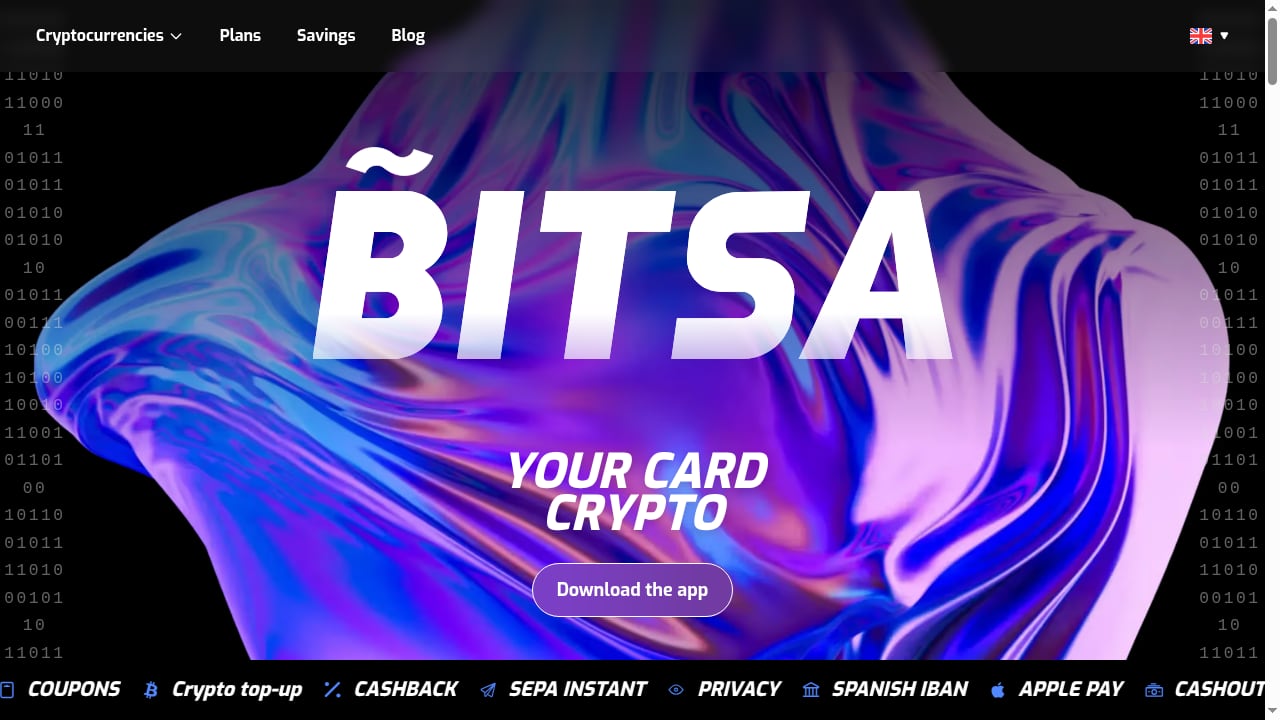
First viewport screenshot of bitsacard.com.
Cardfornia: Self-Custody Payment Cards for AI Agents and Businesses
Cardfornia is a platform that provides secure, stable AI payment cards designed for AI agents' autonomous payments, as well as virtual cards for business payments. Businesses top up a single account with stablecoins (USDT/USDC) into their own self-custodied wallet, issue cards at scale, and maintain real-time control over every transaction.
Key capabilities from the product context:
- Self-custodied funds: users hold their own keys, and funds go directly to a dedicated sub-account with a licensed card provider, never through Cardfornia.
- Dynamic card issuance: create and manage cards programmatically.
- Merchant whitelisting: restrict each card to approved merchants.
- Minute-level authorization: control and review transactions in near real time.
- Full audit logs: trace every card and transaction.
- Stable, high-limit card payments that reduce the risk of account bans, especially for ad accounts.
- Licensing and trust: team certified to ISO/IEC 27001; licensed white-label partners holding MSO, API, MSB, and MTL licenses. Incorporated in Singapore as CARDFORNIA PTE. LTD.
Cardfornia's stated use cases include AI tool subscriptions (ChatGPT, Claude, Cursor), digital ads (Meta, Google, TikTok, AppLovin), SaaS platforms (AWS, Azure, Google Cloud), and global purchases including travel. The company reports average monthly volumes per card of $200+ for AI tools, $2,800+ for ads, and $150+ for SaaS.
Bitsa Card: A Prepaid Visa for Spending Crypto as Euros
Bitsa Card is a prepaid Visa card that lets users spend cryptocurrency as euros in physical and online stores. It combines crypto top-ups, euro balances, physical and virtual cards, and everyday card payments in one mobile app.
Key capabilities from the product context:
- Crypto top-ups: up to 15 supported cryptocurrencies, including Bitcoin, Ethereum, and others.
- Other funding methods: bank transfer, payment card, wallet, or Bitsa Voucher.
- European IBAN: each account includes a Spanish IBAN for incoming transfers.
- Mobile wallets: eligible cards work with Apple Pay, Google Pay, and Samsung Pay wherever Visa is accepted.
- Plans: Free (no maintenance fees, national IBAN), Move (more cards with separate balances, cashback, eSIM exchange), and Pro (unlimited purchases and top-ups, unlimited fee-free transfers, crypto trading with best selling commissions).
- Features: cashback, SEPA Instant transfers, privacy, cashout, contactless payments, and multi-card management.
Bitsa positions itself as a practical solution for spending crypto in daily life. Its blog covers personal finance topics such as compound interest, DCA, emergency funds, and crypto trends, which signals a consumer-education focus rather than a business-infrastructure focus.
Head-to-Head Comparison
First viewport screenshot of bitsacard.com.
| Dimension | Cardfornia | Bitsa Card |
|---|---|---|
| Primary audience | Businesses, crypto-native teams, AI agents | Individual consumers in Europe |
| Custody model | Self-custody wallet; funds go to a dedicated sub-account with a licensed card provider, never through Cardfornia | Prepaid account with euro balance; crypto is topped up and converted to euros for spending |
| Card type | Virtual cards issued at scale | Physical and virtual prepaid Visa |
| Stablecoin support | USDT/USDC top-ups | Supports USDT among up to 15 cryptocurrencies |
| Controls | Dynamic issuance, merchant whitelisting, minute-level authorization, full audit logs | Multi-card management, separate balances on Move plan |
| AI agent payments | Core use case | Not a stated use case |
| Cashback | Not stated in the product context | Up to 15% headline rate (tier conditions may apply) |
| Regions | Global purchases supported | EU-focused; Spanish IBAN |
| Licensing signals | ISO/IEC 27001 team certification; white-label partners hold MSO, API, MSB, MTL licenses | Not detailed in the cited sources |
| Best for | AI tool subscriptions, ad spend, SaaS, global procurement | Everyday spending, cashback, SEPA transfers, mobile wallet payments |
Where Cardfornia Has a Clear Advantage
1. Built for AI Agents, Not Just People
Cardfornia's core design is for AI agents' autonomous payments. That means dynamic card issuance, merchant whitelisting, minute-level authorization, and audit logs are native to the product. Bitsa Card is a consumer app; the cited sources do not describe agent-level controls or programmatic issuance. If your workflow involves agents paying for API credits, compute, or subscriptions, Cardfornia is purpose-built for that.
For a deeper look at this use case, see Crypto Dollar Payments for AI Agents: Cardfornia Guide.
2. Self-Custody of Funds
With Cardfornia, users hold their own keys, and funds go directly to a dedicated sub-account with a licensed card provider, never through Cardfornia. Bitsa Card operates as a prepaid account with a euro balance; the cited sources describe crypto top-ups and conversion to euros, not self-custody. For businesses that want to keep control of stablecoin balances, Cardfornia's model is materially different.
3. Business-Scale Card Issuance and Controls
Cardfornia supports issuing cards at scale with real-time control over every transaction. Merchant whitelisting and audit logs are useful for finance teams that need to enforce policy and reconcile spend. Bitsa's multi-card management is designed for personal use, not organizational spend governance.
4. Stable, High-Limit Payments for Ad Accounts and SaaS
Cardfornia explicitly targets ad spend (Meta, Google, TikTok, AppLovin) with stable, high-limit card payments that lower the risk of account bans, and SaaS platforms such as AWS, Azure, and Google Cloud. Bitsa is positioned for everyday spending; the cited sources do not describe high-limit business payments or ad-account reliability as a focus.
5. Global Business Purchases
Cardfornia covers cross-border procurement and business travel with real-time currency exchange. Bitsa is EU-focused with a Spanish IBAN. If your team pays vendors globally, Cardfornia's stated scope is broader.
Where Bitsa Card Has a Clear Advantage
First viewport screenshot of bitsacard.com.
1. Everyday Consumer Spending and Cashback
Bitsa Card offers cashback (up to 15% headline rate, though such rates typically require a tier or volume conditions), which is attractive for personal spending. Cardfornia's product context does not describe a consumer cashback program.
2. Physical Card and Mobile Wallets
Bitsa offers physical and virtual cards and supports Apple Pay, Google Pay, and Samsung Pay. Cardfornia's product context focuses on virtual cards for business and AI payments. If you need a plastic card for hotel deposits or contactless payments in stores, Bitsa is the more direct fit.
3. European IBAN and SEPA Transfers
Bitsa provides a Spanish IBAN and SEPA Instant transfers, which is useful for European residents who want to receive transfers and manage euros alongside crypto. Cardfornia's context does not describe a personal IBAN.
4. Tiered Plans for Individuals
Bitsa's Free, Move, and Pro plans give individuals a clear upgrade path for more cards, cashback, eSIM exchange, and unlimited purchases. Cardfornia's onboarding is oriented toward business KYB and team portals rather than consumer plan tiers.
Supported Weaknesses of Bitsa Card for Business Use
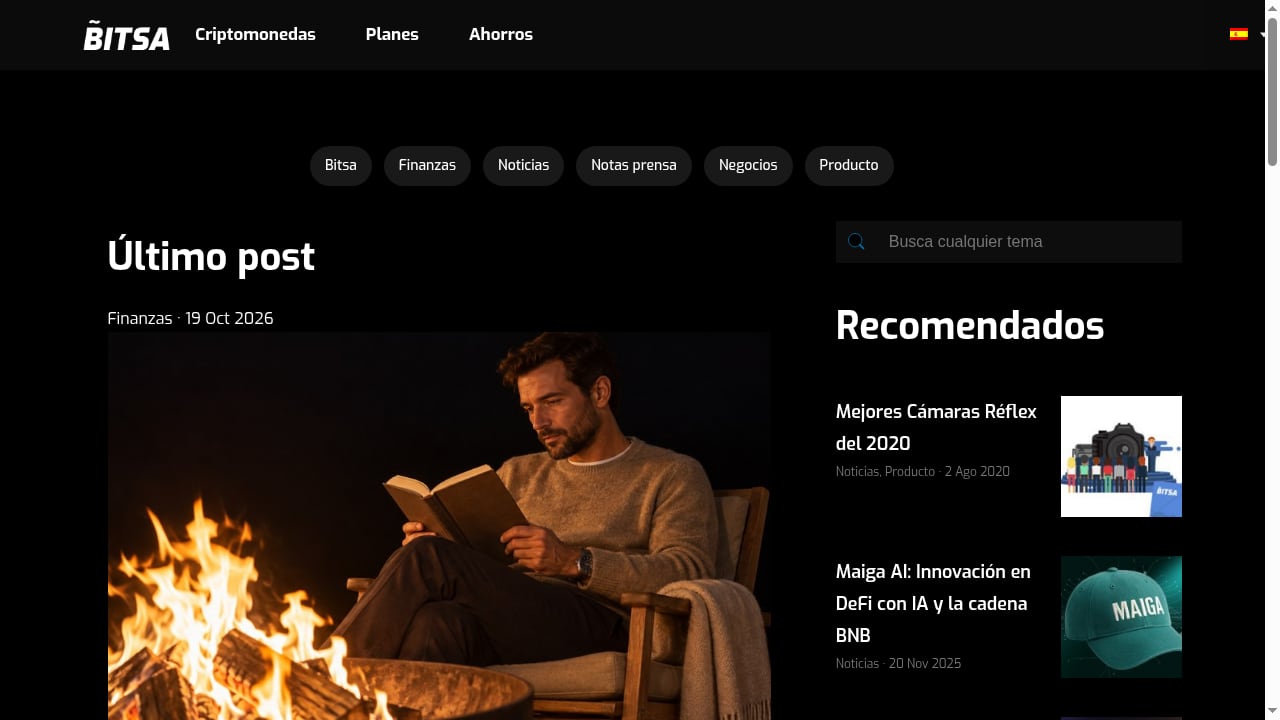
First viewport screenshot of bitsacard.com.
Based on the cited sources, several limitations matter if you are evaluating Bitsa as a business or AI payment solution:
- EU focus: Bitsa is described as limited to the EU in comparison coverage, which may not suit globally scaling businesses.
- Conversion fees: third-party comparison sources list Bitsa conversion fees at 1–2%, which compounds for heavy spenders.
- Medium spending headroom: comparison sources rate Bitsa's limits as "Medium," which may not support high-volume ad or SaaS payments.
- No described agent controls: the cited sources do not mention merchant whitelisting, minute-level authorization, or audit logs.
- No described self-custody: Bitsa operates a prepaid euro balance model, not a self-custodied stablecoin wallet.
These are not flaws for a consumer product; they are simply mismatches for business infrastructure needs.
Supported Weaknesses of Cardfornia for Consumer Use
To keep the comparison fair, note where Cardfornia may not fit:
- Business-oriented onboarding: Cardfornia requires KYB verification and a team portal, which is heavier than a consumer sign-up.
- No described consumer cashback: the product context does not mention cashback.
- Virtual-card focus: the product context describes virtual cards; physical card availability is not stated.
- No described personal IBAN: Bitsa's Spanish IBAN feature has no stated Cardfornia equivalent.
If you are an individual who wants a simple prepaid card for daily spending, Bitsa is likely the better fit.
Practical Examples
Example 1: An AI Startup Paying for Model Subscriptions
A startup runs multiple AI agents that need ChatGPT, Claude, and Cursor subscriptions. With Cardfornia, the team tops up USDT, issues a card per agent, whitelists the merchant, and reviews audit logs. With Bitsa, the team would need individual consumer accounts and manual management, with no described agent-level controls.
Example 2: A Performance Marketing Team
A media buyer runs Meta and TikTok ads at scale. Cardfornia's stable, high-limit cards and merchant whitelisting reduce the risk of account bans and simplify reconciliation. Bitsa's "Medium" limit rating and EU focus may constrain high-volume global ad spend.
Example 3: A European Freelancer
A freelancer in Spain wants to spend Bitcoin and receive euro transfers. Bitsa's Spanish IBAN, SEPA Instant, cashback, and mobile wallet support fit this workflow well. Cardfornia's business KYB and virtual-card model are more than this user needs.
How to Choose
Use this decision path:
- Are you a business or an individual? Businesses and crypto-native teams should start with Cardfornia. Individuals should start with Bitsa.
- Do you need AI agent payments? If yes, Cardfornia is the only one of the two with stated agent-focused controls.
- Do you need self-custody? If yes, Cardfornia. Bitsa uses a prepaid euro balance.
- Do you need cashback and a physical card? If yes, Bitsa.
- Do you need global ad spend and SaaS payments? If yes, Cardfornia.
- Do you need a European IBAN? If yes, Bitsa.
For a broader view of how Cardfornia compares with other platforms, see Cardfornia vs Airwallex vs Gnosis Pay: 2026 Comparison and Cardfornia vs KAST: Which Stablecoin Card Fits Your Business?.
Related reading
- Marqeta Review 2026: Card Issuing, Pricing & Fit - Evidence-based Marqeta review for 2026: ideal users, card issuing and processing use cases, strengths, limitations, pricing signals, setup, and decision criteria.
- How to Use Cardfornia with BVNK for Stablecoin Card Payments - Connect Cardfornia's self-custody AI payment cards with BVNK's stablecoin rails. Step-by-step setup, workflow, examples, and limits.
FAQ
Is Cardfornia a replacement for Bitsa Card?
Not exactly. Cardfornia is built for business and AI agent payments with self-custody and programmatic controls. Bitsa is a consumer prepaid Visa for spending crypto as euros. They serve different buyers.
Can I use Bitsa Card for AI agent payments?
The cited sources do not describe agent-level controls, merchant whitelisting, or programmatic card issuance for Bitsa. Cardfornia is purpose-built for that use case.
Does Cardfornia offer cashback?
The product context does not describe a cashback program. Bitsa advertises cashback up to a 15% headline rate, typically subject to tier conditions.
Is Bitsa Card available outside the EU?
Comparison sources describe Bitsa as EU-focused. Check the issuer's current country list before applying, especially as MiCA rules evolve.
Which card is better for ad spend?
Cardfornia explicitly targets ad platforms with stable, high-limit cards designed to reduce account-ban risk. Bitsa is positioned for everyday spending and is rated "Medium" for limits in comparison sources.
Can I hold both?
Yes. Some users keep a consumer card like Bitsa for personal spending and a business platform like Cardfornia for company and agent payments. The two are complementary rather than mutually exclusive.
Conclusion
Cardfornia and Bitsa Card solve different problems. Cardfornia is infrastructure for businesses and AI agents that need self-custodied stablecoin funding, scalable virtual card issuance, merchant whitelisting, and audit-ready controls. Bitsa Card is a practical consumer prepaid Visa for Europeans who want to spend crypto, earn cashback, and use a Spanish IBAN with mobile wallets.
If your priority is controlling how AI agents and teams spend stablecoins globally, Cardfornia is the stronger fit. If your priority is everyday personal spending with cashback and a physical card, Bitsa is the better choice. Evaluate both against your actual payment flows rather than headline features.
For a wider market view, see Top 10 Stablecoin-Powered Financial Infrastructure Platforms 2026.
Sources: