
Fiat-Backed Stablecoin: How It Works & Business Use

Fiat-Backed Stablecoin: How It Works and Why Businesses Use It
A fiat-backed stablecoin is a digital token designed to hold a steady value against a traditional currency, most often the US dollar. Each token is meant to represent one unit of real money, with the issuer holding cash or cash-equivalent reserves to match what circulates. That simple promise is why these tokens have become the default settlement layer for crypto-native businesses, cross-border payments, and treasury operations.
This article explains the mechanics behind fiat-backed stablecoins, how issuance and redemption keep the peg intact, where the real risks sit, and how companies put USDT, USDC, and similar tokens to work in daily operations.
What Is a Fiat-Backed Stablecoin?

Fiat-Backed Stablecoin: How It Works & Business Use - What Is a Fiat-Backed Stablecoin?.
A fiat-backed stablecoin is a cryptocurrency whose value is pegged to a government-issued currency such as the US dollar, euro, or yen. Unlike Bitcoin or Ethereum, whose prices move with market sentiment, a fiat-backed token is engineered to stay close to its target value.
The defining traits are consistent across issuers:
- A 1:1 peg. One token is meant to equal one unit of the underlying currency.
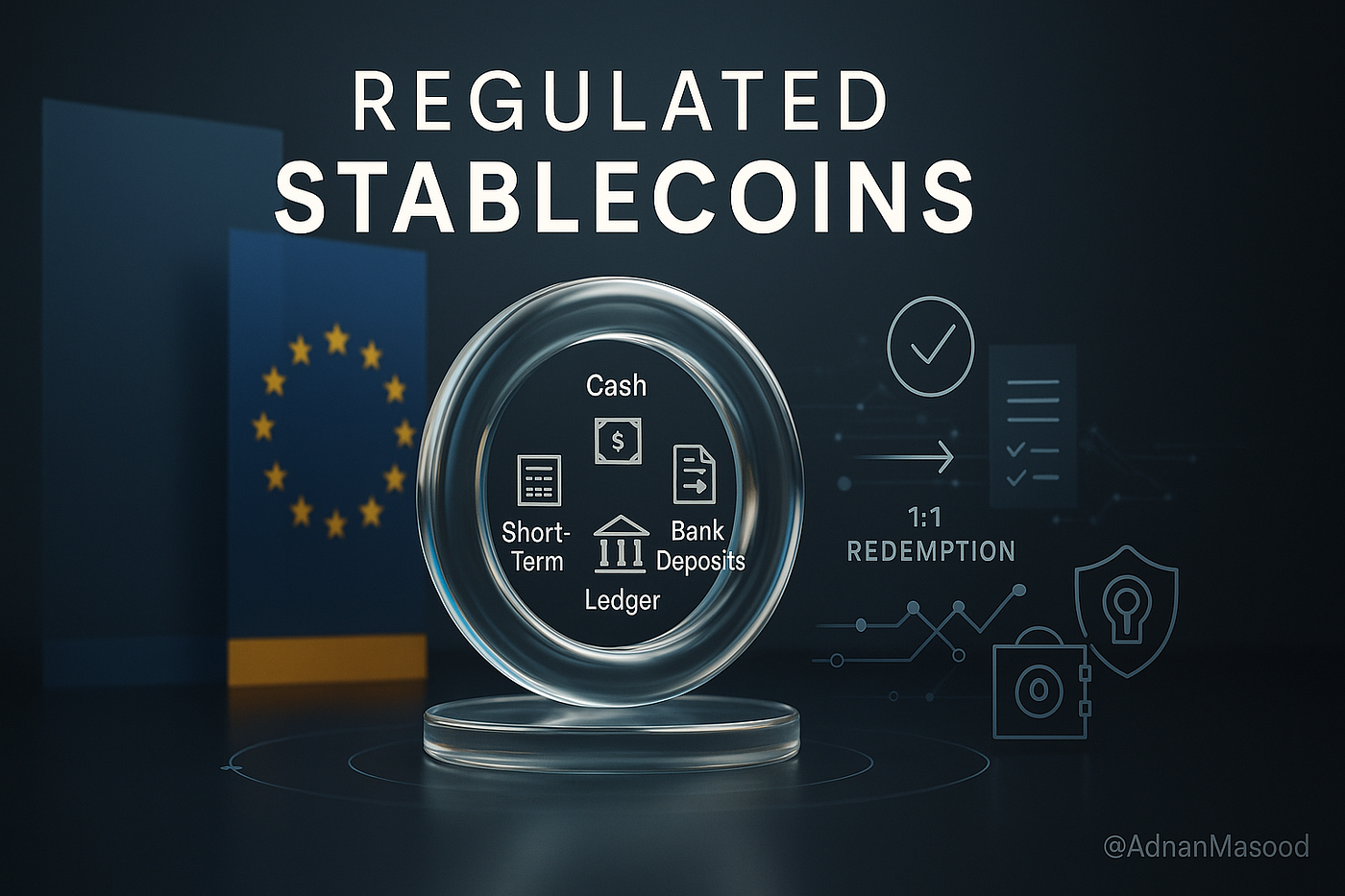
- Full reserves. The issuer holds cash, bank deposits, or short-term government securities matching the tokens outstanding.
- Redemption rights. Holders can typically return tokens to the issuer and receive fiat back, subject to the issuer's terms.
- Blockchain settlement. Transfers happen on public networks, so they clear quickly and around the clock.
- Reserve transparency. Credible issuers publish independent attestations or reserve reports.
The category is large and concentrated. According to Forbes' fiat-backed stablecoin tracker, the segment's total market capitalization sits in the hundreds of billions, with Tether (USDT) and USDC (USDC) accounting for the overwhelming majority.
Fiat-Backed vs Other Stablecoin Models
Not every stablecoin is backed by bank-held currency. The three main designs behave very differently:
| Model | Backing | Example | Trade-off |
|---|---|---|---|
| Fiat-backed | Cash and cash equivalents | USDT, USDC | Simple, but depends on a centralized issuer |
| Crypto-collateralized | Other crypto assets, often over-collateralized | DAI | Transparent onchain, but capital-inefficient |
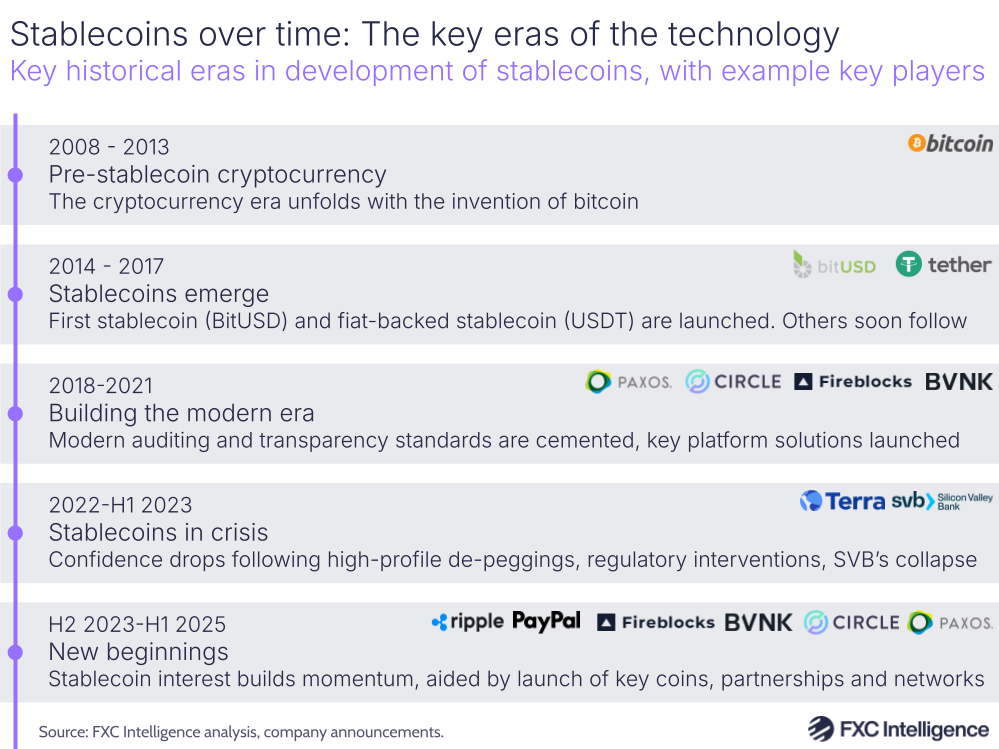
| Algorithmic | Market incentives and code | TerraUSD (failed) | No collateral buffer, historically fragile |
For businesses that need predictable settlement, the fiat-backed model is usually the starting point because the collateral is straightforward and easy to audit.
How Fiat-Backed Stablecoins Actually Work
Fiat-Backed Stablecoin: How It Works & Business Use - How Fiat-Backed Stablecoins Actually Work.
The peg is not magic. It is the result of a four-step loop that ties token supply to real reserves.
1. Reserve Funding
A buyer sends fiat to the issuer's reserve account. The issuer parks that money in cash or short-dated government securities so it stays liquid and low-risk.
2. Issuance (Minting)
Once the fiat settles, the issuer creates an equivalent number of tokens onchain and sends them to the buyer's wallet. New tokens only appear when reserves grow.
3. Circulation
Tokens then move freely on public blockchains. Transfers settle in seconds, across borders, and outside banking hours, because the network handles verification rather than a chain of correspondent banks.
4. Redemption (Burning)
When a holder wants fiat back, they return tokens to the issuer, who destroys them and releases the matching currency. Supply shrinks in proportion to redemptions, which keeps the 1:1 relationship intact.
What Keeps the Price at the Peg
If a token trades slightly below its target, arbitrageurs can buy it cheaply and redeem it for full value, which pulls the market price back up. That arbitrage mechanism is what keeps a liquid stablecoin trading within a narrow band, even during stress.
Stripe's overview of fiat-backed stablecoins notes that stablecoin payments processed roughly $9 trillion globally in 2025, up 87% from 2024 — a sign that this settlement model has moved well past the experimental stage.
Why Businesses Use Fiat-Backed Stablecoins

Fiat-Backed Stablecoin: How It Works & Business Use - Why Businesses Use Fiat-Backed Stablecoins.
The appeal is not ideological. It is operational.
Faster Cross-Border Settlement
Traditional wires can take days and pass through multiple intermediaries. A stablecoin transfer settles in minutes and costs only the network fee. For companies paying contractors or suppliers across jurisdictions, that difference compounds quickly.
Treasury Consolidation
Multinationals can convert local revenue into a dollar stablecoin and sweep it into a central treasury wallet almost instantly. That reduces idle balances, avoids unnecessary FX conversions, and gives finance teams a single view of global cash.
Dollar Access in Volatile Markets
Businesses operating in countries with weak or inflationary currencies often hold part of their operating cash in dollar-backed tokens to preserve purchasing power without opening a US bank account.
Programmable Money
Because stablecoins live on smart-contract platforms, payments can be automated: escrow releases, recurring billing, revenue splits, or conditional payouts triggered by delivery confirmation.
Spending Without an Exchange Detour
Holding digital dollars is only useful if the money can leave the wallet. This is where corporate card infrastructure matters. Platforms such as Cardfornia let companies fund a single account with USDT or USDC and issue multi-currency virtual cards to teams, so stablecoin balances can cover real expenses — cloud bills, ad spend, SaaS subscriptions, and travel — without a manual conversion step for every transaction.
The Real Risks and Constraints
Fiat-Backed Stablecoin: How It Works & Business Use - The Real Risks and Constraints.
Fiat-backed stablecoins are not risk-free. They simply move the risk somewhere specific.
Issuer and Counterparty Risk
Most fiat-backed tokens are issued by centralized companies. If an issuer faces operational or financial trouble, confidence in the token can drop fast. This is the counterparty risk that decentralized designs try to avoid — at the cost of other trade-offs.
Reserve Transparency
Because the peg depends on trust in the reserve, the quality of disclosure matters. Independent attestations, published reserve breakdowns, and clear redemption policies are the signals worth checking before holding meaningful balances.
Regulatory Exposure
Stablecoins sit inside AML, KYC, and reserve-disclosure regimes that vary by jurisdiction and are still evolving. Businesses should confirm where an issuer is licensed and how local rules treat stablecoin holdings and payments.
Depeg Events
Even well-reserved tokens have briefly traded away from their peg during market stress. Treasury policies should assume that a temporary depeg is possible and define what the team does if it happens.
Operational Security
Onchain balances require institutional-grade controls: multisignature approvals, role-based access, hardware security modules, and cold storage. A stablecoin treasury is only as safe as the wallet policy behind it.
How to Evaluate a Fiat-Backed Stablecoin
Use a short checklist before committing operating capital:
- Reserve composition. Cash and short-term Treasuries are stronger than opaque or long-dated holdings.
- Attestation frequency. Monthly independent reports beat occasional blog posts.
- Redemption terms. Know the minimums, fees, and timelines for converting back to fiat.
- Regulatory posture. Check licensing and the jurisdictions the issuer operates in.
- Liquidity and market depth. Deep markets mean tighter pegs and easier exits.
- Chain support. Confirm the token exists on the networks your treasury and payment stack already use.
USDT vs USDC: A Practical Comparison
Both are dollar-pegged and widely accepted, but they are not identical. USDT has the deepest liquidity and the broadest exchange support. USDC is often favored by regulated institutions and publishes detailed reserve reporting. Many businesses hold both and route payments based on which network and counterparty is cheapest at the time. If your team is weighing how these balances get spent, the comparison in Cardfornia vs Cryptopay Business vs BVNK covers how different providers handle stablecoin funding and card issuance.
Putting Stablecoins to Work: From Treasury to Spend
Holding stablecoins is step one. The harder question is how they leave the treasury and pay for real things.
Common operational uses include:
- Paying international contractors in digital dollars without slow banking rails.
- Settling supplier invoices same-day instead of waiting on wire cutoffs.
- Funding ad accounts across Meta, Google, and TikTok, where card reliability matters.
- Covering SaaS and cloud bills such as AWS, Azure, and Figma.
- Managing travel and procurement across currencies with real-time FX.
For crypto-native companies, the practical bottleneck has historically been the last mile: turning a stablecoin balance into a card that a merchant will accept. That is the gap corporate virtual card platforms address. Cardfornia, for example, holds client funds 100% in segregated accounts with third-party licensed custodians — never lent or invested — and issues cards through licensed partners with regulatory approvals across jurisdictions including Hong Kong, the UK, the US, and Canada. If you are mapping out how issuance actually works, instant crypto card issuance walks through approval timelines and KYC checks.
Related reading
- Figma Payment Virtual Card: Design Files vs Real Cards - Searching for a Figma payment virtual card? Learn what Figma community files offer, where they stop, and how businesses issue real virtual cards.
- Cardfornia vs Sparados vs BVNK: Best Crypto Card 2026 - Compare Cardfornia, Sparados, and BVNK for stablecoin corporate spending, virtual cards, expense management, and enterprise payment infrastructure.
Sources and further reading
- Fiat-Backed Stablecoin | Glossary - Explore fiat-backed stablecoins, their types, and benefits, offering stability and bridging the gap between traditional and digital currencies.
Frequently Asked Questions
Is a fiat-backed stablecoin the same as a digital dollar?
Functionally, yes. A fiat-backed stablecoin behaves like a digital version of the currency it tracks, but it is a token issued by a private company rather than a central bank, so it carries issuer and regulatory risk that a bank deposit does not.
Are fiat-backed stablecoins always worth exactly $1?
No. They are designed to trade at or near their peg, and arbitrage usually keeps them there, but prices can drift slightly during market stress or liquidity crunches.
What backs a fiat-backed stablecoin?
Reserves of the underlying currency, typically held as bank deposits, cash, or short-term government securities. The quality and liquidity of those reserves is the main thing to verify.
Can a business hold stablecoins on its balance sheet?
Many do, usually as part of operating cash rather than long-term investment. The key considerations are custody controls, accounting treatment, and local regulatory guidance.
How do businesses spend stablecoins without converting to fiat first?
Through stablecoin-funded corporate cards. A company funds an account with USDT or USDC and issues virtual cards to team members, so spending settles against the digital dollar balance instead of requiring a manual exchange for each purchase.
Do fiat-backed stablecoins replace bank accounts?
Not entirely. They complement banking by handling fast cross-border settlement and programmable payments, while regulated custody and card issuance still rely on licensed financial partners.
Conclusion
A fiat-backed stablecoin is a simple idea with serious infrastructure behind it: real reserves, a mint-and-burn loop, and an arbitrage mechanism that holds the peg. For businesses, the value is practical — faster settlement, cleaner treasury operations, and dollar access that does not depend on a single banking corridor.
The risks are equally concrete. Issuer concentration, reserve transparency, and evolving regulation all deserve scrutiny before you move operating capital onchain. The teams that get this right treat stablecoins as part of a broader financial stack: solid custody, clear treasury policy, and a reliable way to convert digital dollars into everyday business spending.